


US equities opened lower across the board on September 1, with the tech-heavy Nasdaq leading the decline as chip and optical names sold off.
US equities opened lower across the board on September 1, with the tech-heavy Nasdaq leading the decline as chip and optical names sold off.
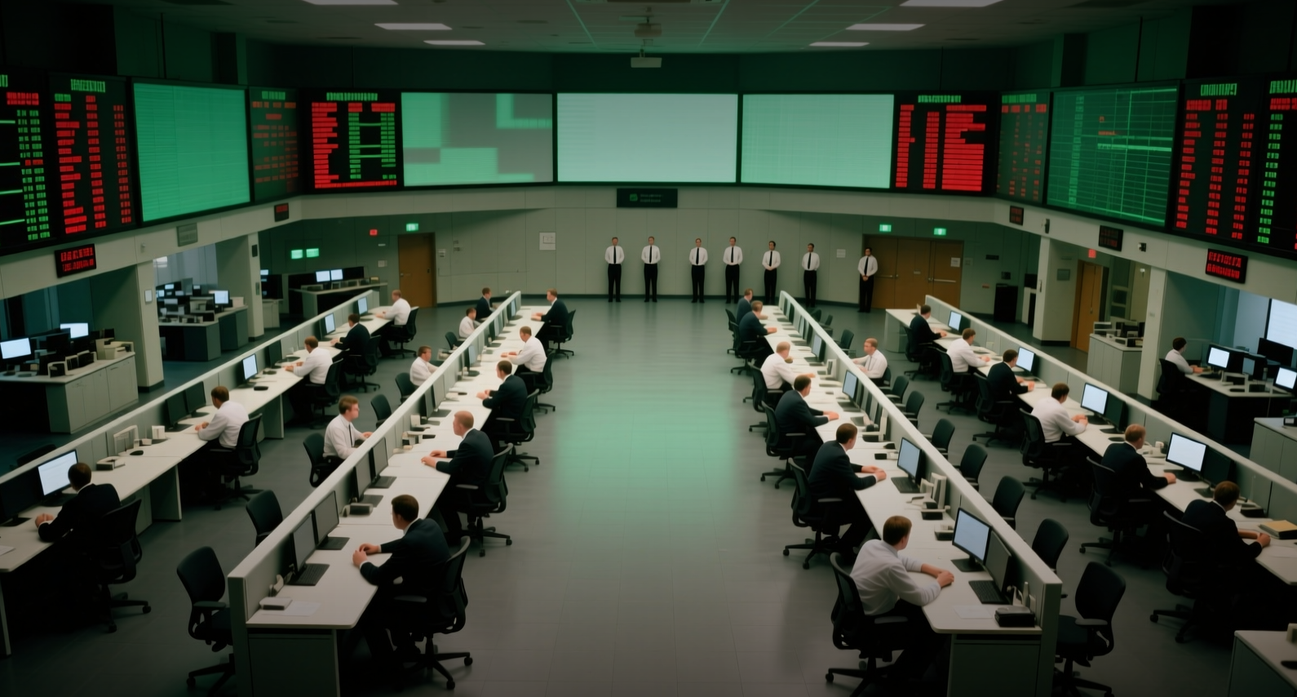
The Nasdaq Composite fell 1.28% at the September 1 open, leading a broad US equity decline as optical communications and memory chip stocks came under pressure.
The move coincided with two catalysts: "Big Short" investor Michael Burry's disclosure of new short positions against AI and semiconductor names, and profit-taking in optical stocks after Corning surged 15.67% on Monday to a record high.
The Dow Jones Industrial Average slipped 0.64% and the S&P 500 lost 0.70%. Corning and Marvell Technology each fell more than 3%, while Intel and SanDisk dropped over 2%. Western Digital, Seagate Technology, SK Hynix, and Micron Technology all declined more than 1%.
The declines extend a volatile stretch for semiconductor equities, where Marvell has dropped roughly 10% since its earnings report despite a 37% jump in second-quarter sales to $2.74 billion. Fervo rose more than 7% after signing a roughly 400-megawatt geothermal power supply agreement with Google, the latest clean-energy deal tied to AI data center demand.
The selloff in chip and optical names tracked weakness in pre-market futures, where the Nasdaq 100 had already slipped 0.39% and S&P 500 futures fell 0.17%. Burry, the investor who inspired "The Big Short," disclosed short positions against Nvidia, Applied Materials, and the iShares Semiconductor ETF in a Substack post, adding to pressure on a sector already facing class-action lawsuits against Samsung, SK Hynix, and Micron.
Corning's decline followed two days of profit-taking after the glassmaker jumped 15.67% on Monday to a historic high. Marvell, which fell about 10% after its earnings report last week, continued to slide even as it guided to third-quarter sales of $3.15 billion, up 50% year over year. Analysts have noted the Google agreement could drive up to $20 billion in annual product sales, though guidance implies a more modest $6 billion in incremental revenue.
The selling extended across assets. Bitcoin traded near $58,597, below the $59,000 mark, while spot gold slipped to $3,990 an ounce and WTI crude fell to $68.69 a barrel, its lowest since February 27. The US dollar index edged higher to around 101.34.
Capital continues to flow into AI infrastructure even as chip equities wobble, with SoftBank completing a $10 billion follow-on investment in OpenAI and Japan approving 387.3 billion yen in subsidies for domestic AI research. Investors now turn to the June ADP private employment report, due at 8:15 a.m. Eastern, and a speech by Federal Reserve Chair Warsh at the European Central Bank's forum in Sintra, Portugal, at 9 a.m. The data and remarks will shape expectations for Friday's nonfarm payrolls report, where the market consensus calls for 115,000 jobs added and an unemployment rate of 4.3%.
This article is for informational purposes only and does not constitute investment advice.
