Beijing's latest outreach to American business leaders keeps the May Xi-Trump summit consensus on track ahead of Xi Jinping's planned September visit to Washington.
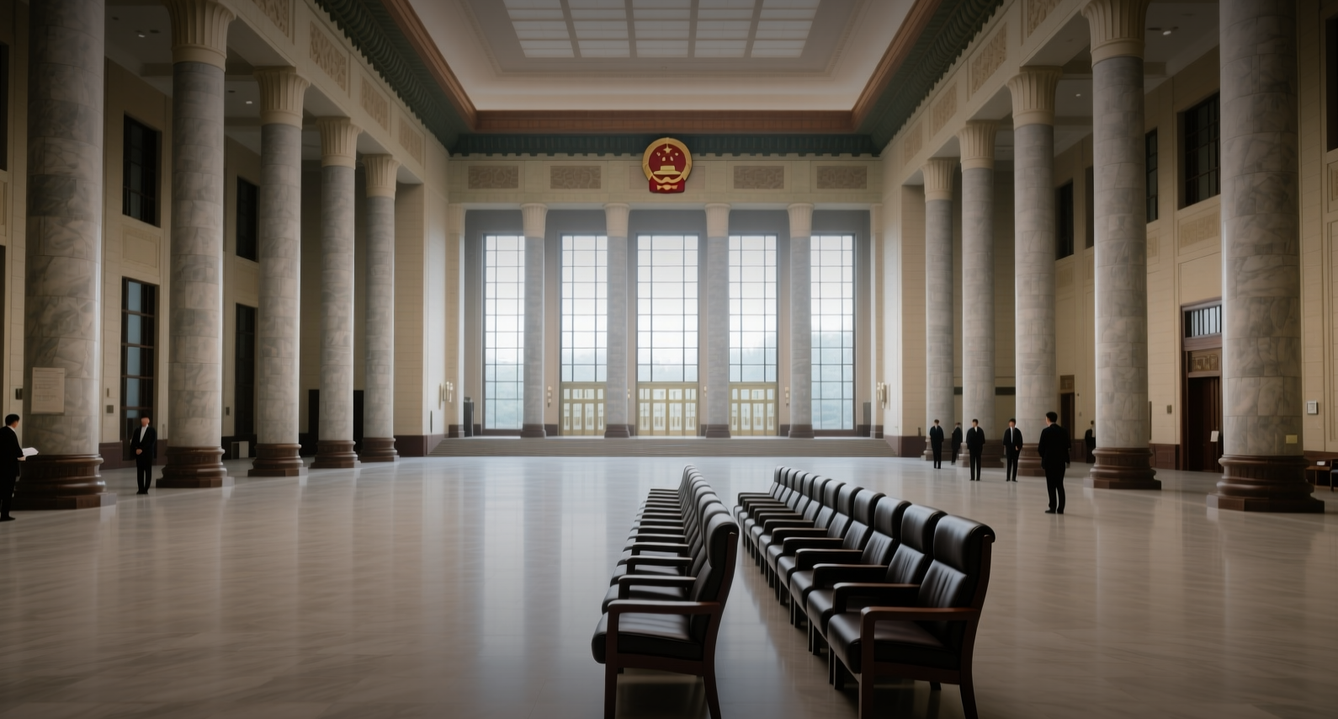
Premier Li Qiang met the US-China Business Council board Sept 1, reaffirming the May Xi-Trump summit's strategic stability framework as US tariffs on Chinese goods hold at 20 percent. The meeting, at Beijing's Great Hall of the People, was the first high-level Chinese engagement with American business since the two presidents agreed in May to define the relationship under a new "constructive strategic stability" framework.
"China is willing to work with the United States to follow the strategic guidance of the two heads of state, strengthen dialogue and communication, expand mutually beneficial cooperation, and properly manage differences," Li said, according to Xinhua. He told the delegation, led by council chairman McCain, that the two countries' relations remain "generally stable" through joint efforts.
The outreach comes as Washington prepares to impose a 7.5 percent overcapacity tariff on Chinese goods, restoring the combined US rate to 20 percent within the limits of the October 2025 Busan agreement, according to Bloomberg. China has committed to buy US$17 billion of US agricultural products annually through 2028 and 200 Boeing jets under the May summit accords, while the two sides agreed to establish a Board of Trade and Board of Investment to shift consultations from "crisis-style response" to "mechanized management."
Xi is expected to visit the US in September after Trump extended an invitation during his May state visit to Beijing, with Secretary of State Marco Rubio and Foreign Minister Wang Yi meeting in Manila on July 22 to lay groundwork for the trip. The trajectory matters because the two economies together account for roughly 40 percent of global output, and the one-year tariff truce negotiated in Busan expires in November.
Tariff Ceiling Holds, But Friction Persists
The Aug 24 decision to impose the 7.5 percent overcapacity tariff — layered on the 12.5 percent forced-labor duty effective July 24 — restores the 20 percent combined rate that prevailed before the Supreme Court struck down Trump's IEEPA tariffs in February. China criticized the forced-labor tariff but stopped short of countermeasures, a restraint consistent with its stated acceptance of rates that do not exceed the Busan ceiling.
Friction has not disappeared. On Aug 5, China's commerce ministry barred drone exports to the US, added six US companies to its countermeasures list, and launched an investigation into imported office equipment containing foreign software — retaliation for US bans on advanced robots and power inverters and the addition of 43 Chinese firms to the Uyghur Forced Labor Prevention Act entity list. The last time Beijing issued a comparable barrage of retaliatory measures was in June, when it added 10 US robotics and defense companies to its export control list after the Pentagon designated 188 Chinese tech firms as military companies.
What's at Stake in September
The September visit will test whether the two sides can convert the May consensus into durable mechanisms before the truce expires. US Treasury Secretary Scott Bessent said in May the US was "not in a rush to extend" the one-year arrangement, while China's commerce ministry called extension "in the common interest of both countries." If the truce lapses without renewal, US duties on Chinese goods could revert toward the higher pre-Busan levels, reversing the tariff reductions that have stabilized bilateral trade since November 2025.
For American companies, the stakes are direct: the US-China Business Council's membership includes Apple, Nvidia, Tesla, Boeing, and Goldman Sachs, firms that met Xi during the May summit and have pressed for predictable market access. Li's Sept 1 pledge that China will "continue expanding high-level opening-up" and "fully listen to the concerns and requests of businesses" offers a signal that Beijing intends to keep the engagement channel open through the visit and beyond.
This article is for informational purposes only and does not constitute investment advice.