
Japan's record $98.7 billion intervention to prop up the yen carries uncomfortable parallels to the Asian financial crisis, a former top currency diplomat said.
Japan's record $98.7 billion intervention to prop up the yen carries uncomfortable parallels to the Asian financial crisis, a former top currency diplomat said.
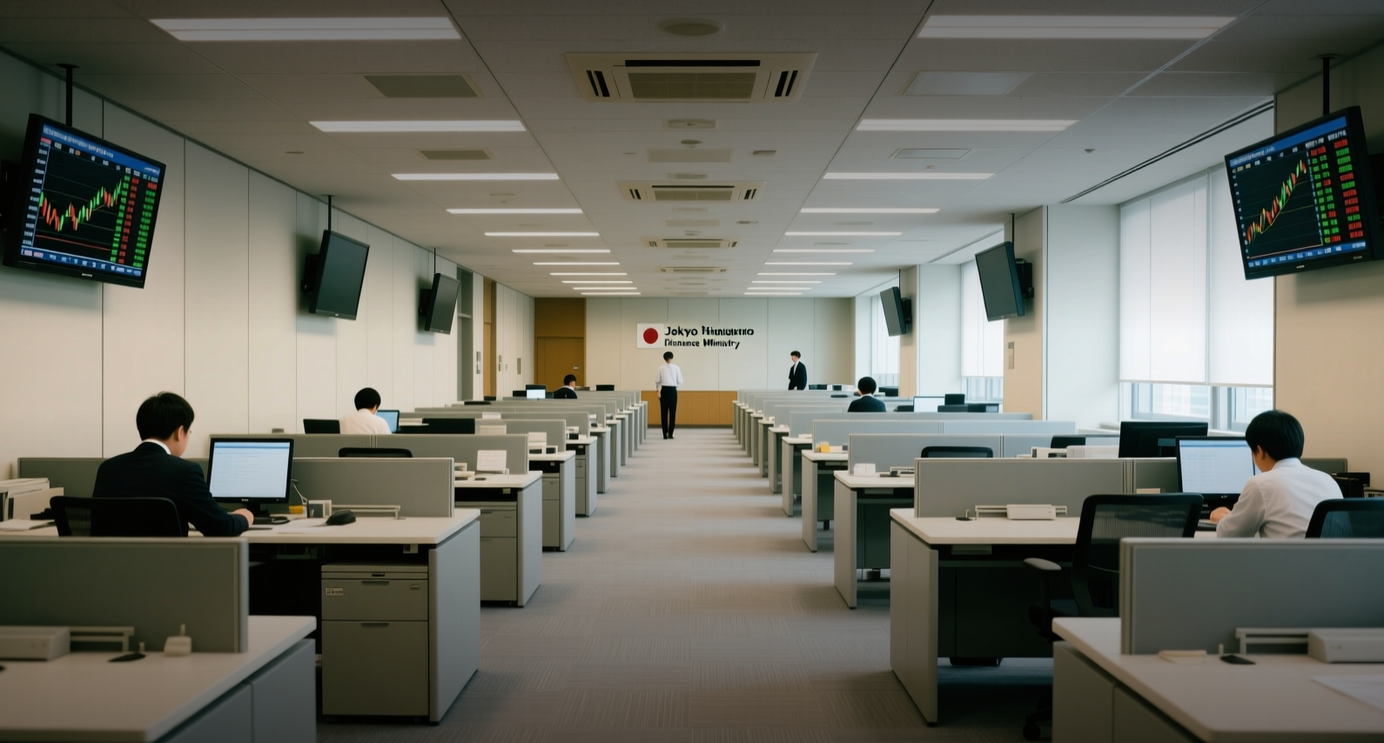
Japan spent a record $98.7 billion over the past month to support the yen, a rare U.S.-coordinated intervention that former top currency diplomat Naoyuki Shinohara says evokes the Asian financial crisis of the late 1990s.
"Being asked by Washington to use swap lines and avoid selling Treasuries evokes memories of that period," Shinohara, who served as the IMF's deputy managing director after a stint as Japan's vice finance minister for international affairs, told Reuters.
The joint Japan-U.S. action on July 31 differed from traditional coordinated interventions, which have historically been built on a shared assessment among major economies and backed by G7 statements. "There is no sign that such a process took place this time," Shinohara said. "Normally, there would be a joint statement from the G7 at some stage, but we haven't seen one yet."
The near absence of central banks, which typically work in tandem with finance ministries, further weakened the messaging effect. "Messaging is the most important element of coordinated intervention. Without central banks, the message is not very powerful," Shinohara said.
The BOJ likely sees the need to raise rates at least to around 1.5 percent from the current 1 percent as soon as possible, though one or two additional increases would probably not be enough to reverse the yen's downtrend. External factors such as a slowdown in U.S. growth or easing Middle East tensions could help support the currency.
The scale of the operation — the largest single-month currency intervention in Japan's history — shows how far policymakers have gone to arrest the yen's decline. U.S. Treasury Secretary Scott Bessent encouraged Japan to use dollar swap lines rather than sell U.S. Treasuries to finance future intervention, a shift from traditional practice that Shinohara said mirrors the dynamics of the 1997 crisis. Back then, the United States, Japan, and the IMF provided Thailand with dollar funding to bolster its foreign reserves.
"Japan today is nowhere near Thailand's situation. But the dynamic is uncomfortably similar," Shinohara said.
Shinohara characterized the U.S. participation as a symbolic gesture with a hidden message urging Japan to get its act together on policy, including speedier rate hikes by the Bank of Japan. The absence of a formal G7 endorsement and the limited role of central banks in the operation suggest the intervention was more about political messaging than market mechanics, he said.
The choice of dollar swap lines over Treasury sales is particularly significant. By encouraging Japan to tap swap lines, Washington avoids the risk of a large-scale selloff in U.S. government debt, which could ripple through global bond markets. This approach also keeps the intervention within the framework of existing central bank cooperation, even as the central banks themselves stayed on the sidelines.
The BOJ's policy rate currently stands at 1 percent, and Shinohara said the central bank likely sees the need to move to at least 1.5 percent soon. But he cautioned that one or two additional increases would probably not be sufficient to reverse the yen's downtrend on their own.
Instead, external factors could play a decisive role. A slowdown in U.S. growth would narrow the interest rate differential that has driven capital out of yen-denominated assets, while easing tensions in the Middle East would reduce the cost of importing oil, a key drag on Japan's trade balance.
"The one thing that must be avoided is a rapid depreciation of the yen," Shinohara said. "A country does not collapse because its currency gets stronger. It runs into trouble when its currency becomes too weak."
Shinohara was involved in global economic policymaking at Japan's Ministry of Finance during the Asian financial crisis and served as top currency diplomat from 2007 to 2010. His perspective carries weight in Tokyo policy circles, where the memory of the 1997 crisis — when currency collapses across Southeast Asia forced a regional bailout — remains a reference point for how quickly a weak currency can destabilize an economy.
This article is for informational purposes only and does not constitute investment advice.
