
The U.S. House canceled two weeks of September voting days, cutting eight sessions and pushing the CLARITY Act toward a post-midterm vote as Chainlink's legal chief called the delay "devastating."
The U.S. House canceled two weeks of September voting days, cutting eight sessions and pushing the CLARITY Act toward a post-midterm vote as Chainlink's legal chief called the delay "devastating."
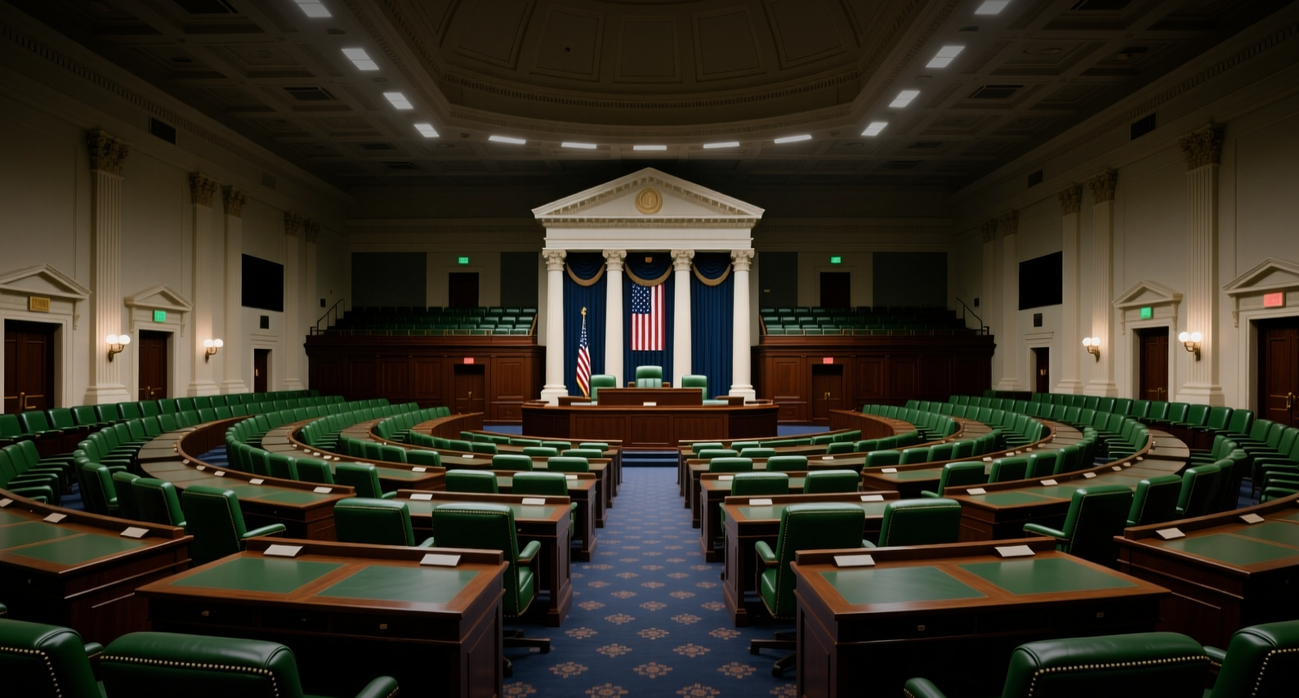
The U.S. House of Representatives canceled the final two weeks of its September session, cutting eight voting days and leaving the CLARITY Act with a narrow window to clear before the Nov. 3 midterm elections.
Katherine Kirkpatrick Bos, head of legal at Chainlink, called the move "devastating for Clarity" and questioned whether the industry has entered a "post-Clarity era." She described the setback as "very frustrating" for market participants who had pushed for the legislation, which she called "the ultimate way to futureproof all of the good work that's being done."
House Majority Whip Tom Emmer's office told Republican members that leaders had scrubbed the weeks of Sept. 21 and Sept. 28 from the schedule, leaving just four voting days before lawmakers depart Sept. 17. The chamber passed its version of the Digital Asset Market Clarity Act, H.R. 3633, in July 2025 with bipartisan support, but the Senate has not yet cleared its own text, which adds provisions absent from the House-passed version.
A Senate cloture vote is set for Sept. 15, two days before the House leaves Washington. Prediction markets price a 17.5 percent chance the bill becomes law in 2026, while Solana Policy Institute CEO Miller Whitehouse-Levine has put pre-midterm odds near 10 percent.
Why the calendar matters
If the Senate advances an amended bill, the House must either accept the changes or negotiate a unified draft, and any agreed language needs approval from both chambers before it reaches President Donald Trump's desk. With representatives departing two days after the Senate's expected vote, the House is not expected to resume regular legislative work until after the midterms, and no emergency return has been announced.
Senate negotiations have spanned presidential crypto ethics provisions, anti-money-laundering requirements, state enforcement authority, decentralized finance treatment, and stablecoin rewards. Stablecoin rewards remain one of the thorniest sticking points: the Senate text would bar payments based solely on holding a stablecoin balance while permitting rewards tied to transactions, a distinction that shapes how exchanges structure yield products. The fight follows the GENIUS Act, which set federal rules for payment stablecoin issuers but left third-party distribution questions unresolved.
Guidance is not a substitute
Kirkpatrick Bos argued that agency guidance, however well-intentioned, is not a substitute for an actual law. "We've heard future proof again and again from both the CFTC and the SEC," she said, "but the three of us definitely know that the best way you future proof things is legislation, because it's very difficult to amend or to undo legislation."
Her underlying concern is durability. "My only concern as a scenario in two and a half years, what can we do to cement that guidance?" she asked. Her answer centers on broader participation from established financial players: "The more that we are embedded with TradFi, the more sophisticated large institutions are part of the discussion and part of the engagement, the harder it's going to be to undo all of this."
If the current Congress ends without a signed bill, lawmakers must restart the process next session. A post-election lame-duck window could offer another shot, but whether party leaders grant floor time will hinge on how the midterms reshape the balance of power in both chambers.
This article is for informational purposes only and does not constitute investment advice.
