

Japan's second-largest automaker is imposing unprecedented price-cut demands on its parts suppliers through fiscal 2030, targeting 30 percent reductions in key component categories as Chinese EV makers erode its global market position.
Japan's second-largest automaker is imposing unprecedented price-cut demands on its parts suppliers through fiscal 2030, targeting 30 percent reductions in key component categories as Chinese EV makers erode its global market position.
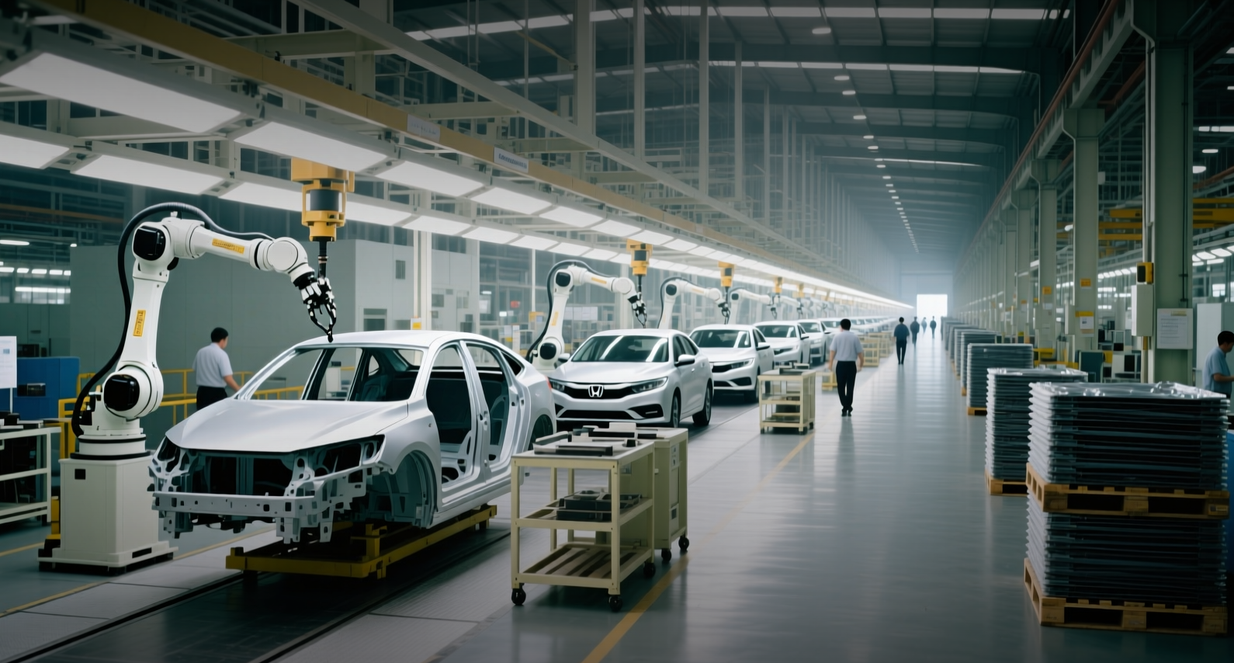
Honda is demanding suppliers cut component prices by up to 30 percent under a 1.5 trillion yen ($9.4 billion) cost-reduction program, its most aggressive response yet to Chinese EV competition. The maker of the CR-V sport-utility vehicle briefed major suppliers at a spring meeting in Utsunomiya, north of Tokyo, on company-specific cost targets covering pressed and forged components, electrical parts, and parts tied to software-defined vehicles, according to internal documents reviewed by Reuters and two people familiar with the matter.
The cost-reduction targets were "extremely large" and it was not immediately clear whether they would be achievable, one of the people said. Another person said that until the spring meeting, Honda had not given the impression it needed aggressive cost cuts — now the situation appeared to leave "no room for delay."
Honda is targeting 30 percent reductions in three key parts categories, a scale the documents said would allow Japanese suppliers to better compete with Chinese rivals. The automaker also asked tier-one suppliers to review how they procure materials, urged them to standardize parts sourced from second- and third-tier suppliers, and encouraged broader use of Chinese-made components.
The program reflects the scale of the competitive threat. BYD and other Chinese EV makers are capturing significant market share in Southeast Asia, Latin America, and Europe, powered by advanced software and battery technology at prices that are by far the industry's lowest. Honda expects EV-related losses to ultimately exceed $12 billion — among the largest hits for any global automaker — and reported its first-ever annual loss as a publicly traded company in May.
Supplier chain under pressure
The cost mandate lands on a Japanese supplier base already squeezed by U.S. import tariffs, higher labor costs, and rising R&D demands as vehicles become more software-intensive. Honda shares fell 2.5 percent in afternoon trading Wednesday, while affiliated suppliers also traded lower — seat maker TS Tech dropped 1.3 percent, frame maker H-One fell 2.3 percent, and auto body parts maker G-Tekt declined 2.0 percent.
The 30 percent reduction targets represent a structural shift for Japan's automotive supply chain. Honda's direct suppliers are being asked to pass cost pressure down to their own sub-suppliers, a cascading effect that could reshape procurement relationships across the industry. Honda also plans to source more components from Chinese suppliers, a move that threatens to displace domestic parts makers from their traditional role.
Honda's strategic pivot includes a partnership with Nissan to jointly develop standardized electronic control units for software-defined vehicles, with an architecture rollout planned from the 2029 financial year. The two automakers ended merger talks last year that would have created one of the world's largest car companies.
CEO Toshihiro Mibe, who won board support for reappointment in June despite pressure from former executives over the company's performance, is betting that aggressive cost restructuring can close the gap with Chinese competitors. Honda declined to comment on specific cost-reduction targets or details of discussions with suppliers, though a spokesperson said the automaker was working with suppliers globally to improve competitiveness, including through standardized parts.
For investors, the program shows that Honda's margin recovery depends on extracting savings from its supply chain rather than growing volumes in a market where Chinese competitors hold the pricing advantage. The open question is whether Japanese suppliers can absorb 30 percent cost cuts without compromising quality or triggering consolidation across the parts industry — and whether Honda's hybrid-focused strategy can hold off BYD long enough for the savings to take effect.
This article is for informational purposes only and does not constitute investment advice.
