

Key Takeaways: Cisco Systems now expects about $9 billion of AI infrastructure orders from hyperscalers in fiscal 2026, nearly double its prior $5 billion forecast.
Key Takeaways: Cisco Systems now expects about $9 billion of AI infrastructure orders from hyperscalers in fiscal 2026, nearly double its prior $5 billion forecast.
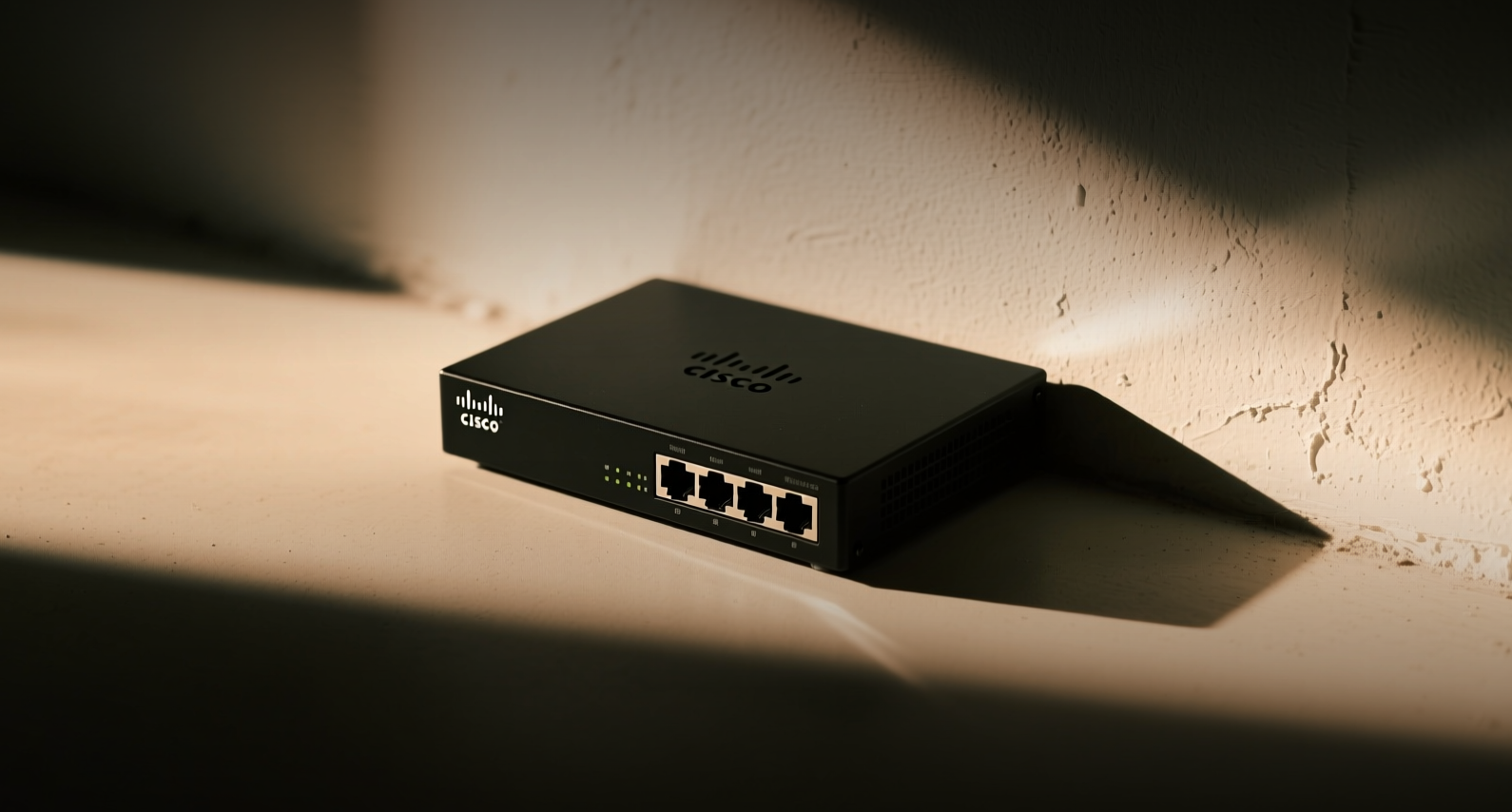
Cisco Systems' AI networking business is accelerating faster than management projected, with hyperscaler infrastructure orders now expected to reach about $9 billion in fiscal 2026, nearly double the $5 billion target set in May.
"The industry is entering a networking super cycle," Cisco management said on the fiscal third-quarter earnings call, citing hyperscaler AI deployments, enterprise network modernization and sovereign cloud investments as the primary demand drivers.
Cisco took $1.9 billion of AI infrastructure orders from hyperscalers in the fiscal third quarter ended April 25, more than triple the $600 million booked a year earlier, bringing the year-to-date total to $5.3 billion. The company expects to recognize about $4 billion of AI infrastructure revenue in fiscal 2026, against total guided revenue of $62.8 billion to $63.0 billion, up about 11 percent from fiscal 2025's $56.7 billion.
The order acceleration positions Cisco to capture a larger share of the AI data center buildout, but the stock's roughly 60 percent gain in 2026 to about 26 times forward earnings means investors are pricing in continued compounding well past fiscal 2026. The company reports fiscal fourth-quarter results Wednesday, Aug. 12.
Cisco's Acacia optics business, which makes high-speed optical connections for data centers, took more than $1 billion of orders in the fiscal third quarter, its strongest quarter to date, and is on track to grow more than 200 percent year over year in fiscal 2026. Networking product orders jumped more than 50 percent year over year in the quarter, the seventh consecutive quarter of double-digit growth, while product revenues from networking rose 25 percent.
Campus networking orders climbed more than 25 percent and data center switching orders rose more than 40 percent, reflecting enterprise investment to prepare networks for AI-driven traffic. Management expects a multi-year, multi-billion-dollar campus refresh cycle as companies replace aging infrastructure with AI-ready platforms.
Silicon One, Cisco's custom silicon line, has become a strategic advantage, enabling the company to tailor chips, systems and software to hyperscaler requirements while reducing dependence on merchant silicon. New hyperscaler design wins span both scale-up and scale-out AI deployments, management said.
The gap between orders and recognized revenue is the key metric to watch. Cisco expects to convert only about $4 billion of the $9 billion order target into fiscal 2026 revenue, with the remainder flowing through in later periods. That means the rest of Cisco's business — campus networking, cybersecurity, collaboration and service provider gear — still sets the base growth rate. A $9 billion order year can lift a $63 billion company's growth from mid-single digits to low double digits, but it cannot make it grow like a pure AI supplier.
The fiscal third quarter was strong beyond the order book. Revenue climbed 12 percent from a year earlier to a record $15.8 billion, and non-GAAP earnings per share came in at $1.06, up 10 percent, both topping the high end of guidance. Cisco also announced a restructuring plan to reallocate resources toward silicon, optics, security and AI, expecting up to $1 billion of pretax charges, including roughly $450 million in the fiscal fourth quarter.
Cisco faces mounting pressure from Arista Networks and Hewlett Packard Enterprise, both expanding in high-speed Ethernet switching. Arista leads in 100G switching and is benefiting from demand for 800G and faster networking, while HPE's acquisition of Juniper Networks strengthened its position across AI, cloud and hybrid environments. Marvell Technology, Credo Technology and Astera Labs are also competing for AI connectivity dollars. Marvell introduced the Teralynx T100, an AI-optimized switch silicon, in June, while Credo's acquisition of DustPhotonics added silicon photonics to its optical interconnect portfolio. Astera Labs' Scorpio AI fabric switches and Aries retimers accounted for more than half of its second-quarter revenue, showing how crowded the AI interconnect market has become.
Cisco shares have appreciated about 46 percent year to date, outperforming the broader Zacks Computer and Technology sector's 14.6 percent rise, and trade at 23.77 times forward earnings versus the sector's 22.73 times. The Zacks Consensus Estimate for fiscal 2026 earnings is $4.28 per share, up 2.6 percent over the past 30 days, implying 12.3 percent growth from fiscal 2025. Cisco carries a Zacks Rank #1 (Strong Buy), but the valuation premium means the $9 billion order target must convert into revenue on schedule to justify the multiple. The dividend, at $1.68 per share annually, now yields about 1.4 percent, roughly half what it yielded at the stock's 52-week low.
This article is for informational purposes only and does not constitute investment advice.
