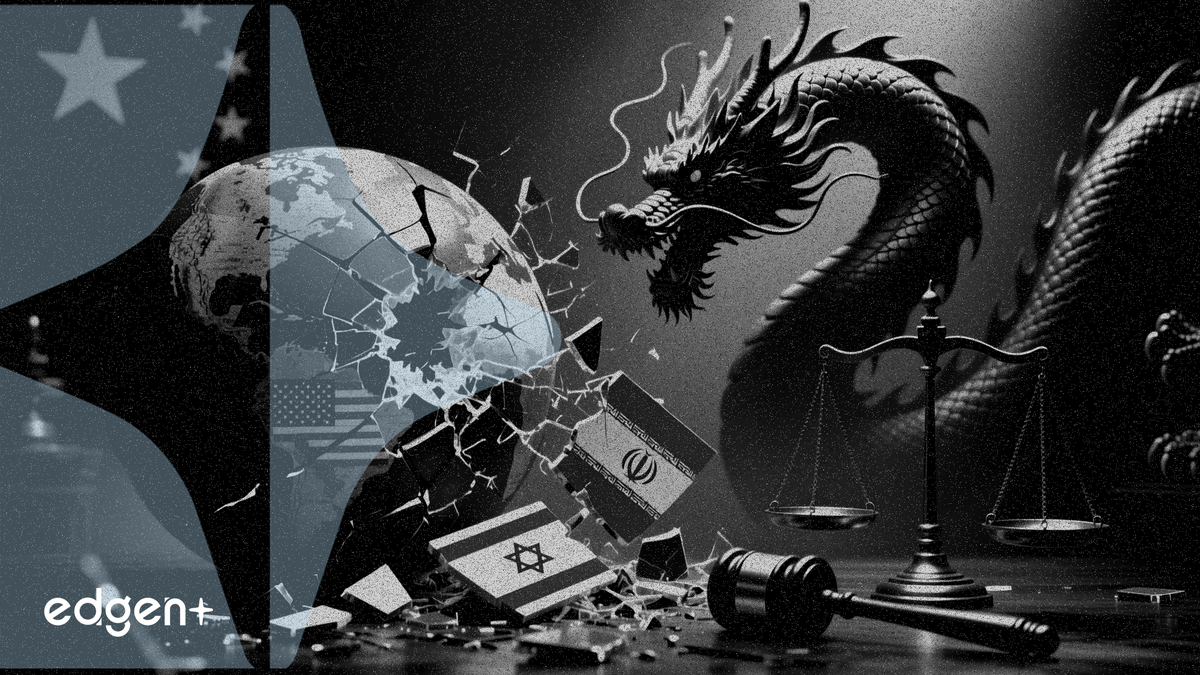
China’s top diplomat condemned the US-Israeli military campaign in Iran as an illegal violation of international law, urging restraint in a series of 3 calls with European and Middle Eastern counterparts as the conflict threatens to close the world’s most critical oil chokepoint.
Beijing has sharpened its criticism of the month-long US-Israeli war against Iran, with Foreign Minister Wang Yi telling counterparts from Saudi Arabia, Germany, and Bahrain on Tuesday that the military strikes were a clear violation of international law. The separate calls addressed the escalating crisis and its spillover effects, chiefly the disruption of shipping in the Strait of Hormuz, through which nearly 20 percent of the world’s oil supply flows.
"The US-Israeli military attack on Iran was not authorized by the UN Security Council and is a clear violation of international law," Wang said during his call with German Foreign Minister Annalena Baerbock, according to a readout from the Chinese Foreign Ministry. "The actions of the UN Security Council should help de-escalate the situation... not endorse illegal acts of war, let alone add fuel to the fire."
The war, which began on February 28, has already sent shockwaves through the global economy, spiking oil prices and rattling equity markets. Iran’s effective closure of the Strait of Hormuz has disrupted global energy flows, leading to fuel shortages and causing gasoline prices to surge past $4 a gallon in the US for the first time since 2022. WTI crude gained over 50 percent in March, briefly touching $119 per barrel before pulling back.
The diplomatic push from Beijing underscores the high stakes for the global economy as the conflict enters its second month. With the strait’s passage uncertain, the world faces a severe energy crisis that could trigger a recession. China, a major importer of Middle Eastern oil, is positioning itself as a mediator, leveraging its recent five-point peace initiative with Pakistan to call for an immediate ceasefire and the protection of vital shipping lanes.
Diplomatic Blitz
In his call with Saudi Foreign Minister Faisal bin Farhan, Wang expressed concern over the war's impact on the security and stability of Gulf countries. Faisal, in turn, emphasized the importance of China's role and expressed a desire to strengthen coordination to "cool down the war and end the conflict."
Similar themes emerged in Wang's conversation with Bahrain's Foreign Minister Abdullatif bin Rashid Al Zayani, who is also the rotating chair of the Gulf Cooperation Council (GCC). Zayani noted the "severe challenges" to Gulf security and backed using the UN Security Council to resolve the impasse over the Strait of Hormuz.
The conversations highlight a growing international consensus for de-escalation, even as the conflict on the ground remains intense. The US and Israel have conducted a sustained air campaign for over a month, destroying much of Iran’s air-defense network and missile production sites. Iran has retaliated with missile and drone barrages against Israel and US bases across the Gulf.
Washington's Mixed Signals
The diplomatic maneuvering comes as US President Donald Trump sends conflicting messages. Trump has threatened to "obliterate" Iran's power plants if the strait is not reopened but has also told aides he is willing to end the US military campaign even if the waterway remains closed, suggesting a withdrawal is "very soon."
This ambiguity has left markets volatile. Oil prices initially dropped on hopes of a US exit but rebounded as traders reassessed the reality that a withdrawal without a resolution would leave Iran in control of the strait, guaranteeing future instability.
"It’s hard to see how throwing in the towel in the strait solves anything," Patrick De Haan, head of petroleum analysis at GasBuddy, told CNN. "It would basically be surrendering the strait to Iran and guaranteeing higher energy prices."
Markets have recently rallied on bets that the talk is posturing ahead of a diplomatic resolution, with the S&P 500 climbing roughly 4 percent since Monday. However, with sentiment gauges showing "Extreme Fear," the rally is built on fragile hope rather than concrete progress.
This article is for informational purposes only and does not constitute investment advice.