
Canada will impose retaliatory tariffs up to 50 percent on $27.6 billion of US imports starting Sept. 8, escalating a circular trade war threatening North American supply chains.
Canada will impose retaliatory tariffs up to 50 percent on $27.6 billion of US imports starting Sept. 8, escalating a circular trade war threatening North American supply chains.
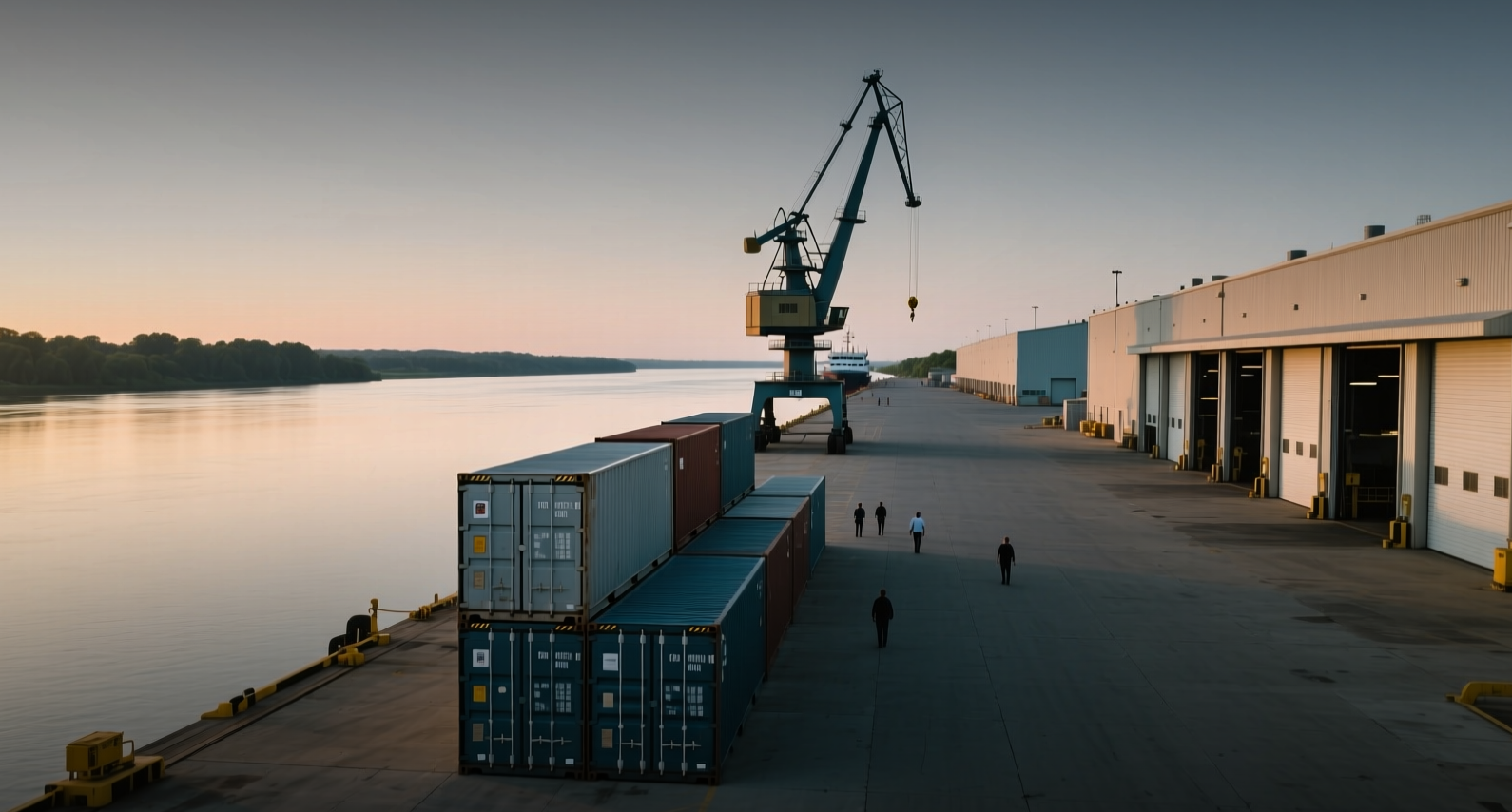
Canada will hit $27.6 billion of US imports with tariffs up to 50 percent starting Sept. 8, the latest salvo in a circular trade war squeezing North American manufacturers from both directions.
"Escalation just tightens a vise that's already closed on a lot of these businesses," said Shawn Phetteplace, national campaigns director at the small-business advocacy group Main Street Alliance.
The Canadian package covers steel, aluminum, dairy, agricultural equipment, pulp, paper, plastics and electronics, with duties of 15, 25 and 50 percent. It mirrors President Donald Trump's Section 338 tariffs, which took effect Aug. 22 and imposed additional 50 percent duties on selected Canadian goods spanning wine, dairy, motor vehicles, hockey sticks and cement — duties that extend to products otherwise qualifying for favorable treatment under the United States-Mexico-Canada Agreement.
The stakes extend well beyond the border. Ohio sold $18.3 billion of goods to Canada in 2025, nearly one-third of the state's exports and more than its next four largest foreign markets combined, according to the US Trade Representative. Businesses importing into Ohio have incurred roughly $11 billion in executive tariff costs since January 2025, the ninth-highest total among states, per the National Taxpayers Union Foundation.
From IEEPA to Section 338: A circular escalation
The conflict traces to early 2025, when Trump invoked the International Emergency Economic Powers Act to impose a 25 percent tariff on most Canadian imports, arguing Canada had failed to curb fentanyl trafficking and illegal migration. The Supreme Court struck down those levies in February 2026 for exceeding presidential authority. Trump then used Section 232 of the Trade Expansion Act to raise steel and aluminum tariffs from 25 to 50 percent in June 2025, and later invoked Section 338 of the Tariff Act — a 1930 statute never previously used for tariffs — to impose the additional 50 percent duties effective Aug. 22.
Canada's retaliation has been calibrated. Ottawa suspended negotiations after rejecting the latest US terms and paired its Sept. 8 counter-tariffs with billions in support for affected businesses and workers. The escalation has been circular: some Canadian measures Trump cited to justify Section 338 tariffs were themselves retaliation for earlier US actions, including 25 percent tariffs on American vehicles.
Ohio's $18.3B export market faces twin pressures
The auto industry illustrates the integrated nature of cross-border manufacturing. Transportation equipment was Ohio's largest manufacturing export category in 2025 at $18.8 billion, and vehicle parts can cross the border multiple times before a finished car reaches a customer. About 75 percent of Ohio's estimated tariff costs have fallen on raw materials, parts and equipment used by manufacturers, according to the National Taxpayers Union Foundation. Auto parts account for roughly $1.5 billion of the state's $11 billion tariff bill, per an Axios analysis of Trade Partnership Worldwide data.
"We should be working together to take on China in this market," said Ian Sheldon, trade economist at Ohio State University. "I'm a little bit puzzled by this trade war."
The Yale Budget Lab estimates current US tariff policy will raise consumer prices about 0.7 percent and cost the average household roughly $1,100 annually. Canada's trade data already shows the shift: goods exported to the US fell by C$29.4 billion (5.4 percent) in 2025 while shipments to other countries rose by C$27.6 billion (15.8 percent).
For small businesses, the options are narrower. A Main Street Alliance survey found 81.5 percent of respondents expected to raise consumer prices to offset tariff costs, 41.7 percent planned to delay expansion and 31.5 percent anticipated layoffs, while only 14.6 percent considered shifting production to the US viable.
"Building US manufacturing capacity takes years, not months, and in some cases isn't feasible at all," Phetteplace said. "So when a 30 percent or 145 percent tariff lands with no phase-in period, a small business has nowhere to hide from it the way a Fortune 500 company might."
Neither side appears ready to blink. Canada has suspended negotiations, and the Trump administration maintains tariffs can secure better trade terms and pressure Ottawa to end what it considers discriminatory treatment. The next escalation point is whether Washington responds to Canada's Sept. 8 package with further countermeasures, potentially extending the Section 338 framework to additional sectors.
This article is for informational purposes only and does not constitute investment advice.
