


Amazon's $200 billion AI infrastructure bet is on track to deliver superior returns to Microsoft's by mid-2027 as owned Trainium silicon compounds against ongoing NVIDIA cost obligations.
Amazon's $200 billion AI infrastructure bet is on track to deliver superior returns to Microsoft's by mid-2027 as owned Trainium silicon compounds against ongoing NVIDIA cost obligations.
Amazon's $200 billion AI infrastructure bet is on track to deliver superior returns to Microsoft's by mid-2027 as owned Trainium silicon compounds against ongoing NVIDIA cost obligations.
Amazon's AI cloud ROI is projected to overtake Microsoft's by mid-2027, as $200 billion in infrastructure spending begins generating full revenue from custom Trainium chips that promise hundreds of basis points of margin advantage.
"The free cash flow and ROIC for these investments are cumulatively quite attractive a couple of years after being in service," Andy Jassy, chief executive officer of Amazon, said on the company's April 29 earnings call.
Microsoft's AI business hit a $37 billion annual run rate with 20 million paid Copilot seats, while Amazon's AWS grew 28% to $37.59 billion in Q1, its fastest pace in 15 quarters. But Amazon burned $18.2 billion in negative free cash flow as Q1 capex hit $44.2 billion — a deliberate trade-off Jassy is betting will pay off.
The divergence reflects two strategies. Microsoft monetizes AI through existing software seats at 68.8% gross margins, converting capex into revenue almost immediately. Amazon builds silicon infrastructure that, once operational, could save "tens of billions" in annual chip costs and widen operating margins by several hundred basis points, according to Jassy.
Copilot Pays Today, Trainium Pays Tomorrow
Microsoft's Intelligent Cloud segment generated $34.68 billion in Q1, with Satya Nadella reporting that paid Copilot seats exceeded 20 million — Accenture alone deployed 740,000 seats. The company's $627 billion remaining performance obligations backlog gives CFO Amy Hood visibility that few peers can match.
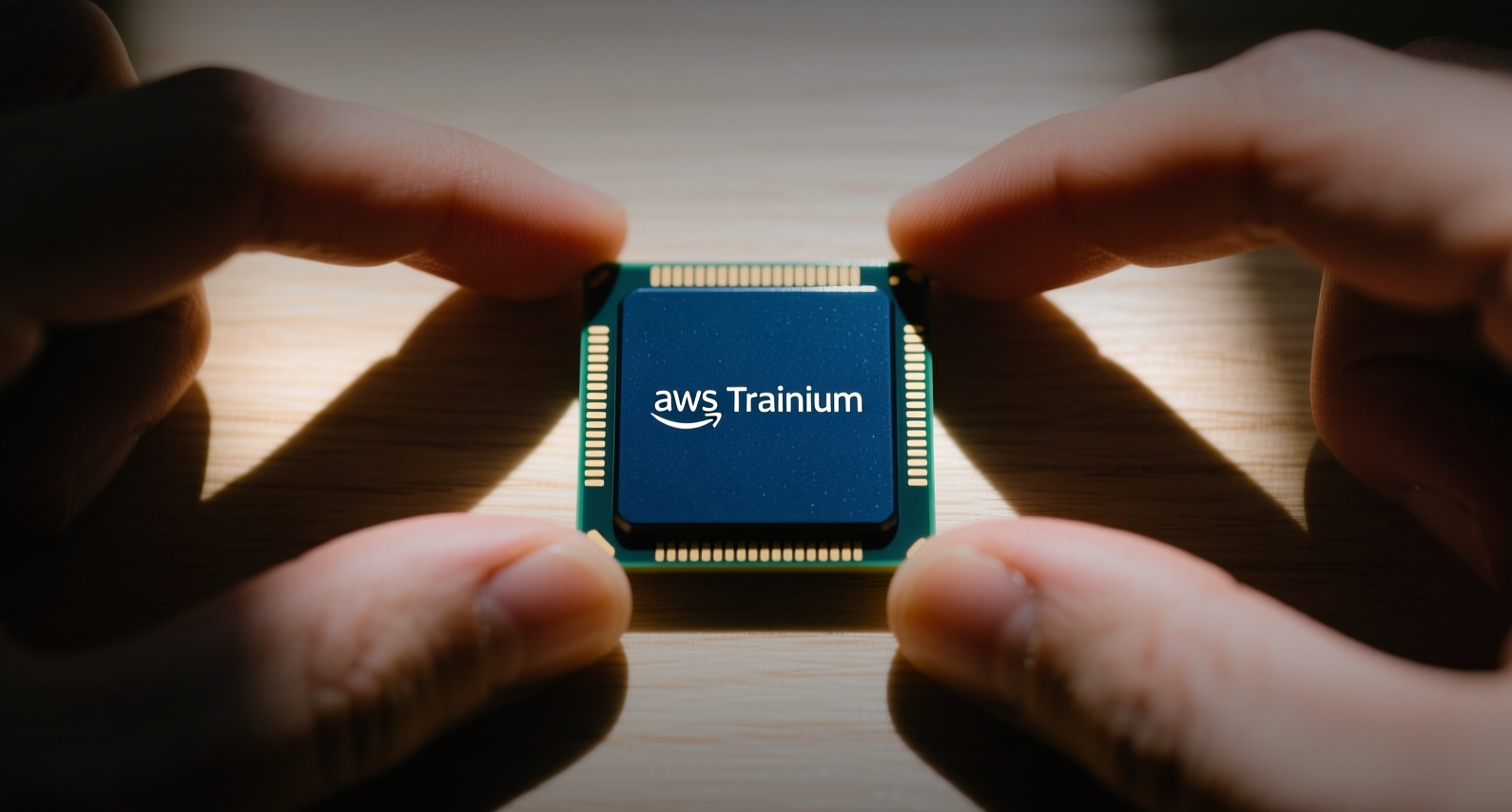
Amazon's picture is structurally different. AWS secured over $225 billion in Trainium commitments from Anthropic and OpenAI, pre-selling capacity before the data centers are fully operational. The Trainium chip business crossed a $20 billion run rate, and Jassy told investors the custom silicon will provide "several hundred basis points of operating margin advantage" at scale.
The trade-off appears in the numbers. Microsoft's operating margin sits at 45.6% with a 2.4% free cash flow yield. Amazon's operating margin is 11.2%, and its $131.8 billion in fiscal 2025 capex — part of a roughly $200 billion 2026 plan — has punished the stock 16.7% year to date.
Why Mid-2027 Marks the Crossover
Chips and servers depreciate over five to six years, data centers over 30-plus years. The 2025-2026 capex wave enters full revenue service in mid-to-late 2027, when Amazon's owned Trainium silicon begins compounding against Microsoft's ongoing NVIDIA and OpenAI cost obligations.
For investors, the calculus is about timing. Microsoft offers clean cash generation and proven Copilot economics today. Amazon offers a margin expansion story that materializes in 2027 — if Trainium3 ships on schedule and memory costs stabilize. Amazon shares trade at roughly 22 times forward earnings, pricing in execution risk that Jassy's chip strategy could resolve.
This article is for informational purposes only and does not constitute investment advice.
