Content
Özet
İş Modeli ve Pazar
Finansal Sağlık
Değerleme ve Rakipler
Gelir Büyüme Beklentisi
Rekabet Avantajı Analizi
Analist Konsensüsü ve Fiyat Hedefleri
Değerleme Senaryoları
Yatırım Tezi ve Temel İşaretler
Yatırım Tezi Özeti
İzlenmesi Gereken Temel İşaretler

Markets Confusing? Ask Edgen Search.

Instant answers, zero BS, and trading decisions your future self will thank you for.

Try Search Now

TSM 2025 2. Çeyrek İncelemesi: Yapay Zeka Devriminin Vazgeçilmez Dökümhanesi

· Mar 31 2026
TSM 2025 2. Çeyrek İncelemesi: Yapay Zeka Devriminin Vazgeçilmez Dökümhanesi

Taiwan Semiconductor Manufacturing Co Ltd (TSM), küresel yapay zeka ve teknoloji sektörlerine güç veren en gelişmiş çipleri üreten, dünyanın önde gelen yarı iletken dökümhanesidir.

Özet

  • Dominant Lider: TSM, dünyanın en gelişmiş 5nm altı çiplerinin %90'ından fazlasını üreten ve saf dökümhane pazarının yaklaşık %70'ini elinde bulunduran baskın pazar lideridir.
  • Yapay Zeka Destekli Büyüme: Büyüme, Yapay Zeka (AI) ve Yüksek Performanslı Hesaplama (HPC) patlamasıyla hızlandı ve bu segment artık toplam gelirin %60'ını oluşturuyor.
  • Mükemmel Finansallar: Şirket, yaklaşık 74 milyar dolar nakit paraya sahip bir "kale" bilançosu ve sektör lideri kar marjları dahil olmak üzere olağanüstü güçlü finansallara sahiptir.
  • Jeopolitik Risk: Birincil risk, Tayvan'ı çevreleyen jeopolitik gerilimdir; bu, şirketin diğer türlü mükemmel temel gücünü aşabilecek harici bir faktördür.
  • Boğa Eğilimi Konsensüsü: Analistler ezici bir çoğunlukla boğa eğiliminde, güçlü bir konsensüs ve yapay zeka destekli büyüme anlatısına olan güveni yansıtan yukarı yönlü fiyat hedefleriyle.

İş Modeli ve Pazar

TSMC, saf dökümhane iş modeliyle faaliyet göstermektedir; yani diğer şirketler için çip üretir ancak kendi markalı ürünlerini tasarlamaz veya satmaz. Bu strateji, müşterilerle derin güven oluşturarak TSM'yi Apple, Nvidia ve AMD gibi dünyanın önde gelen fabless yarı iletken şirketlerinin üretim ortağı haline getirmiştir.

Şirketin geliri, yüksek büyüme gösteren nihai pazarlar tarafından giderek daha fazla domine edilmektedir. Yapay zekaya doğru kayış, Yüksek Performanslı Hesaplama (HPC)'yi en büyük platformu haline getirerek, yapay zeka devriminin kritik omurgası rolünü vurgulamaktadır.

Nihai Pazar

Gelir Katkısı (2025 2. Çeyrek)

Yüksek Performanslı Hesaplama (HPC)

%60

Akıllı Telefon

%27

Nesnelerin İnterneti (IoT)

%5

Otomotiv

%5

Dijital Tüketici Elektroniği (DCE)

%1

HPC segmentine yapılan bu stratejik dönüş, TSM'nin gelir kalitesini artırıyor, daha değişken tüketici elektroniği döngülerine karşı geçmişteki kırılganlığını azaltıyor ve büyümesini seküler yapay zeka trendine bağlıyor.

Finansal Sağlık

TSMC, istikrar ve rakiplerinden daha fazla yatırım yapma finansal gücünü sağlayan kritik bir varlık olan "kale bilançosu"na sahiptir. Bu finansal güç, S&P (AA-) ve Moody's (Aa3) gibi sektörün en yüksek kredi derecelendirme kuruluşları tarafından tanınmaktadır.

  • Likidite: 2024 sonu itibarıyla şirket, yaklaşık 74 milyar dolar gibi devasa bir nakit pozisyonuna sahipti. Cari oranı 2,37 ve likidite oranı 2,15, tüm kısa vadeli yükümlülükleri karşılamak için fazlasıyla yeterli varlığa sahip olduğunu göstermektedir.
  • Kaldıraç: Borç, aşırı ihtiyatla yönetilmektedir. Şirketin borç/öz sermaye oranı sadece 0,20 olup, büyümeyi öncelikli olarak borç yerine kendi büyük nakit akışlarıyla finanse etme konusunda muhafazakar bir felsefeyi yansıtmaktadır.

Bu ezici finansal güç, piyasa gerilemelerine karşı dayanıklılık sağlar ve TSM'ye agresif teknoloji yol haritasını finanse etme kapasitesi vererek rekabet avantajını pekiştirir.

Değerleme ve Rakipler

TSM'nin değerlemesi, tartışmasız sektör lideri statüsünü yansıtmaktadır. Intel gibi geride kalan rakiplerine göre primli işlem görürken, Nvidia gibi desteklediği fabless yapay zeka liderlerine göre iskontolu işlem görmektedir.

Şirket

Borsa Kodu

İleri F/K (NTM)

İş Modeli

TSMC

TSM

~20.5x

Saf Dökümhane

Nvidia

NVDA

~33.9x

Fabless Tasarım

AMD

AMD

~26.4x

Fabless Tasarım

Intel

INTC

~11.5x

IDM ve Dökümhane

Nvidia ve AMD'ye uygulanan iskonto, farklı iş modellerini yansıtmaktadır; sermaye yoğun üretim, genellikle yüksek marjlı fabless tasarıma göre daha düşük çarpanlara sahiptir. Hızlanmış büyümesi göz önüne alındığında, mevcut değerleme makul görünmektedir.

Gelir Büyüme Beklentisi

TSMC, yapay zeka ve HPC'ye yönelik sürekli talepten neredeyse tamamen kaynaklanan hızlandırılmış bir büyüme dönemindedir. Yönetim, 2025 tam yıl gelir büyüme tahminini güvenle "%30 civarına" yükseltmiştir.

Bu görünüm, güçlü bir yukarı yönlü gidişat öngören analist konsensüsü tarafından desteklenmektedir.

Grafik: Tahmini Gelir Büyümesi (2024 - 2026)

  • 2024 (Tahmin): ~90 Milyar Dolar
  • 2025 (Projeksiyon): ~115 Milyar Dolar
  • 2026 (Projeksiyon): ~132 Milyar Dolar

Bu gidişat, en gelişmiş 3nm ve 5nm süreç düğümlerine yönelik doyumsuz talep tarafından körükleniyor; bu düğümler, son teknoloji yapay zeka hızlandırıcıları üretmek için hayati öneme sahiptir.

Rekabet Avantajı Analizi

TSMC'nin rekabet avantajı, birbirini karşılıklı olarak güçlendiren dört sütun tarafından desteklenerek olağanüstü geniş ve dayanıklıdır.

  1. Stratejik Varlıklar ve Kaynaklar: Yarı iletken üretiminde eşsiz ve genişleyen teknolojik liderlik. Proses yol haritası sürekli olarak üstün performans sunarak müşteriler için yüksek geçiş maliyetleri oluşturmaktadır.
  2. Pazar Konumu ve Ağ Etkileri: Dünyanın en gelişmiş mantık çiplerinin %90'ından fazlasını üreten neredeyse tekelci kontrol. "Büyük İttifak" ekosistemi, derinlemesine entegre bir değer zinciri oluşturmaktadır.
  3. Operasyonel Mükemmellik ve Verimlilik: 2025 yılı için öngörülen 38-42 milyar dolarlık sermaye harcamasıyla desteklenen devasa ölçek ekonomileri, TSM'nin sektör lideri kullanım oranları ve üstün brüt marjlar elde etmesini sağlamaktadır.
  4. Stratejik Çeviklik ve Dayanıklılık: Derin teknik ve operasyonel odaklı bir ekip tarafından yönetilen, karmaşık teknolojik geçişleri yürütmede kanıtlanmış bir geçmiş.

Analist Konsensüsü ve Fiyat Hedefleri

TSM için analist duyarlılığı ezici bir çoğunlukla boğa eğiliminde olup, güçlü ve derinleşen bir konsensüs bulunmaktadır.

  • Derecelendirmeler: 37 analistten 39'u "Al" veya "Güçlü Al" tavsiyesi verirken, yalnızca 2'si "Tut" notu vermiştir. "Sat" notu bulunmamaktadır.
  • Fiyat Hedefleri:
    • Yüksek Hedef: 288.49 Dolar
    • Ortalama Hedef: 268.17 Dolar
    • Düşük Hedef: 260.27 Dolar

"Al" ve "Güçlü Al" tavsiyelerinin sayısı istikrarlı bir şekilde artarak beklentilerde sürekli bir yukarı yönlü revizyon olduğunu göstermektedir.

Değerleme Senaryoları

TSM için ileriye dönük değerleme, şirketin performansı ve dış jeopolitik ortama büyük ölçüde bağlıdır.

Grafik: Değerleme Senaryoları ve Olasılıklar

(Burada yatay bir çubuk grafik kullanılacaktır. Her çubuk bir senaryoyu temsil eder, uzunluğu olasılığa karşılık gelir. Fiyat hedefi aralığı her çubukta belirtilecektir.)

Senaryo

Koşullar

Olasılık

Fiyat Hedefi Aralığı

İyimser Senaryo

Güçlü Uygulama + Olumlu Makro

30%

$336 - $362

Temel Senaryo

Zayıf Uygulama + Olumlu Makro

%20

$233 - $259

Kötümser Senaryo

Güçlü Uygulama + Olumsuz Makro

%40

$194 - $220

Felaket Senaryosu

Zayıf Uygulama + Olumsuz Makro

%10

$142 - $168

Kusursuz uygulama ancak jeopolitik riskin gerçekleşmesi varsayımına dayanan Kötümser Senaryo, en olası olumsuz senaryo olarak kabul edilmektedir.

Yatırım Tezi ve Temel İşaretler

Yatırım Tezi Özeti

TSMC'nin finansal ve büyüme profili, sektör lideri karlılık, kale benzeri bir bilanço ve seküler yapay zeka mega trendine doğrudan bağlı bir büyüme yörüngesinin güçlü birleşimiyle olağanüstü yüksek kalitededir. Değerlemesi makul görünse de, yatırım tezi temel olarak jeopolitik manzaranın istikrarına bağlıdır.

İzlenmesi Gereken Temel İşaretler

  • Jeopolitik Gelişmeler: ABD-Çin arasındaki Tayvan gerilimlerinin herhangi bir şekilde tırmanması veya azalması, hisseyi etkileyen en önemli faktör olacaktır.
  • N2 Düğüm Hızlandırması (2025 2. Yarı): Yeni nesil 2 nanometre düğümünün başarılı ve zamanında hızlandırılması, TSM'nin teknoloji liderliğini doğrulamak için kritik öneme sahiptir.
  • Brüt Marj Performansı: Özellikle yeni denizaşırı fabların yüksek maliyetleri göz önüne alındığında, marjların şirketin %53'lük uzun vadeli hedefinin üzerinde kalıp kalmadığını izleyin.
  • HPC Gelir Bileşimi: HPC segmentinin gelirdeki payının (şu anda %60) sürekli büyümesi, yapay zeka odaklı büyüme tezinin doğrudan doğrulaması olacaktır.

Recommend
Redeem miles for gift cards and each is worth ~1 cent; redeem for long-haul business and they're worth 2.5-4+. With programs now dynamically priced, the one check that decides every redemption.

How to redeem airline miles without wasting them

The single biggest mistake with miles is redeeming them for the easy stuff: gift cards, merchandise, seat upgrades at the gate. Do that and each mile is worth about one cent. Redeem the *same* miles for flights, especially long-haul or premium-cabin flights, and they're often worth two to five cents each, sometimes more. So the real skill isn't earning miles; it's not throwing away their value at the finish line. Here's how to actually use them. A mile has no fixed price; its value depends entirely on what you redeem it for. The way to judge any redemption is simple math: (cash price of the flight) ÷ (miles it costs) = cents per mile. If a flight costs $400 or 20,000 miles, that's 2 cents a mile, a solid deal. If a $90 flight costs 18,000 miles, that's half a cent, which is terrible; pay cash and keep the miles. Run this check before every redemption. It instantly separates a great use from a waste, and it's the one habit that makes miles worth having. As a rule of thumb, most major ai
Edgen
·
Jun 30 2026
Short-term goals (under ~3 years) belong in safe cash; long-term goals (5+ years) can take market risk. The best HYSAs now pay ~4-5% APY. How to sort yours and run both.

Long-term vs short-term financial goals (and how to plan both)

The difference comes down to one thing: time. A short-term goal is money you'll need within roughly three years (an emergency fund, a trip, a wedding, next year's tax bill), so it has to be *safe and reachable*. A long-term goal is five-plus years out (retirement, a house down the road, a kid's education), so it can take market risk, because time smooths the bumps out. Get that match right and you've done most of the work. It's not the size, it's the deadline. A $2,000 goal you need in six months is short-term; a $2,000 goal you won't touch for fifteen years is long-term, and they belong in completely different places. This is the part that actually matters, and where people lose money without realizing it. Short-term money should not be in the stock market. If your emergency fund is in stocks and the market drops 20% the same month your car dies, you're selling at the worst possible time. Short-term goals go somewhere stable and accessible, and a high-yield savings account is the clas
Edgen
·
Jun 30 2026
Mortgages near 6.5%, home prices flat, and the Fed split on rate cuts vs hikes. With timing a coin flip, the 3 questions that actually decide whether to buy now or wait.

Should you buy a house now or wait? How to actually decide

The honest answer: buy when you'll stay put for at least five years and you'll still have an emergency fund left after the down payment. Otherwise, waiting (and renting) is often the smarter money move, not the weaker one. "Rent vs buy" isn't a math problem with one right answer, and it's almost never really about timing the market. It's about your *life*, in three questions. Before the three questions, here's the mid-2026 backdrop — because "now or wait" usually hides a bet on rates and prices, and the data says that bet is a coin flip. The picture: mortgages are still pricey, prices have gone flat (more than half of the 20 big metros saw year-over-year declines in March), and the cheap-money era hasn't returned. So "buy before it runs away" and "wait for the crash" are *both* weak arguments right now. The whole "wait for rates to drop" plan rests on the Fed, and the Fed is split down the middle. In its June 2026 projections, policymakers were divided: 8 expected no change this year,
Edgen
·
Jun 30 2026
Most financial goals fail because they're wishes, not systems. Here's the 3-part anatomy of a goal that sticks (a number, a date, one automatic move), plus why 37% of adults can't cover a $400 surprise.

How to set financial goals you'll actually hit

A financial goal you'll actually hit has three things a vague wish doesn't: a number, a date, and one automatic move that happens whether or not you remember it. "Save more" is a wish. "$6,000 in a separate account by next December, $500 auto-transferred on payday" is a goal. The gap between those two sentences is the reason most goals quietly die, and it has almost nothing to do with willpower. Key Takeaways A real financial goal answers three questions: how much, by when, and what for. Drop any one and it stops working. "Pay off debt" has no number and no date, so there's nothing to aim at or measure, while "$8,000 of card debt cleared in 18 months" tells you exactly whether you're on track and the day you're done. The "what for" matters more than people expect. A goal tied to something real (a buffer so a bad month isn't a crisis, a deposit on a first place) survives the months when motivation dips. In our experience reading how people actually use a money tool, the goals that get
Edgen
·
Jun 30 2026
A big RSU grant just vested — now what? Here's what a modern money tool actually surfaces first, using Ed as a worked example: a reality check, the 22% tax gap most high earners miss, and the concentration risk nobody flags.

Your RSUs Just Vested. Here's What a Money Tool Surfaces First.

You just had a big RSU grant vest. Congratulations — and now the awkward part: a six-figure pile of your own company's stock, a vague sense you should "do something," and no one actually telling you what. An advisor, a spreadsheet, and a piece of software each handle this moment differently. Here's what a modern money tool surfaces in a moment like this — using Ed as a worked example — so you can decide what kind of help actually fits. Key takeaways You connect your brokerage and bank through read-only aggregation, so the tool can read balances but can't move a dollar. Ed's framing is simple: precise about your money, blind to your identity. Instead of sorting your lattes into categories, Ed opens on a single Financial Reality Check — a read on whether your money could survive a bad month. For a lot of high earners, that one number lands harder than any budget, because it answers a question the other apps never ask. (If the Reality Check is the numbers side, your money type is the beha
Edgen
·
Jun 26 2026
A money personality test is more than a quiz if it measures behavior, not just vibes. Here's the science behind money types, how Ed's test works, and how to use your result.

What Is a Money Personality Test? The Science Behind Your Money Type

The short version: a good money personality test should feel like a roast and work like a mirror — fun on the surface, behavioral underneath. The useful ones don't tell you what you know; they show you how you act with money, and the one blind spot worth watching. Key takeaways Here's the uncomfortable backdrop. U.S. financial literacy has been stuck for a decade — adults answer only about 49% of the standard knowledge questions correctly, essentially flat since 2017 (TIAA Institute–GFLEC, 2025) — even as free financial information became infinite. If facts fixed money, they'd have fixed it by now. They don't, because the thing that actually drives your outcomes lives one level below the facts: how you're wired to behave when money is on the line. That's the whole premise of financial fitness — and it's what a money personality test is built to surface. Not what you know. What you do. The idea has real research behind it — money behavior is patterned and measurable, and a few tradition
Edgen
·
Jun 23 2026
A financial reality check scores where you actually stand across safety, control, progress, upside, and Mental Load. Here's why a money score matters, how Ed's checkup works, and what to do with your weakest area.

What Is a Financial Reality Check? Why Your Credit Score Isn't Enough

The short version: your credit score measures how safe you are to lend to. Almost nobody has ever seen the number that measures whether you are actually secure. A financial reality check is that second number. Key takeaways Ask people for their credit score and many can recite it. Ask whether they could survive three months without income, or where their money quietly leaks each month, and you get a shrug. That's the gap. A credit score answers a lender's question — how risky is it to extend this person debt? It can be high while your life is fragile, or low while you're genuinely fine, because it was never built to measure you. A financial reality check answers the question the credit score ignores: are you safe, clear, progressing, building, and at ease? Here's the simple version, with the research behind each axis.
Edgen
·
Jun 23 2026
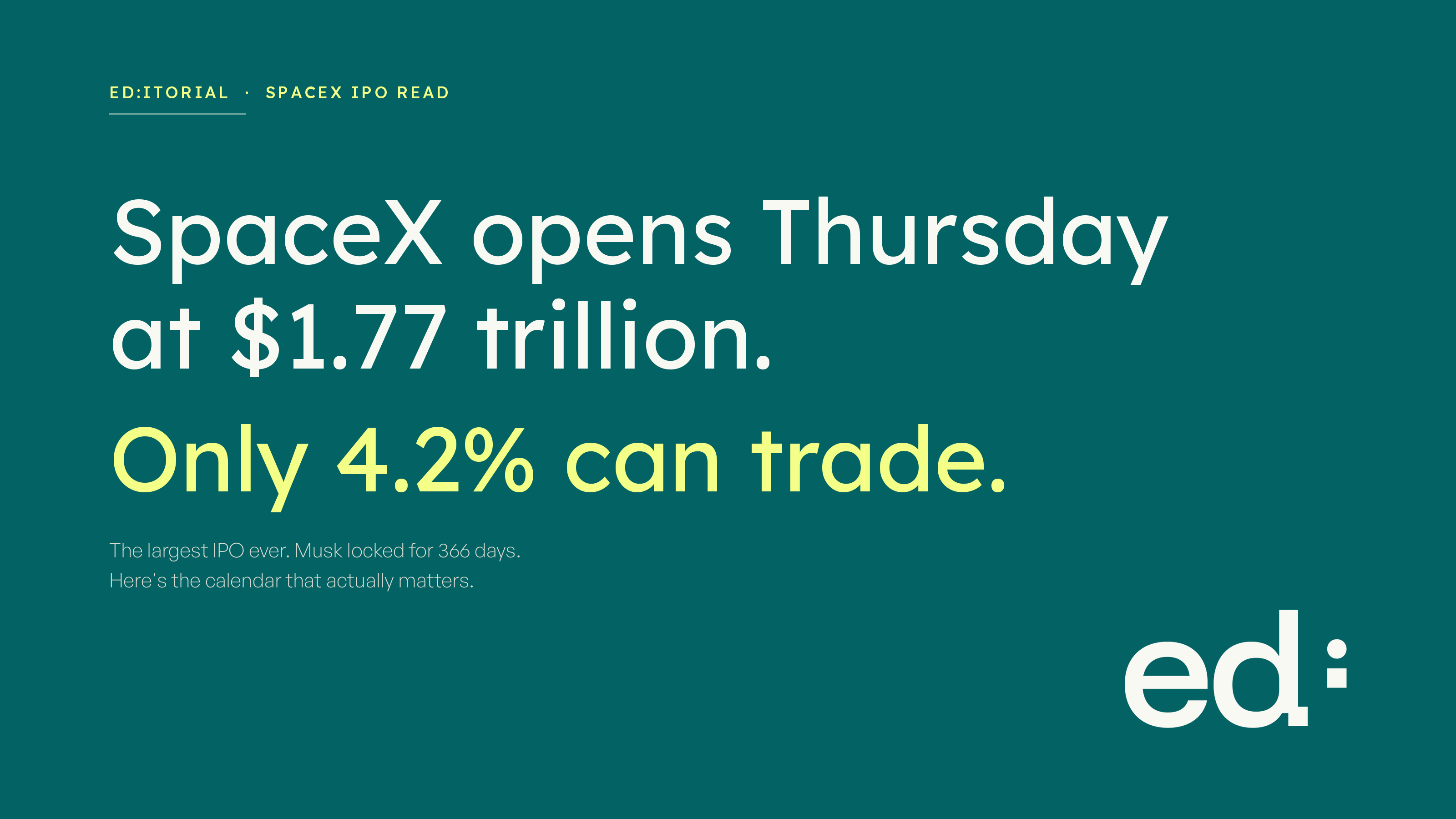
SpaceX opens Thursday at a $1.77 trillion valuation — the largest IPO ever. Only 4.2% of stock actually trades. Musk is locked up for 366 days. The next 366 days run on an unusually clean calendar of supply releases. Here are the 13 dates worth watching.

SpaceX goes public Thursday with a possible $5 trillion hit. Here's the calendar that actually matters.

SpaceX prices Wednesday night and opens Thursday on Nasdaq at $135 per share — a $1.77 trillion valuation, the largest IPO ever. Most coverage will frame what comes next as a sentiment trade, an Elon story, or a race to Goldman's $5 trillion bull case. The reality is more grounded and more useful: the next 366 days are governed by an unusually clean calendar of supply releases — when 95.8% of the company can or cannot trade, when index funds add weight, when the lock-up cliff arrives, when Musk himself becomes a potential seller for the first time. Read the calendar and you've already understood the structure most market commentary will spend the next quarter trying to explain. Here are the 13 dates worth watching. Two things keep showing up in headlines that don't survive a careful read. The first is the idea that index funds are about to be forced into a massive single-event SpaceX buy. They aren't. Nasdaq did create a fast-track inclusion rule that lets SpaceX join the Nasdaq 100 wi
Edgen
·
Jun 10 2026

Yatırım yapmak artık yalnız bir iş değil.

Ed'i ücretsiz dene. Kart yok, taahhüt yok.