コンテンツ
SpaceX が本当に売っているもの
道その1:SpaceX を直接買う
道その2:SpaceX が「お墨付き」を与える銘柄を買う
道その3:ピックス&ショベルを買う
直接買いに行くなら、押さえておきたいこと
The Money Person Take

市場が複雑すぎますか?Edgen Searchに聞いてみてください。

答えはすぐに表示され、情報は正確で、あなたが未来を決めるトレーディング判断を下せるようにします。

今すぐ Search を体験

SpaceX 株を上場前に買う方法 — 6月11日 IPO 価格決定、個人投資家が取れる3つの道

Edgen
· May 27 2026
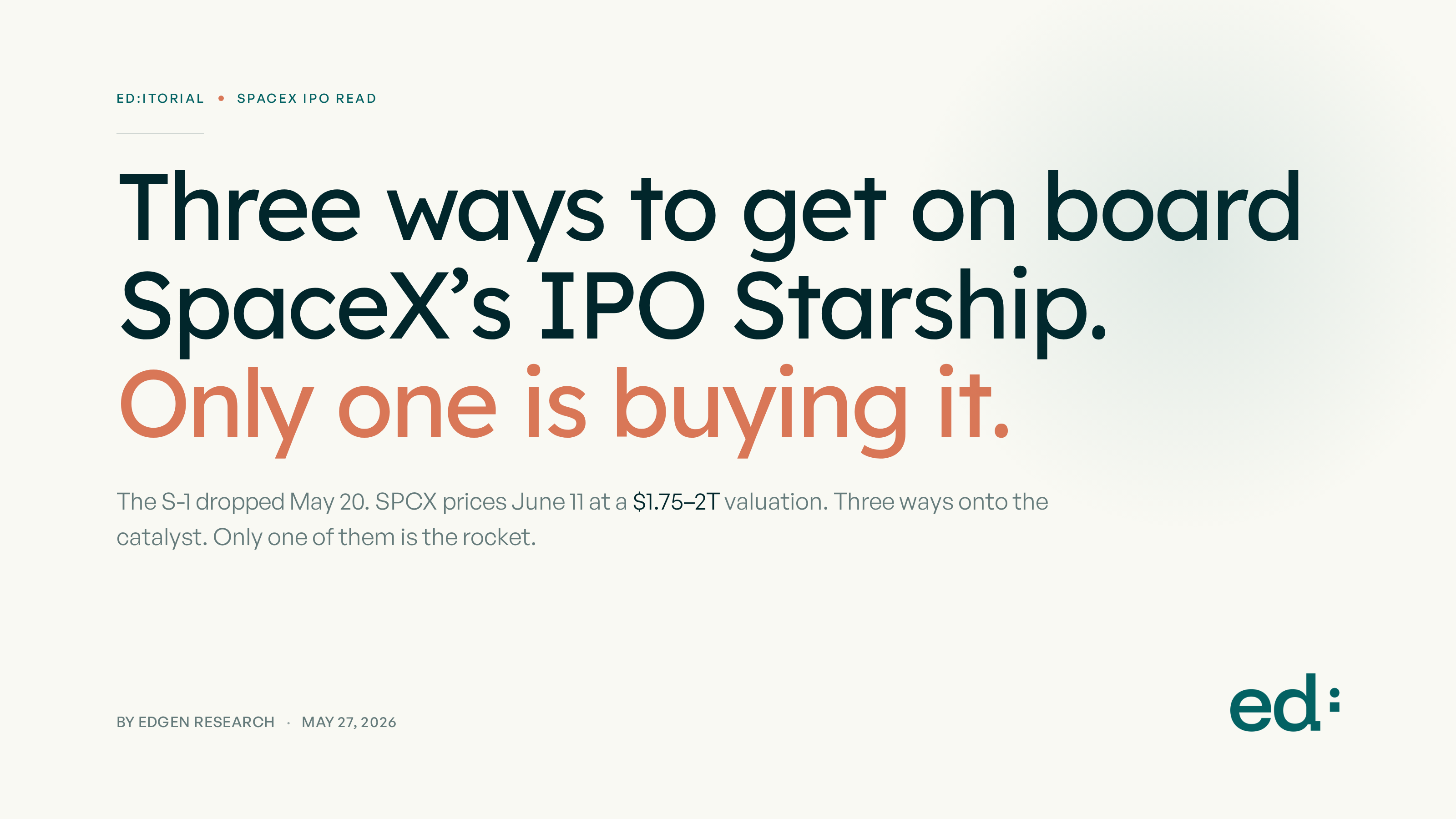
SpaceX 株を上場前に買う方法 — 6月11日 IPO 価格決定、個人投資家が取れる3つの道

By Edgen Research | 2026-05-28

「SpaceX 株、上場前にどうやって買えるのか」——いま個人投資家から一番多く飛んでくる質問だ。S-1 は 5月20日に公開、6月11日に価格決定、6月12日からティッカー SPCX で取引開始、調達額 800億ドル、想定時価総額 1.75〜2兆ドル。規模だけで見れば史上最大の IPO になる。

ブローカーアプリでも、Reddit でも、グループチャットでも、聞かれているのはほぼ同じ。「上場前に SpaceX をどう買うか」。

質問としては当然だ。ただし、その下にもう一つ、目を向けておきたい問いがある。

多くの人が本当に欲しいのは「SpaceX という個別株」ではなく、「SpaceX が引き上げているテーマの正しい側に立つこと」だ——再使用ロケットが当たり前になる流れ、Starlink が衛星通信を日常インフラに変える流れ、宇宙が防衛・通信・産業ソフトの次のプラットフォームになる流れ。SpaceX 株を買えばその波には乗れる。でも、すでに今日から買える上場銘柄を使っても、同じ波に、しかも IPO 抽選を引かずに、もっとクリーンなリスクで乗ることはできる。

乗り方は一つじゃない。道は3つある。そのうち「ロケットそのものを買う」道はひとつだけだ。

SpaceX が本当に売っているもの

IPO の話題の下にあるテーマを分解すると、3つが積み上がっている。

再使用ロケットはもう実験じゃない、デフォルトだ。 Falcon 9 は累計 400回以上の打ち上げ実績。1kg あたりの打ち上げコスト曲線は、他社が追いつくか市場から押し出されるかを迫るところまで下がってきている。

Starlink はプロダクトからインフラへ。 コンシューマー、法人、防衛、海事、Direct-to-Cell——どの層でも収益化が進み、衛星を打ち上げるほどユニットエコノミクスが効いてくる。これまで光ファイバーや基地局でしか届かなかった通信が、軌道から届くようになってきた。

宇宙は次のプラットフォーム層。 防衛機関、通信キャリア、農業、物流、センサーネットワーク——すべてが衛星データと帯域の上で動いており、ベンダーリストはまだ広がり続けている。

このテーマの正しい側に立つ方法が、ここから3つに枝分かれする。

道その1:SpaceX を直接買う

一番ストレートなのは、多くの個人投資家がすでに考えている道だ。

もっともクリーンなのは、S-1 で個人投資家向けの割当チャネルとして名指しされた5つのブローカーで Indication of Interest(IOI、購入意思表明)を出すこと。指定されたのは Charles Schwab、Fidelity、RobinhoodSoFi、E-Trade by Morgan Stanley の5社。IOI が約定されれば、機関投資家と同じ IPO 価格で買える。割当が保証されるわけではないし需要は厚いはずだが、このサイズのディールで個人にここまでアクセスを開けるのはかなり珍しい。

二つ目は Tema Space Innovators ETF(NASA)、足元 38.76ドル。SpaceX のウェイトは約 10%、残りは上場済みの宇宙関連銘柄のバスケット。NAV プレミアムは載っていないので、表示価格 = 払う価格。ただし「SpaceX 純粋ベット」ではなく「SpaceX をブースターに据えた宇宙バスケット」として理解しておきたい。

三つ目は Destiny Tech100(DXYZ)、足元 47.62ドル。SpaceX は単独で 16.2% と最大のポジション。気をつけたいのは値段だ。DXYZ は報告 NAV の 1.94倍で取引されている。つまり原資産の未上場株に対して、ほぼ2倍を払っている。こうしたプレミアムは、織り込んでいた触媒が実際に到来したあと、しれっと圧縮されることがある。

道その2:SpaceX が「お墨付き」を与える銘柄を買う

時価総額 2兆ドルでの SpaceX IPO は、SpaceX 一社にプライシングを付けるだけじゃない。「宇宙経済全体がもう機関投資家のカテゴリとして成立している」というシグナルを市場に送る。そして、そのシグナルは、すでに上場済みで待機していた銘柄群を一斉に押し上げる。

Rocket Lab(RKLB) は、もっとも信頼できる「2番手」のロケット会社だ。Electron は今日の小型ペイロード市場を回し、Neutron は SpaceX が支配している中大型市場を狙っている。単一の打ち上げベンダーに依存したくないハイパースケーラーや各国政府は、すでに Rocket Lab に仕事を流し始めている。SpaceX が IPO したあと、この流れはむしろ強くなる。

AST SpaceMobile(ASTS) は、Direct-to-Cell 衛星のもう一つの本命。AT&T と Verizon がわざわざ出資した理由はシンプルで、競合のコンステレーションから容量を借りたくなかったからだ。Starlink の Direct-to-Cell が消費者の目を取りに行くなら、ASTS は「Elon に依存したくないキャリア」のための代替経路になる。

Iridium(IRDM) は地味で、利益が出ていて、政府・海事・IoT で守られている衛星通信会社。Starlink が消費者プレミアム層を取りに行くあいだ、Iridium は昔から回してきたレガシーのバックボーンを淡々と回し続けるだけだ。

ここに挙げた3社、どれを買うのにも IPO の割当はいらない。NAV の 2倍を払う必要もない。そして SpaceX が 2兆ドルで IPO してこのカテゴリを再評価させた瞬間、3社まとめて恩恵を受ける——抽選を引き当てなくても。

道その3:ピックス&ショベルを買う

3つ目は、個人投資家が一番時間をかけない道だ。でも、機関投資家がカテゴリベットを置きにいくのはむしろこっちのことが多い。パターンはおなじみで、カテゴリ定義企業がピーク評価で上場するとき、サプライヤーや川下の利用者も多くの場合よく動く——リスク調整後で見ると、本体より上回ることさえある。

宇宙エクスポージャーを持つ防衛大手 — L3Harris、Northrop Grumman、Lockheed Martin の宇宙部門。SpaceX は商業宇宙経済を世に証明しているけれど、そのあいだ実際にお金を出して経済を引っ張ってきたのは防衛だ。衛星 ISR、秘匿通信、ミサイル警戒のあらゆる契約は、結局この3社のどこかに落ちる。

買える Starlink の利用者側T-Mobile は Direct-to-Cell の Starlink パートナーで、消費者向けでもっとも分かりやすい銘柄。海運、オフショア接続を必要とする石油&ガスのオペレーター、農業データ会社など、産業ユーザーの財務でも Starlink の売上は実際にマージンラインに出てきている。

部材とグラウンドインフラのサプライヤー — レーザー通信、推進系、地上局、コンポーネントベンダー。サイズは小さく流動性も薄めだが、誰かが打ち上げるたびに売上が立つ。

これらの銘柄は、6月12日に SPCX が Reddit でトレンド入りするようには騒がれない。代わりに、NAV の 1.94倍で取引もされない。

直接買いに行くなら、押さえておきたいこと

「やっぱり SpaceX を直接買いたい」と思うなら、それはそれで構わない。ただし、目を開けたまま入りたい。

時価総額 1.75〜2兆ドルというのは、「ほぼすべてが順調にいく」前提が織り込まれた値段だ——Starlink が複数の業界で飽和するまでシェアを取り、Starship が量産レベルの打ち上げ頻度に到達し、Direct-to-Cell が意味のあるシェアを獲得する。このうちひとつでも滑ると、バリュエーションはあっさり戻ってくる。

DXYZ の NAV 1.94倍も、構造は同じベットの個人投資家版だ。「IPO 価格が現行の未上場マークよりさらに高く付く」という前提に、ほぼ2倍を払っている。そうなる可能性はある。ならない可能性もある。

過去のメガ IPO を振り返ると、ピーク熱狂のなかで本命を直接買うのが、必ずしも最良のトレードだったわけではない。Amazon の IPO 購入者は儲かったし、UPS や FedEx、決済ネットワーク各社も、ボラの何分の一かで似たリターンを出した。Tesla の IPO 購入者は見事に勝ったし、Panasonic や充電インフラ系も勝った。SpaceX はどちらのパターンにもなりうる——両方が存在することは知っておいて損はない。

The Money Person Take

この記事から持ち帰ってほしいことが一つだけあるとすれば、それは「問いを変えること」だ。SpaceX をどう買うか より、6月13日の時点で、SpaceX に正当化されたバリューチェーンのどこに自分は立っていたいか のほうが、ずっと使える問いだ。

ヘッドラインが欲しくて、IPO プレミアムを払う覚悟があるなら——5社のブローカーで IOI を出す、もしくは DXYZ のプレミアム税を払う。

プレミアムを払わずに「お墨付き済み」のエクスポージャーが欲しいなら——RKLB、ASTS、IRDM を、自分のテーマ観に合わせた比率で持つ。

もっとも穏やかなリスクリワードで、地味な答えを受け入れられるなら——防衛大手と Starlink の利用者側を持つ。どちらに転んでも恩恵がある銘柄群で、完璧な IPO がなくてもちゃんと動く。

3つとも、れっきとした SpaceX への投資だ。そのうち、本当に SpaceX 株を買う必要があるのは、ひとつだけだ。

Edgen Research は個人投資家向けに機関投資家品質の分析を提供しています。本記事は投資助言ではありません。SpaceX は 2026年6月12日まで未上場企業であり、上場前評価額はあくまで推定であって保証されたものではありません。商品の仕様や提供状況は変更される場合があります。ETF の現在の組入銘柄は、必ず発行体のファクトシートでご確認のうえご購入ください。

紹介
banner.jpg

What is a money person? The plain-English alternative to a financial advisor

The short version: a money person is a smart, warm friend who happens to be good with money and explains it like a person, not a bank. Practically, it's a second opinion on your whole financial picture — cash, debt, tax exposure, concentration, and the goals you're working toward — that tells you in plain language what to look at first. It's not a traditional advisor managing your portfolio for 1% a year, and it's not a coach cheering you on. It's the honest read a good advisor's first meeting would give you, without the fee or the asset minimum. It's the role Ed Wealth was built to play. Strip away the label and a money person does four concrete things: Just as important is what it doesn't do: it doesn't take custody of your money, it doesn't sell you products for commission, and it doesn't pretend a forecast is a promise. It's a second opinion: it shows you the structure and lets you decide. People reach for four different things when they say "I should talk to someone." They're not
Edgen
·
Jul 10 2026
banner.jpg

Is a financial advisor worth it? Advisor vs robo vs money person

The short version: a financial advisor is worth it when your money has real complexity — a business, concentrated stock, an estate, a divorce, or turning savings into retirement income. There, a fee pays for itself. But most people don't have a complexity problem; they have a clarity one, and paying 1% of your assets a year — about $3,000 on a $300,000 portfolio, every year — is a lot to pay for reassurance. You have three tiers to choose from: a human advisor (~1% of assets), a robo-advisor (~0.25%), and a money person — a flat-fee second opinion that doesn't grow as your savings do. Start with the honest case for paying. A good advisor earns their fee when your situation is genuinely complex: selling a business, a big block of company stock or options, an estate with kids, a divorce, a windfall, or building a retirement-income plan with real moving parts. In those moments, one right call can save you many times the fee, and the job becomes picking a good one (that's how to choose a f
Edgen
·
Jul 10 2026
banner.jpg

Do You Actually Need a Financial Advisor? (An Honest Test)

The short version: you need a financial advisor when your money has genuine complexity — equity comp across several employers, a business sale, an estate with kids involved, a divorce, a sudden windfall, or a retirement-drawdown plan with real moving parts. If your situation is closer to "I earn well but somehow feel behind," that's a clarity problem, not a complexity one, and hiring someone to manage your money for about 1% a year is an expensive way to solve it. Here's how to tell which one you have. Almost everyone reaching for an advisor falls into one of two camps, and confusing them is where money gets wasted. A complexity problem is when there are real moving parts that interact: decisions where a wrong move costs far more than any fee. Selling a company, exercising stock options with a tax bill attached, splitting assets in a divorce, planning how to draw income across a 30-year retirement. Here, a good advisor earns their keep. A clarity problem looks different. Good income, a
Edgen
·
Jul 06 2026
banner.jpg

How to Choose a Financial Advisor in 2026 (and Whether You Even Need One)

The short version: picking a financial advisor isn't about finding the "smartest" one. It comes down to three boring questions that actually predict whether you'll be treated well: are they legally a fiduciary, how do they get paid, and do you even need one yet. Get those right and the rest is noise. Here's how to run the check — and what to do if you want guidance but can't (or don't want to) meet a $250,000 minimum. Before you choose one, ask whether this is the right tool at all. A full-service advisor earns their fee when your situation is genuinely complex — a business sale, equity comp across several companies, estate planning, a divorce, a sudden windfall, or a retirement-income plan with real moving parts. But a lot of people reaching for an advisor don't have a complexity problem. They have a clarity problem: a good income, a few scattered accounts, and a nagging sense of being behind. That doesn't need someone to manage your money for 1% a year. It needs a clear read on where
Edgen
·
Jul 06 2026
Redeem miles for gift cards and each is worth ~1 cent; redeem for long-haul business and they're worth 2.5-4+. With programs now dynamically priced, the one check that decides every redemption.

How to redeem airline miles without wasting them

The single biggest mistake with miles is redeeming them for the easy stuff: gift cards, merchandise, seat upgrades at the gate. Do that and each mile is worth about one cent. Redeem the *same* miles for flights, especially long-haul or premium-cabin flights, and they're often worth two to five cents each, sometimes more. So the real skill isn't earning miles; it's not throwing away their value at the finish line. Here's how to actually use them. A mile has no fixed price; its value depends entirely on what you redeem it for. The way to judge any redemption is simple math: (cash price of the flight) ÷ (miles it costs) = cents per mile. If a flight costs $400 or 20,000 miles, that's 2 cents a mile, a solid deal. If a $90 flight costs 18,000 miles, that's half a cent, which is terrible; pay cash and keep the miles. Run this check before every redemption. It instantly separates a great use from a waste, and it's the one habit that makes miles worth having. As a rule of thumb, most major ai
Edgen
·
Jun 30 2026
Short-term goals (under ~3 years) belong in safe cash; long-term goals (5+ years) can take market risk. The best HYSAs now pay ~4-5% APY. How to sort yours and run both.

Long-term vs short-term financial goals (and how to plan both)

The difference comes down to one thing: time. A short-term goal is money you'll need within roughly three years (an emergency fund, a trip, a wedding, next year's tax bill), so it has to be *safe and reachable*. A long-term goal is five-plus years out (retirement, a house down the road, a kid's education), so it can take market risk, because time smooths the bumps out. Get that match right and you've done most of the work. It's not the size, it's the deadline. A $2,000 goal you need in six months is short-term; a $2,000 goal you won't touch for fifteen years is long-term, and they belong in completely different places. This is the part that actually matters, and where people lose money without realizing it. Short-term money should not be in the stock market. If your emergency fund is in stocks and the market drops 20% the same month your car dies, you're selling at the worst possible time. Short-term goals go somewhere stable and accessible, and a high-yield savings account is the clas
Edgen
·
Jun 30 2026
Mortgages near 6.5%, home prices flat, and the Fed split on rate cuts vs hikes. With timing a coin flip, the 3 questions that actually decide whether to buy now or wait.

Should you buy a house now or wait? How to actually decide

The honest answer: buy when you'll stay put for at least five years and you'll still have an emergency fund left after the down payment. Otherwise, waiting (and renting) is often the smarter money move, not the weaker one. "Rent vs buy" isn't a math problem with one right answer, and it's almost never really about timing the market. It's about your *life*, in three questions. Before the three questions, here's the mid-2026 backdrop — because "now or wait" usually hides a bet on rates and prices, and the data says that bet is a coin flip. The picture: mortgages are still pricey, prices have gone flat (more than half of the 20 big metros saw year-over-year declines in March), and the cheap-money era hasn't returned. So "buy before it runs away" and "wait for the crash" are *both* weak arguments right now. The whole "wait for rates to drop" plan rests on the Fed, and the Fed is split down the middle. In its June 2026 projections, policymakers were divided: 8 expected no change this year,
Edgen
·
Jun 30 2026
Most financial goals fail because they're wishes, not systems. Here's the 3-part anatomy of a goal that sticks (a number, a date, one automatic move), plus why 37% of adults can't cover a $400 surprise.

How to set financial goals you'll actually hit

A financial goal you'll actually hit has three things a vague wish doesn't: a number, a date, and one automatic move that happens whether or not you remember it. "Save more" is a wish. "$6,000 in a separate account by next December, $500 auto-transferred on payday" is a goal. The gap between those two sentences is the reason most goals quietly die, and it has almost nothing to do with willpower. Key Takeaways A real financial goal answers three questions: how much, by when, and what for. Drop any one and it stops working. "Pay off debt" has no number and no date, so there's nothing to aim at or measure, while "$8,000 of card debt cleared in 18 months" tells you exactly whether you're on track and the day you're done. The "what for" matters more than people expect. A goal tied to something real (a buffer so a bad month isn't a crisis, a deposit on a first place) survives the months when motivation dips. In our experience reading how people actually use a money tool, the goals that get
Edgen
·
Jun 30 2026
A big RSU grant just vested — now what? Here's what a modern money tool actually surfaces first, using Ed as a worked example: a reality check, the 22% tax gap most high earners miss, and the concentration risk nobody flags.

Your RSUs Just Vested. Here's What a Money Tool Surfaces First.

You just had a big RSU grant vest. Congratulations — and now the awkward part: a six-figure pile of your own company's stock, a vague sense you should "do something," and no one actually telling you what. An advisor, a spreadsheet, and a piece of software each handle this moment differently. Here's what a modern money tool surfaces in a moment like this — using Ed as a worked example — so you can decide what kind of help actually fits. Key takeaways You connect your brokerage and bank through read-only aggregation, so the tool can read balances but can't move a dollar. Ed's framing is simple: precise about your money, blind to your identity. Instead of sorting your lattes into categories, Ed opens on a single Financial Reality Check — a read on whether your money could survive a bad month. For a lot of high earners, that one number lands harder than any budget, because it answers a question the other apps never ask. (If the Reality Check is the numbers side, your money type is the beha
Edgen
·
Jun 26 2026
A money personality test is more than a quiz if it measures behavior, not just vibes. Here's the science behind money types, how Ed's test works, and how to use your result.

What Is a Money Personality Test? The Science Behind Your Money Type

The short version: a good money personality test should feel like a roast and work like a mirror — fun on the surface, behavioral underneath. The useful ones don't tell you what you know; they show you how you act with money, and the one blind spot worth watching. Key takeaways Here's the uncomfortable backdrop. U.S. financial literacy has been stuck for a decade — adults answer only about 49% of the standard knowledge questions correctly, essentially flat since 2017 (TIAA Institute–GFLEC, 2025) — even as free financial information became infinite. If facts fixed money, they'd have fixed it by now. They don't, because the thing that actually drives your outcomes lives one level below the facts: how you're wired to behave when money is on the line. That's the whole premise of financial fitness — and it's what a money personality test is built to surface. Not what you know. What you do. The idea has real research behind it — money behavior is patterned and measurable, and a few tradition
Edgen
·
Jun 23 2026

投資、もうひとりじゃない

Edgen を無料で試そう。クレカ不要、縛りなし