


Rocket Lab's $8 billion acquisition of Iridium Communications is set to flip the space company from cash-burning to free-cash-flow-positive by 2027.
Rocket Lab's $8 billion acquisition of Iridium Communications is set to flip the space company from cash-burning to free-cash-flow-positive by 2027.
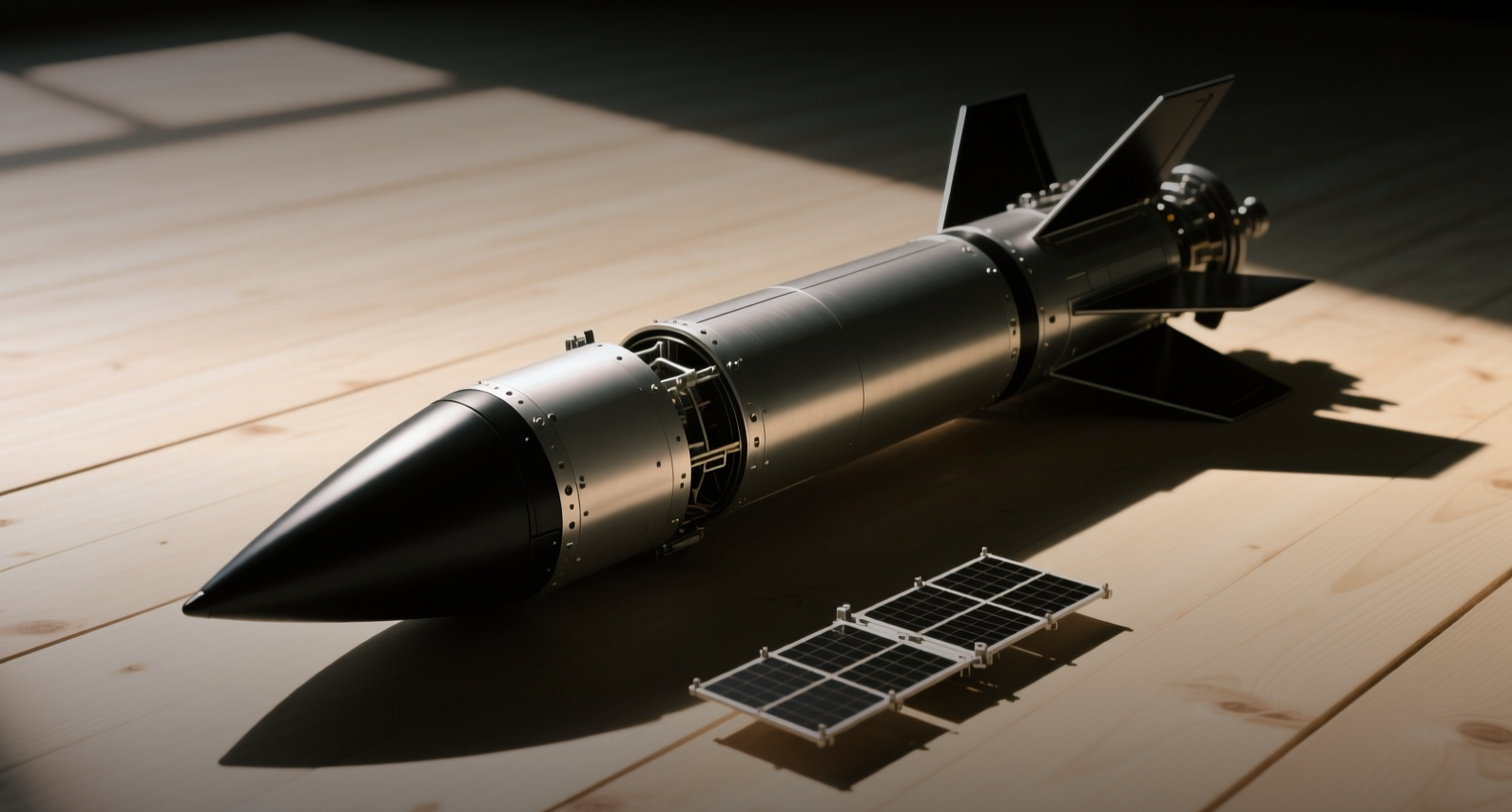
Rocket Lab's $8 billion acquisition of Iridium Communications is projected to make the combined company profitable in 2027, with analysts forecasting $137 million in net income and $425 million in free cash flow. The deal, announced June 29, values Iridium at $54 per share — a 14 percent premium to its current trading price — with half paid in cash and half in stock via a collar-protected exchange ratio.
"The Iridium acquisition is a significant accelerant for Rocket Lab's push into higher-value space applications," said Trevor Walsh, analyst at Citizens, which raised its price target to $130.
Over the last 12 months, Rocket Lab posted $183 million in GAAP losses and burned $316 million in free cash flow, while Iridium earned $93 million and generated $288 million in positive free cash flow. The combined entity would generate per-share earnings of approximately $0.20, marking the first GAAP profit in Rocket Lab's history.
The transaction, expected to close mid-2027, transforms Rocket Lab from a pure launch provider into a vertically integrated space company operating its own satellite constellation — a direct challenge to SpaceX's Starlink dominance.
According to S&P Global Market Intelligence consensus estimates, Rocket Lab's GAAP losses are projected to shrink to $24 million in 2027, with free cash flow turning positive at $44 million. Iridium is forecast to earn $161 million in 2027, up 56 percent year over year, and generate $381 million in free cash flow, up 32 percent. Combined, that implies $137 million in net income and $425 million in free cash flow.
Rocket Lab will issue approximately 74.1 million new shares for the stock portion of the deal, bringing its total share count from 598.2 million to roughly 672.3 million. At the current price of $64.95, the company's market capitalization stands at $39 billion, down nearly 60 percent from its 52-week high of $151.
Wall Street remains bullish despite the drawdown. Bank of America raised its target to $115 after the U.S. Space Force contract award, Roth Capital and Citizens both moved to $130, and New Street Research initiated coverage with a Street-high $150 target. The average analyst price target sits at approximately $114, implying upside of roughly 79 percent from current levels.
The acquisition gives Rocket Lab more than just financial lift. Iridium operates a constellation of 66 low-Earth-orbit satellites providing direct-to-device communications, positioning, navigation and timing services, and Internet of Things connectivity — markets where SpaceX has limited presence.
Rocket Lab CEO Peter Beck has long sought a "Starlink-like" business to complement the launch side. The Iridium deal delivers that, creating a fully vertically integrated space company that builds satellite components, assembles satellites, launches them on its Electron and upcoming Neutron rockets, and operates them as a commercial service.
The Neutron rocket, targeted for first flight in the fourth quarter of 2026, already has five commercial missions booked despite not having flown. Rocket Lab closed 2025 with $602 million in revenue and entered the first quarter of 2026 with a backlog exceeding $2 billion.
The stock's recent volatility stems largely from the deal's collar mechanism, which has created uncertainty around dilution and financing as Rocket Lab's share price fell. With annualized volatility approaching 98 percent, the market has struggled to price the transaction. But the underlying fundamentals — a record $266 million U.S. Space Force contract, a $2 billion backlog, and an acquisition that should be accretive — suggest the current discount may be more about deal mechanics than business health.
This article is for informational purposes only and does not constitute investment advice.
