
Global security risks are pushing defense to the forefront of the Farnborough Airshow, with weapons makers accounting for half of exhibitors as the Iran war and Ukraine conflict reshape aerospace demand.
Global security risks are pushing defense to the forefront of the Farnborough Airshow, with weapons makers accounting for half of exhibitors as the Iran war and Ukraine conflict reshape aerospace demand.
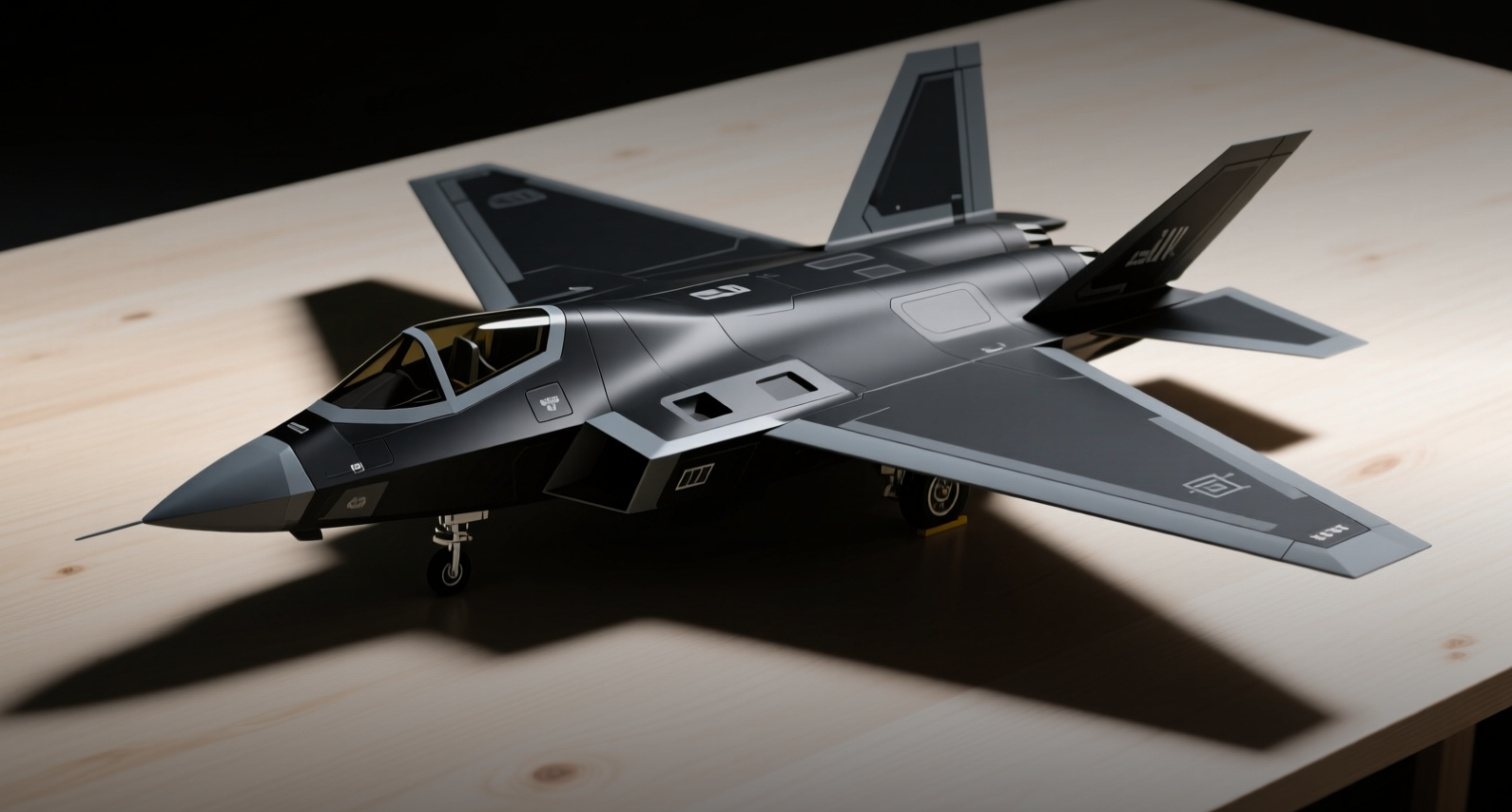
Spiraling security risks are pushing defense to the forefront of Britain's Farnborough Airshow, with weapons makers accounting for half of the record 1,600 exhibitors as aerospace and arms makers struggle to keep pace with demand while cementing a fragile recovery in civil jet production.
"The global security environment is arguably more complex and volatile today than we have seen in many, many decades," Air Chief Marshal Harv Smyth, head of the Royal Air Force, told an International Air Chiefs Conference ahead of the show.
Defense companies now represent 50% of exhibitors at the July 20-24 show, up from 40% historically, organizers told Reuters. The shift follows the cancellation of the Royal International Air Tattoo at RAF Fairford due to the Iran war, with the US Air Force citing "uncertainty over access" to the base. European defense spending is seeing its biggest rise since the Cold War, while the US has pitched a $1.5 trillion military budget aimed at revitalizing the industrial base.
The biennial gathering comes as NATO allies grapple with diverging spending commitments and the collapse of the Franco-German-Spanish Future Combat Air System, leaving a potential gap in next-generation fighter development. The outcome of defense procurement decisions made at Farnborough could shape the competitive landscape for years, with startups developing AI-powered drones and uncrewed systems challenging established primes.
The shift in emphasis marks a departure from Farnborough's traditional role as a commercial jet order battleground between Boeing and Airbus. Industry sources said total aircraft orders may struggle to climb above 300 units, well below some pre-show forecasts of as many as 800 jets, as production capacity constraints limit the scope for new deals.
"Winning orders is not the question. It's not the relevant measuring stick that it used to be because of production capacity constraints," said Jerrold Lundquist, managing director of advisory firm The Lundquist Group.
Supply Chains Face Dual Pressure
The supply chain strains affecting commercial aerospace are also testing defense production. Airbus has set a repeatedly delayed target to lift single-aisle jet output by about 25% to 75 a month in 2027, while Boeing is studying production increases above currently targeted levels to narrow the gap against its rival.
"The supply chain has improved relative to where it was a year or two ago but not to the point where Airbus can pursue its goal of 75," said Kevin Michaels, managing director of AeroDynamic Advisory. "And as Boeing raises rates, it's surely going to cause issues there as well."
Engine deliveries remain one of the most persistent bottlenecks. GE Aerospace, one of the world's largest jet-engine makers, lifted its 2026 forecast on Thursday as conditions improved, though Chief Executive Larry Culp said "more work to do" remains.
Defense Startups Challenge Incumbents
The wars in Ukraine and Iran are exposing the need for faster development cycles and mass-produced systems, creating an opening for defense technology startups. Helsing, the European AI defense company co-chaired by former Airbus Chief Executive Tom Enders, raised 1.8 billion euros last week at an 18 billion euro valuation.
"The younger companies are aggressive, not risk-averse," Enders told Reuters. "Procurement agencies and armed forces increasingly understand this is the way for a dynamic fast-moving industry."
The US Air Force has awarded production contracts to General Atomics and Anduril for drone wingmen programs, signaling a shift toward uncrewed systems. But Byron Callan, managing partner of research firm Capital Alpha, noted that "most militaries are still spending the vast amount of their resources on manned platforms."
The UK last month unveiled a 298 billion pound Defense Investment Plan pushing investments in space, autonomous systems, and cyber warfare, with a commitment to reach 3% of GDP on defense spending in the next Parliament and 3.5% by 2035. The US has seen a 25% surge in aerospace exports over the past year, with the UK among the top five destinations, according to Aerospace Industries Association Chief Executive Eric Fanning.
The last time European defense spending rose at this pace was during the 1980s Cold War buildup, when NATO members averaged 3% to 4% of GDP. Today, the gap between US demands and European capacity remains a central tension, with President Donald Trump continuing to push allies to take on more of the burden.
This article is for informational purposes only and does not constitute investment advice.
