
World Labs' Atlas launch puts spatial intelligence at the center of AI's next growth phase.
World Labs' Atlas launch puts spatial intelligence at the center of AI's next growth phase.
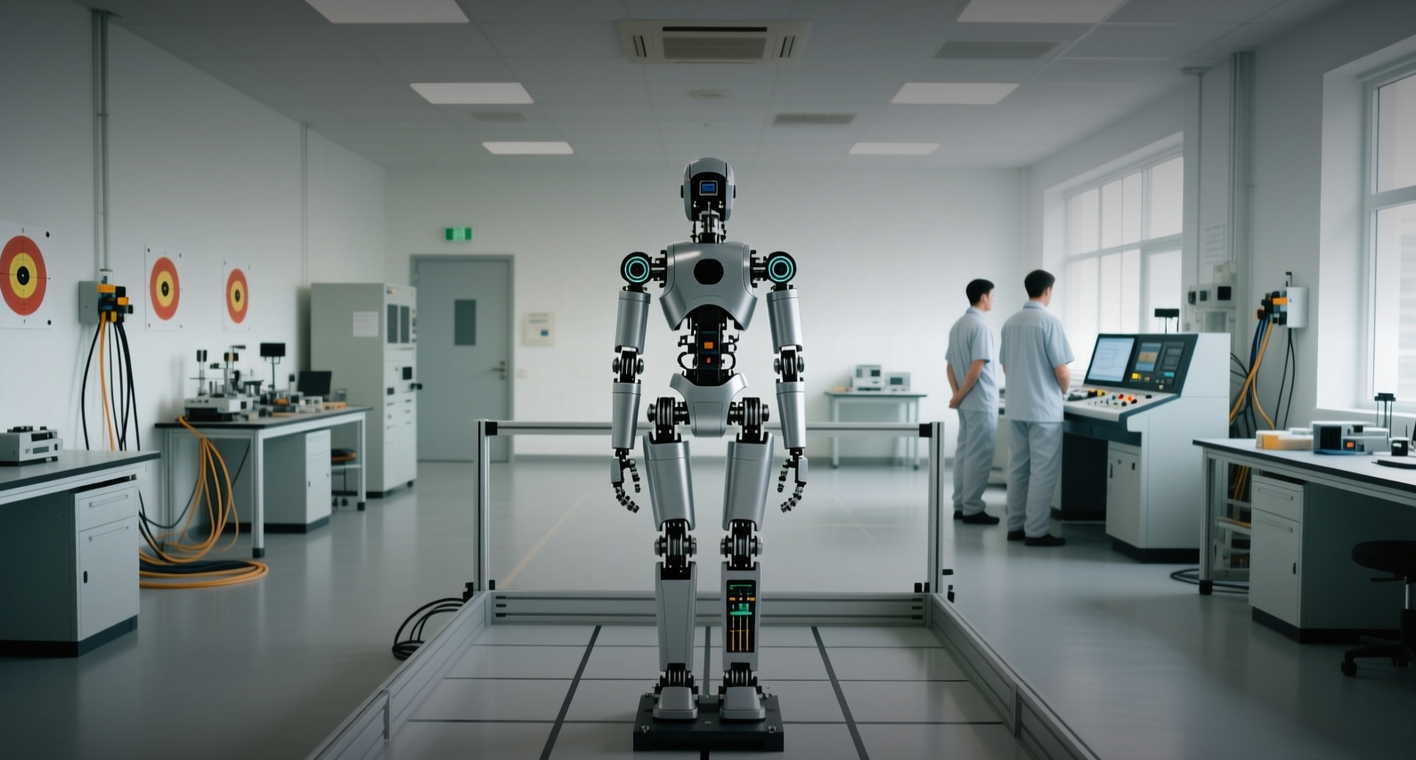
World Labs' Atlas launch puts spatial intelligence at the center of AI's next growth phase.
World Labs, founded by Fei-Fei Li, unveiled Atlas on Sept. 1, an omni world model for spatial intelligence with pixel-perfect generation that targets robotics, gaming, and virtual reality.
The launch arrives as spatial intelligence moves from research toward commercial monetization. Manycore Tech, a Hong Kong-listed spatial intelligence company, reported AI application revenue up 177 percent year over year in interim results released Aug. 27, with adjusted net profit of RMB 55.42 million (USD 8.2 million), up 211 percent.
Atlas's pixel-perfect generation capability distinguishes it from earlier world models that struggled with spatial consistency. The model is designed to understand and generate 3D environments with high fidelity, a capability that could reduce the cost of building virtual training environments for AI agents and enable more realistic simulations for robotics development. Manycore's SpatialVerse, which provides virtual training environments for AI agents, secured RMB 6.8 million (USD 1 million) in orders during the first half of the year, already exceeding its full-year 2025 total.
The competitive stakes are significant. World Labs joins OpenAI, Google DeepMind, and NVIDIA in the race to build world models that can understand physical space. If Atlas delivers on its pixel-perfect generation claims, it could accelerate adoption across robotics, gaming, and AR/VR, pressuring incumbents and creating new revenue streams for AI infrastructure providers.
The spatial intelligence sector is showing signs of accelerating commercial traction. Manycore Tech's LuxReal, an AI video creation platform launched in the first half of the year, saw monthly registered users increase more than 270 percent in June from the prior month, while monthly revenue rose more than 470 percent. The platform combines Manycore's proprietary SpatialGen model with 3D technology to address spatial consistency in AI-generated video.
Manycore's capital expenditure rose 124 percent year over year, reflecting investment in compute capacity to support its full-stack spatial intelligence infrastructure. The company's self-built GPU cluster processed an average of about 12.9 million computing tasks per day during the first half of the year.
Manycore has positioned itself as a midstream infrastructure provider for spatial intelligence, opening its Aholo platform to external users across entertainment, AI agent training, industrial digital twins, gaming, and spatial design. The company has established partnerships with Arashi Vision, Pico, Hesai, and Huace Film & TV, among others.
In physical AI, SpatialVerse has partnered with Chinese robotics companies including Agibot, Galbot, Noematrix, AI² Robotics, Songying Technology, and Hesai Technology. The product generates high-fidelity, physically accurate synthetic data for training world models and embodied intelligence systems.
World Labs' Atlas enters this market with a different approach. Rather than building a platform for external developers, Atlas is positioned as a foundational world model that could be integrated into robotics, gaming, and VR applications directly. The pixel-perfect generation capability suggests the model can produce visually consistent 3D environments, a key challenge in spatial AI.
The world-model race has intensified as companies recognize the commercial potential of spatial intelligence. OpenAI, Google DeepMind, and NVIDIA have all invested in world models, but World Labs' focus on spatial intelligence specifically differentiates Atlas from language-centric approaches.
Manycore's token-based business model provides a template for monetization. Deployed applications generate large volumes of 3D data that feed back into model training, creating a reinforcing flywheel. The company's average daily token consumption has been scaling rapidly, according to its interim results.
For investors, the spatial intelligence sector represents a new frontier in AI monetization. Manycore's shares closed 6.97 percent higher on the day of its earnings release and technology announcements, reflecting market enthusiasm for the sector's growth trajectory. The company was also selected as a constituent of the Hang Seng Composite Index, with the change effective Sept. 7.
World Labs' Atlas launch could intensify competition in this space, potentially benefiting companies that provide the compute infrastructure and data pipelines needed to train and deploy world models. NVIDIA, which supplies GPUs for AI training, stands to gain from increased demand for spatial intelligence computing.
This article is for informational purposes only and does not constitute investment advice.
