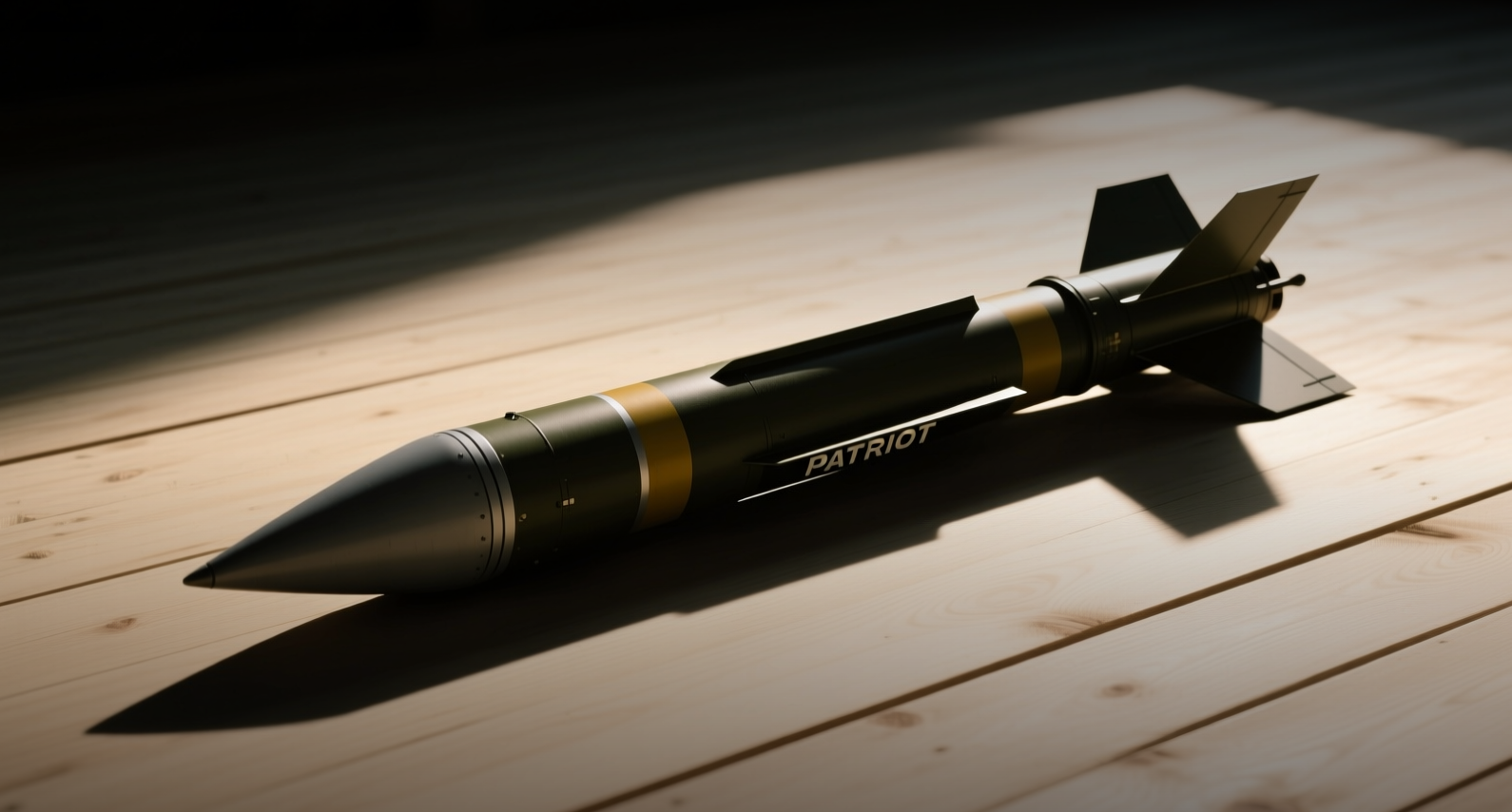
The Pentagon's missile inventories are at critically low levels after the Iran conflict, with replenishment timelines stretching into years and no congressional funding yet appropriated.
The Pentagon fired at least half of its THAAD ballistic missile interceptors and nearly half of its Patriot air defense interceptors during Operation Epic Fury, the US campaign against Iran that ended full-scale fighting in April, leaving stockpiles at levels that analysts say could take three years or more to rebuild.
"If the war continues at the rate it's been going for the last five days, it would reduce stockpiles enough that there would be a new, higher level of risk with the Indo-Pacific," said Mark Cancian, a retired Marine Corps colonel and defense analyst at the Center for Strategic and International Studies.
By the time the ceasefire took hold, the Pentagon had also expended around 30% of its Tomahawk land-attack missiles, according to a CSIS analysis that CNN confirmed through three people familiar with internal Defense Department estimates. Replenishment rates remain slow — the Pentagon receives roughly 15 new Tomahawks and 20 new Patriot missiles per month, with no THAAD deliveries forecast in 2026. John Ferrari, a retired Army two-star general at the American Enterprise Institute, said "not a single dollar has been appropriated by the Congress to replace a single missile" since the war began, leaving only the "normal, slow yearly peacetime process."
The depletion threatens the military's ability to deter potential conflicts with China or North Korea, analysts said, even as the White House formally requested supplemental funding from lawmakers and Trump invoked the Defense Production Act in June to speed missile production. The US fiscal 2027 budget request calls for $1.5 trillion in defense spending, a roughly 42% increase, while NATO members agreed at the Hague summit to a new 5% of GDP defense-spending standard.
Defense Contractors See Demand Surge
The supply chain strain is already showing up in defense contractor earnings. Firan Technology Group, a Toronto-based supplier of printed circuit boards and aerospace electronics, reported record bookings of CAD 86.7 million in its fiscal second quarter, an 89% increase from a year earlier, driven partly by two classified US defense programs with annual circuit board spending estimated at CAD 50 million to CAD 100 million each. The company's backlog rose 30% to CAD 193.5 million.
FTG Chief Executive Brad Bourne said on the company's earnings call that defense spending is expected to increase across the US, NATO and Canada, with Canada raising its defense budget to 2% of GDP and all NATO members committing to the new 5% standard. The company opened a manufacturing facility in Hyderabad, India, last week, aiming to capture market share in what Bourne called the third-largest defense market after the US and NATO.
Elaine McCusker, a senior fellow at the American Enterprise Institute who previously served as the Pentagon's deputy comptroller, told CNN the "timeline for replenishment of munitions for the most part will be measured in years — two to five for most." Licensing agreements to allow Germany and Ukraine to domestically produce Patriot interceptor missiles could ease pressure on US production lines, but those efforts are slow-moving — Japan needed three years to build its Patriot factory, and Germany has yet to produce a single Patriot missile despite starting work on its production line in 2022.
Deterrence Calculus Shifts
Michael O'Hanlon, who leads foreign policy research at the Brookings Institution, said he does not believe the US military's ability to deter Chinese or North Korean aggression "has suffered yet." But he cautioned that "at some point" deterrence could wane. "It's probably unmeasurable and unknowable where that point might be, since it's largely about an adversary's psychology," O'Hanlon said.
The last time the US faced a comparable munitions depletion was during the 1991 Gulf War and subsequent operations in the Balkans, though analysts said the current shortfall is more severe because of the breadth of systems affected and the simultaneous demand from NATO allies rebuilding their own arsenals. The CSIS analysis estimated that Precision Strike Missile and Joint Air-to-Surface Standoff Missile inventories should rebound to pre-war levels by mid-to-late 2027, but the most critical systems — THAAD, Patriot and Tomahawk — face a longer road.
Cancian said the Defense Production Act invocation is "helpful" but "the impact will be small," noting that expanding production capacity takes time. A Pentagon official told CNN the department is "committed to rapidly expanding the defense industrial base" and is "aggressively pursuing and integrating the best of American innovation" to drive production at scale.
This article is for informational purposes only and does not constitute investment advice.