
Washington is redeploying Coast Guard assets from the Middle East to the western Pacific in its most direct maritime challenge to Beijing's gray-zone campaign.
Washington is redeploying Coast Guard assets from the Middle East to the western Pacific in its most direct maritime challenge to Beijing's gray-zone campaign.
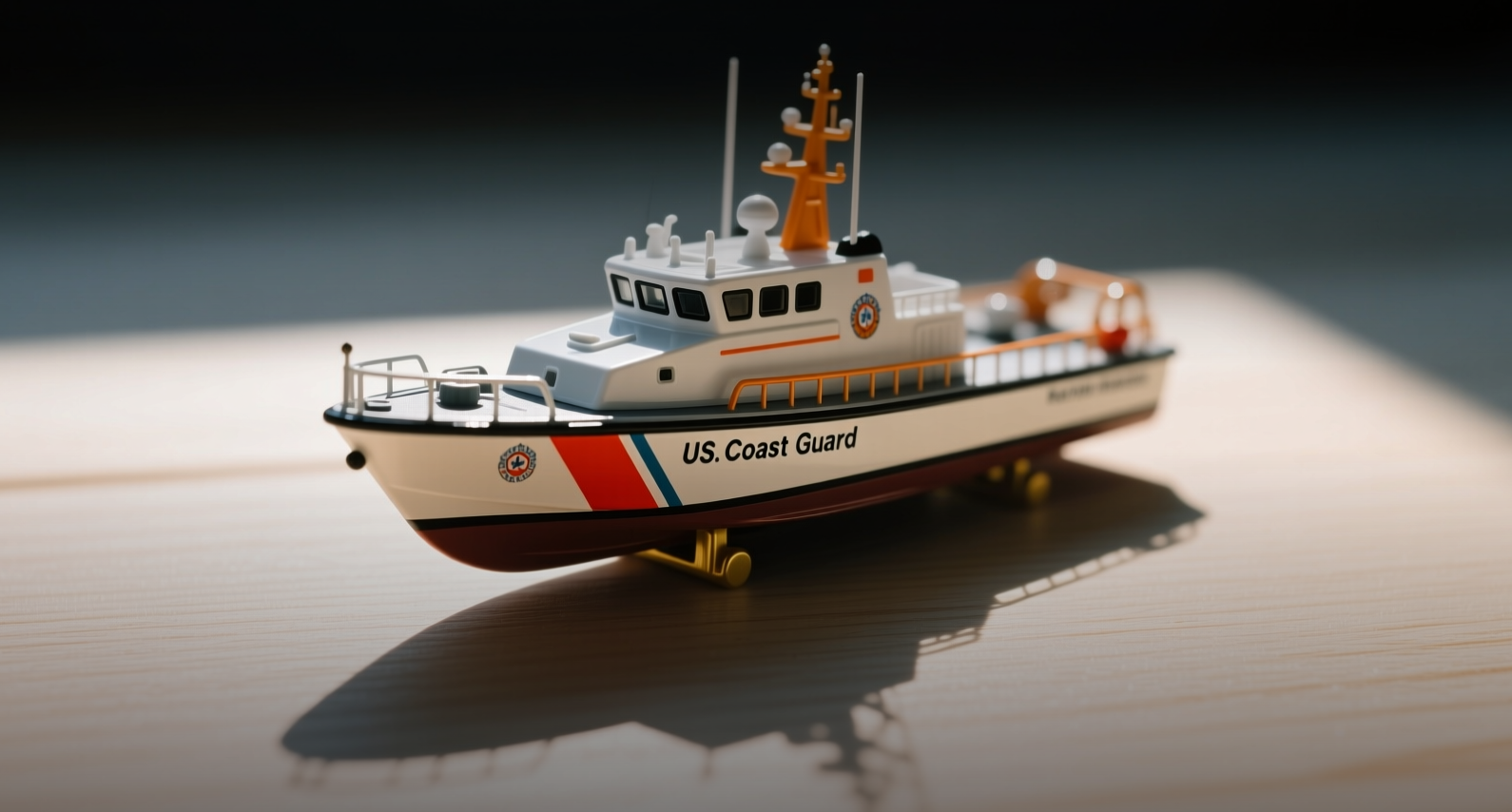
The US Coast Guard has stationed six fast-response cutters in Singapore and the Philippines, marking the first deployment of its reimagined expeditionary squadron as Washington moves to counter China's expanding maritime claims in the South China Sea and waters east of Taiwan.
"The Coast Guard is one way of maintaining a US presence when the Navy is clearly much in demand in the Strait of Hormuz and the Middle East," said Euan Graham, a nonresident senior fellow at the Australian Strategic Policy Institute.
The 154-foot vessels, approved to operate from Singapore and Subic Bay on Luzon island at least through September, represent a shift in US strategy. The Coast Guard previously deployed larger cutters to Subic Bay, a former US military base facing the South China Sea, but this is the first time the smaller fast-response class has operated from there. The deployment comes as Beijing has escalated what analysts call a gray-zone campaign — using coast guard and maritime militia vessels rather than naval forces to assert control over waters through which an estimated $3.4 trillion in annual trade passes.
The redeployment signals a stretching of US naval resources. The cutters were moved out of Bahrain as hostilities with Iran escalated earlier this year, and their relocation to the Pacific leaves a gap in the Middle East even as the Strait of Hormuz — through which about 21% of global oil trade flows — remains under disruption risk. For Beijing, the US move adds a new layer of deterrence at a time when Chinese coast guard vessels have conducted multiday "law enforcement patrols" east of Taiwan, intercepting international vessels and testing what British analysts call a potential "quarantine" strategy against the island.
China's Coast Guard Builds the World's Largest Patrol Fleet
Beijing has invested heavily in its maritime law enforcement arm, which now operates the world's longest patrol vessels with larger guns and greater endurance than US counterparts. In the first half of this year, China deployed thousands of militia vessels in real-world simulations aimed at disrupting sea routes between Japan and Taiwan, according to a July 8 commentary by the Royal United Services Institute. The RUSI analysis, authored by senior research fellow Philip Shetler-Jones, associate fellow Caroline Tuckett and retired Royal Navy commodore Peter Olive, warned that Beijing's activities in waters east of Taiwan represent a potential "watershed moment" in its effort to reshape regional maritime norms.
The strategy, which RUSI terms "quarantine," differs from a naval blockade. A quarantine operation would be led by the Chinese Coast Guard and presented publicly as law enforcement rather than an act of armed conflict, reducing the likelihood of outside intervention. Beijing began laying the legal groundwork in 2021, granting its coast guard authority to assert sovereignty over waters surrounding Taiwan and regulate international commercial shipping. In 2023, it exercised that jurisdiction over Taiwanese commercial vessels operating around Kinmen.
US Response Faces Resource Constraints
The US Coast Guard has struggled with aging ships and slower-than-expected production of new vessels. A new strategy called Force Design 2028 aims to boost the military workforce by 15,000 from about 46,000 active-duty and reserve personnel in 2024. Recruitment in 2025 reached its highest level in decades, and Congress authorized roughly $25 billion in investment, including funding for new vessels and aircraft.
Still, analysts say the US needs more Pacific bases to maintain a persistent presence across vast distances. The Coast Guard already stations ships in Guam and Hawaii, including an Indo-Pacific support cutter that has visited Papua New Guinea, Vanuatu and other small island nations where the US and China compete for influence. On those missions, crews work with local law enforcement to patrol for illegal fishing and drug smuggling — missions that may be a more palatable form of partnership for nations wary of an overt US military footprint.
The European Union has taken notice. The European Parliament on July 7 passed a report on East Asian geopolitics that mentioned Taiwan 44 times and called for stronger cooperation with Japan, South Korea and Taiwan to maintain stability across the Taiwan Strait, according to Taiwan's representative to the EU, Hsieh Chih-wei.
The last time the US redeployed significant naval assets to counter Chinese maritime assertiveness was in 2016, when Washington sent two carrier strike groups to the South China Sea following Beijing's deployment of surface-to-air missiles on Woody Island. That show of force preceded a period of relative calm before gray-zone activities resumed at higher intensity from 2020 onward.
This article is for informational purposes only and does not constitute investment advice.
