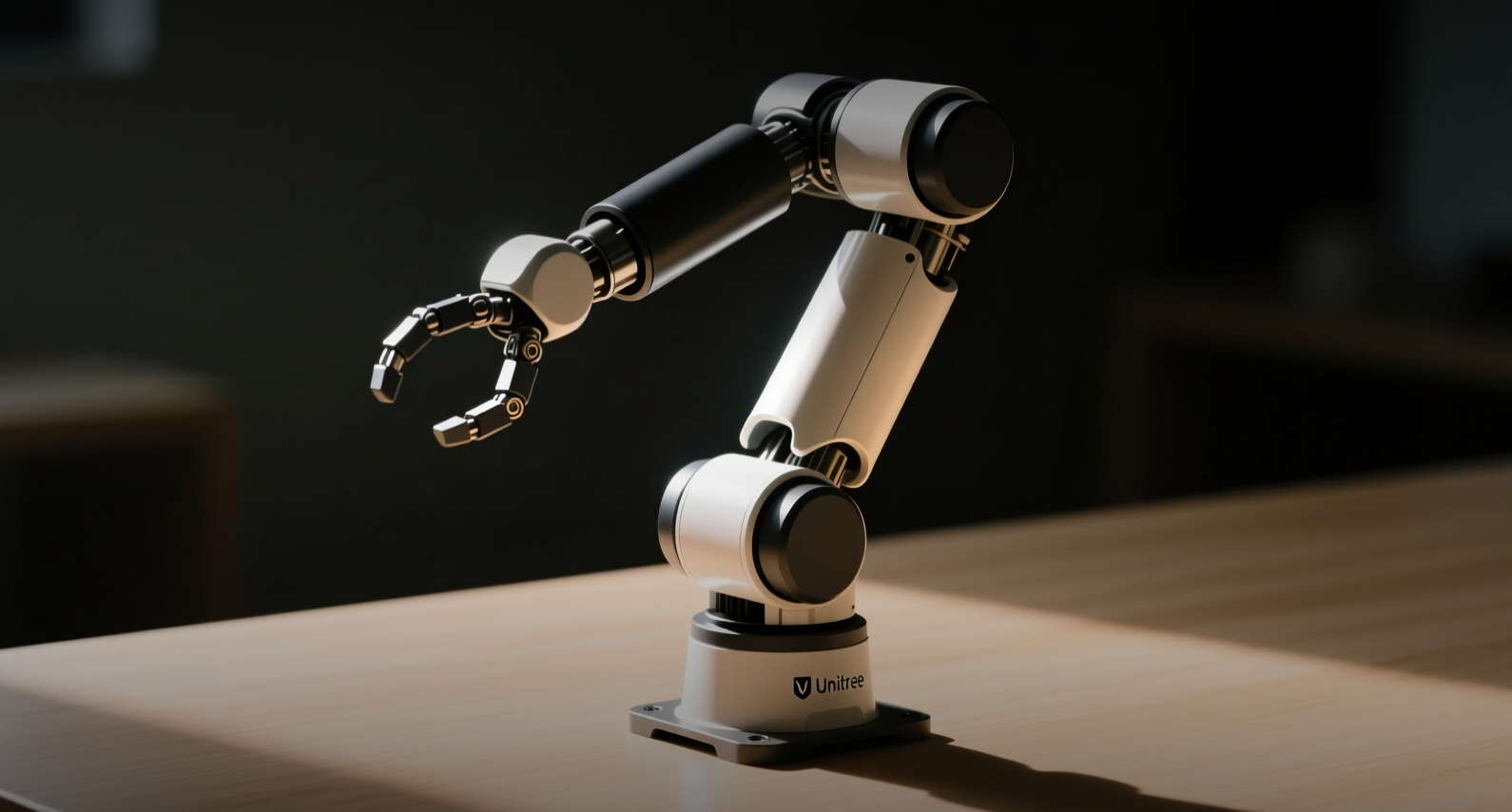
Unitree Robotics priced its STAR Market IPO at RMB150.8 a share, raising about RMB6.1 billion and valuing the robot maker at roughly RMB61 billion, with Tencent and DeepSeek among strategic investors.
The Hangzhou-based company will issue 40.45 million shares, or 10 percent of the enlarged share capital, according to its STAR Market prospectus. Net proceeds are expected to reach about RMB5.92 billion.
The strategic placement tranche of 8.09 million shares drew the National Council for Social Security Fund, China National Petroleum Corp. and Tencent, alongside DeepSeek. Chairman and Chief Technology Officer Wang Xingxing's stake is valued at about RMB18.31 billion at the offer price.
Online and offline subscriptions begin Monday, with each board lot of 500 shares requiring RMB75,400. The listing gives investors a direct way to own a leading Chinese humanoid-robot maker as Beijing pushes robotics as a strategic industry.
The strategic investor lineup pairs state-linked institutions with two of China's most prominent private technology names. Tencent, whose second-quarter net profit held flat year over year at more than RMB56 billion with capital expenditure near RMB52.8 billion, is deepening its robotics exposure through the placement. DeepSeek, the artificial-intelligence startup whose models have reshaped China's AI sector, adds a technology anchor to the shareholder register.
A RMB61 Billion Bet on Humanoid Robots
Unitree's valuation of about RMB61 billion places it among the most valuable robotics listings on the STAR Market, the Shanghai exchange's technology board. The company's humanoid robots have drawn global attention, and the IPO gives retail and institutional investors a liquid vehicle to trade the sector's momentum.
The deal structure reflects the broader push by Chinese regulators to channel capital into advanced manufacturing. The National Council for Social Security Fund's participation shows long-horizon state backing, while China National Petroleum's presence ties the offering to industrial applications of robotics in energy operations.
For Wang Xingxing, who founded the company and holds the roles of chairman, general manager and chief technology officer, the listing crystallizes a stake worth about RMB18.31 billion at the offer price. The float of 10 percent of enlarged share capital keeps control concentrated while providing the liquidity investors seek.
The subscription window opens Monday, and the final listing date will follow the book-building and allocation process. Demand for the strategic tranche, which was fully subscribed by marquee investors, suggests institutional appetite for robotics exposure remains strong even as broader Chinese equity markets face headwinds.
Unitree competes with a growing field of humanoid-robot developers, including Tesla's Optimus program and Chinese rivals such as UBTech Robotics, which lists on the Hong Kong exchange. The sector's commercial viability still hinges on bringing down production costs and proving reliability in real-world settings, factors that will shape how Unitree's valuation holds once trading begins.
The STAR Market has seen a mixed record for high-profile technology listings, with some debuts surging on the first day and others sliding below their offer price. Unitree's modest float could support aftermarket demand if the strategic investor base holds its positions.
The outcome will also be watched as a barometer for robotics fundraising. China's humanoid-robot sector has attracted heavy investment from state funds and private capital, and a strong debut for Unitree could accelerate follow-on listings from smaller developers seeking public-market capital to fund research and production scale-up.
This article is for informational purposes only and does not constitute investment advice.