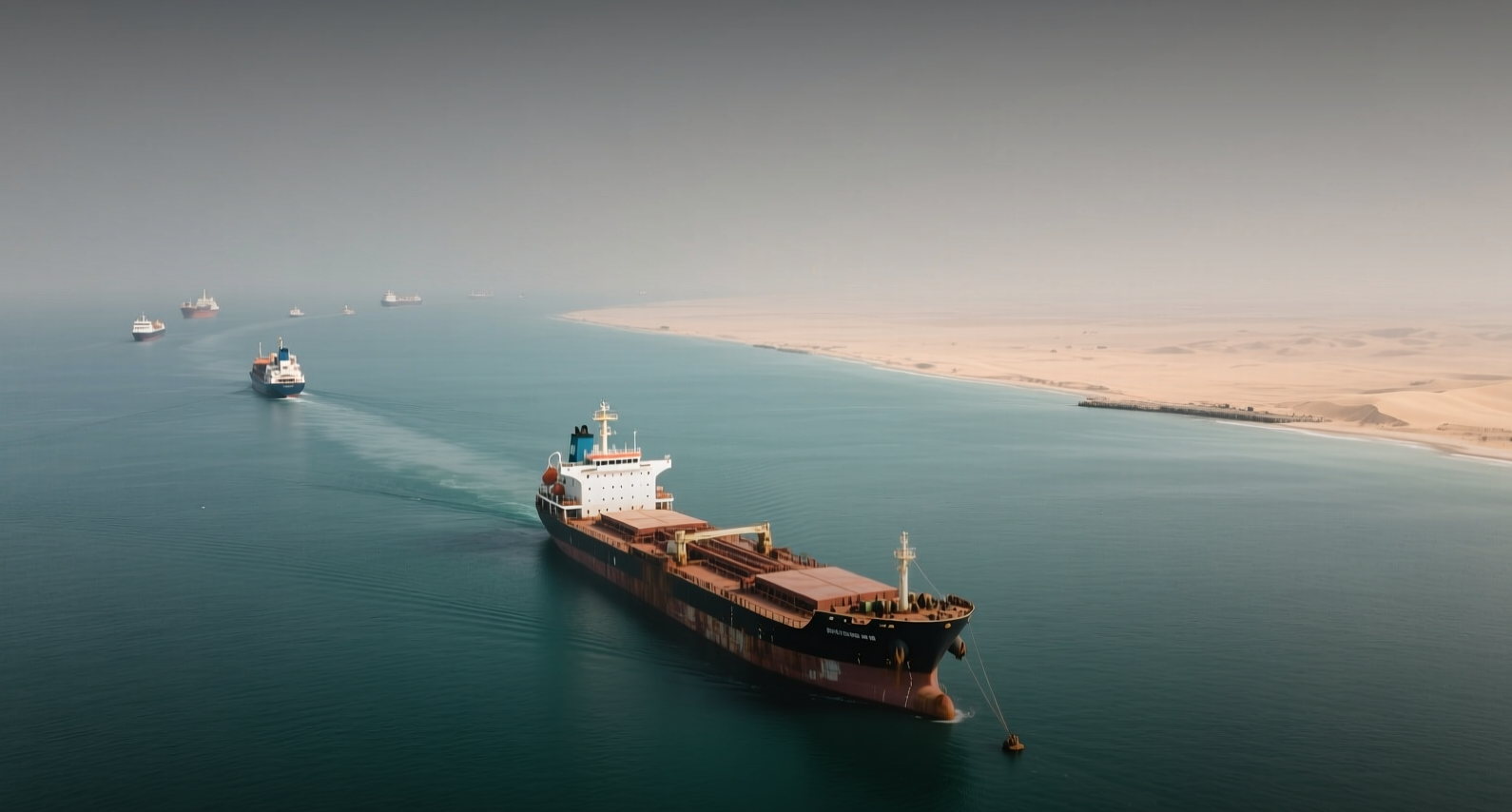
US diesel at a record $5.85 a gallon and a 2.7 percent contraction in Iran's economy are the clearest evidence yet that Washington's oil blockade is working — and President Donald Trump's "very effective" verdict signals the export curbs will stay in place rather than ease toward a nuclear deal. The assessment, delivered as American forces strike Iranian tankers and tighten financial sanctions, points to an extended campaign of squeezing the Islamic Republic's export revenue.
"We are strangling their economy," Chris Wright, US Energy Secretary, told CBS, describing the blockade of Iranian crude, refined products and natural gas as a primary mission of American forces in the region. He added that Washington would prevent Iran from acquiring nuclear weapons even without an agreement, saying a deal "may have to wait until Iran's next government."
The squeeze is biting hard. Iran's gross domestic product contracted 2.7 percent in the year ending March, inflation surged to 62.2 percent in February with food prices up 99 percent, and the war has cost roughly 1 million jobs, according to World Bank estimates and Iranian officials. US diesel prices hit an all-time high of $5.85 a gallon last Friday, while the Strait of Hormuz — which carried about one-fifth of global oil supply before the conflict — remains disrupted after the June ceasefire collapsed.
The stakes extend beyond energy markets into US politics. Only 33 percent of registered voters approve of Trump's performance, down 3 points from last month, and 46 percent believe he is making it harder for Republican congressional candidates to win with less than two months before the November midterms. The last time a US administration sustained a comparable oil blockade, crude prices and domestic fuel costs climbed for consecutive quarters before political pressure forced a policy shift — a precedent that now hangs over the enforcement stance.
Iran's retaliation escalates the cost
Tehran is raising the price of the blockade. Parliament Speaker Mohammad Bagher Ghalibaf warned that any further US attack on Iranian interests would draw "faster, heavier, and more painful" retaliation, and announced a restricted zone outside the Strait of Hormuz where vessels would face sanctions. The warning followed US strikes on three Iranian crude tankers — one disabled off Kharg Island, another near Jask and a third in the Gulf of Oman — in response to Revolutionary Guard ballistic missiles fired at two American naval vessels.
General Brad Cooper, commander of US Central Command, framed the exchange in economic terms: "If you fire on two of our ships, we will impose a higher economic cost — taking out three of yours." Defense Secretary Pete Hegseth echoed the line on X, saying "if Iran fires on U.S. ships, we destroy (and sink) their tankers." Iran's oil minister said Kharg Island, the hub that handled roughly 90 percent of pre-war crude exports, has been attacked about 550 times yet remains operational.
Oil flows and the forward path
Wright offered a more optimistic read on the strait than the disruption narrative suggests, telling CNN that throughput averages more than 9 million barrels a day and, with bypass pipelines, exceeds two-thirds of pre-conflict levels. "Iran is still causing problems, but the U.S. Navy is winning this fight," he said. A new round of sanctions in late August targeted Iran's access to digital assets, advanced technology, gold reserves, commercial aviation and shipping, and the Treasury recently sanctioned a small Turkish investment bank it accused of facilitating Revolutionary Guard financing.
The trajectory hinges on whether Tehran's restricted-zone threat materializes and whether fuel prices keep climbing into the midterms. If Iran follows through on blocking more of the strait, oil and diesel costs would rise further and deepen Trump's approval slide; if the blockade holds and flows recover, the administration may claim vindication for its "very effective" assessment. Either path keeps the enforcement stance — and its market consequences — the central variable for global energy prices through the election.
This article is for informational purposes only and does not constitute investment advice.