
The State Department has paused immigrant visa appointments worldwide to retrain consular officers on public charge screening, freezing interviews for thousands of green card applicants with no date set for resumption.
The State Department has paused immigrant visa appointments worldwide to retrain consular officers on public charge screening, freezing interviews for thousands of green card applicants with no date set for resumption.
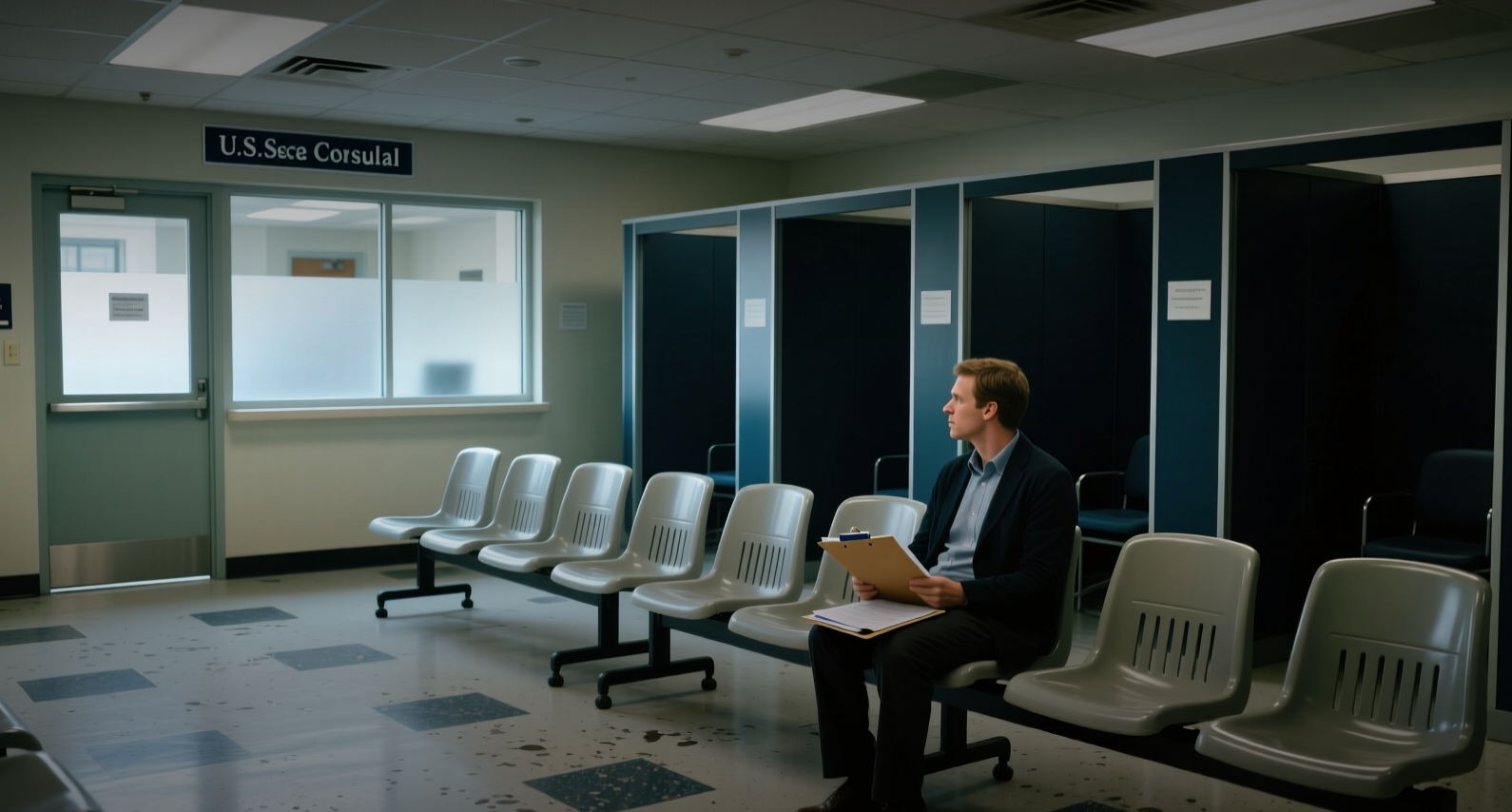
The State Department has paused immigrant visa appointments worldwide to retrain consular officers on public charge screening, postponing interviews for thousands of green card applicants with no date set for resumption.
"Many affected applicants had already spent thousands of dollars and disrupted their lives to attend scheduled interviews, only to have their appointments canceled at the last minute," said Brian Simmons, an attorney at immigration law firm Fragomen in Washington.
The training, launched in early August, comes days after U.S. District Judge Jeannette Vargas on Aug. 21 struck down a separate State Department policy that suspended immigrant visa issuance for applicants from 75 countries on the same public charge grounds. The department has also announced plans to revoke up to 200,000 B-1/B-2 visas held by foreigners who entered on temporary visas before applying for asylum, and said it has already revoked more than 175,000 visas this month.
The pause affects family- and employment-based green card applicants going through consular processing at U.S. embassies and consulates, with applicants in Hong Kong, Manila, Nairobi, Santo Domingo, Ciudad Juárez and Seoul among those reporting rescheduled interviews. With no resumption date announced, processing times will lengthen for applicants in the final stages of their immigration journey.
The department said the training is intended to ensure consular officers evaluate visa applicants "comprehensively and consistently," with a particular focus on whether applicants could become a public charge — someone the government considers likely to become primarily dependent on certain forms of government assistance. Public charge inadmissibility is already part of U.S. immigration law under Section 212(a)(4) of the Immigration and Nationality Act, which can prevent an applicant from receiving an immigrant visa in certain circumstances.
The move is the latest in a series of actions tightening U.S. immigration rules. On Aug. 5, the State Department announced a pilot program allowing consular officers to require certain immigrant visa applicants to post a Public Charge Bond, which can allow an applicant to overcome an inadmissibility finding. The department has also proposed a $103,265 fee for H-1B cap petitions, and President Donald Trump signed executive orders seeking to further restrict birthright citizenship after the Supreme Court blocked an earlier attempt.
Melissa Chavin, a London-based U.S. immigration lawyer, said she expects the pause to be temporary. "I don't think that they'll leave this indefinitely, especially for wealthier developed countries," she said. Applicants from developing countries might find it harder to progress their applications under the new guidance, she added.
The pause differs from the struck-down 75-country ban in that it targets no specific nationality, applying instead to all immigrant visa processing while officers complete training. The State Department has not said when normal appointment scheduling will resume, and applicants with interviews scheduled in coming days have been told to watch for emails from the embassy or consulate handling their case.
Applicants should avoid assuming a canceled or postponed interview means their underlying visa case has been denied. Based on information released so far, the disruption relates to appointment scheduling while consular officers complete the new training. The department has not publicly detailed the new screening guidance or how long the training will last.
This article is for informational purposes only and does not constitute investment advice.
