


SpaceX's Starlink V3 satellites will deliver 100 times the bandwidth of the current V2 system, a leap that CEO Elon Musk says could capture a majority of global internet traffic.
SpaceX's Starlink V3 satellites will deliver 100 times the bandwidth of the current V2 system, a leap that CEO Elon Musk says could capture a majority of global internet traffic.
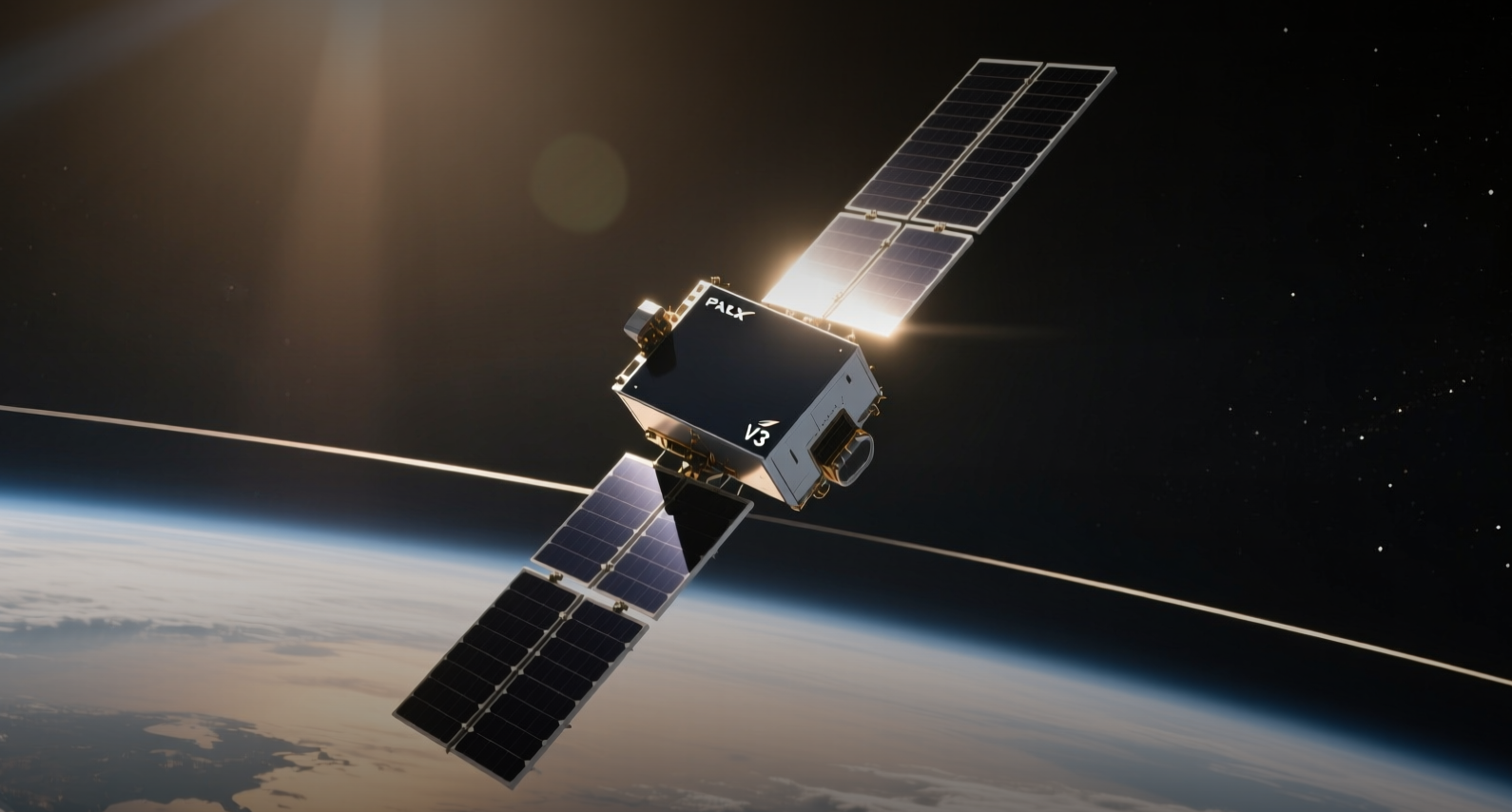
SpaceX's Starlink V3 satellite constellation promises a hundredfold increase in network bandwidth, a leap that CEO Elon Musk says could position the service to carry a majority of the world's internet traffic in accessible markets.
"It's kind of hard for people to wrap their minds around this, but it's not out of the question that at some point, Starlink will deliver a majority of the world's internet, at least in countries where we're allowed to operate," Musk said on SpaceX's first earnings call as a public company.
Individual V3 satellites deliver roughly 10 times the performance of V2 models, which max out between 100 Mb/s and 450 Mb/s depending on congestion. The company has applied to the FCC for approval to deploy up to 100,000 V3 satellites in low-Earth orbit, supplementing roughly 9,600 V2 birds currently in service. Musk said the system will reach $20 billion in annual recurring revenue this year.
The expansion threatens Amazon's Project Kuiper and incumbent satellite operators. Quilty Space founder Chris Quilty cautioned that aggregate capacity is a misleading metric. "Starlink V3 will provide a 10x boost, reaching 8 Pb/s of downlink capacity, but aggregate network capacity is a misleading metric because capacity is geographically distributed while demand is geographically concentrated," he said.
Starlink ended Q2 with 12 million paid subscribers, double the year-ago figure, across 167 markets. Connectivity revenue rose 66 percent year-over-year to $4.3 billion, with enterprise and government revenue up 108 percent to $1.8 billion. Average revenue per user held at $66 per month despite price increases on residential plans in May. Musk said enterprise revenue is expected to "substantially exceed" consumer revenue over time, pointing to business demand as the primary growth driver.
SpaceX reported $7.8 billion in total Q2 revenue, up 92 percent year-over-year, though it posted a net loss of $541 million. The company ended the quarter with $100 billion in cash and marketable securities and $47.5 billion in backlog.
Musk said V3 satellites will launch on Starship flight 14 into operational orbit, following last month's suborbital test that carried a batch of V3 birds. SpaceX engineers successfully communicated with every test satellite using radio frequency and laser links before they disintegrated on re-entry after roughly 20 minutes in space. Musk estimated the company needs approximately 1,000 V3 satellites in orbit before it can begin offering speed increases to customers, a threshold he expects to reach around the second quarter of next year.
SpaceX also expanded its compute capacity to 1.4 gigawatts in Q2, up from 1 gigawatt in the prior quarter and 400 megawatts a year ago. Musk said the company now targets approximately 15 gigawatts of power and cooling capacity online by the end of next year, with a stretch goal of 20 gigawatts. He confirmed SpaceX will build data centers exclusively on Nvidia hardware, citing the Vera Rubin architecture as the best available option.
The V3 expansion could reshape the satellite broadband market. Even if revenue per gigabyte falls by 90 percent, Musk said the bandwidth increase would still drive a tenfold rise in Starlink revenue. SpaceX's $20 billion ARR projection for this year would make Starlink one of the largest connectivity businesses globally, rivaling major telecom operators. The company's compute buildout also positions it to compete in the AI infrastructure race, though the $541 million net loss shows the cost of that ambition.
Amazon's Project Kuiper, which has yet to deploy its commercial constellation at scale, faces a widening gap in orbital capacity and subscriber base. Traditional satellite operators and terrestrial broadband providers in markets where Starlink operates will need to respond to gigabit-class speeds becoming available from orbit.
This article is for informational purposes only and does not constitute investment advice.
