
A $100 billion SpaceX investment will transform a rural Louisiana duck-hunting region into a high-cadence spaceport, dividing locals over jobs, environment, and identity.
A $100 billion SpaceX investment will transform a rural Louisiana duck-hunting region into a high-cadence spaceport, dividing locals over jobs, environment, and identity.
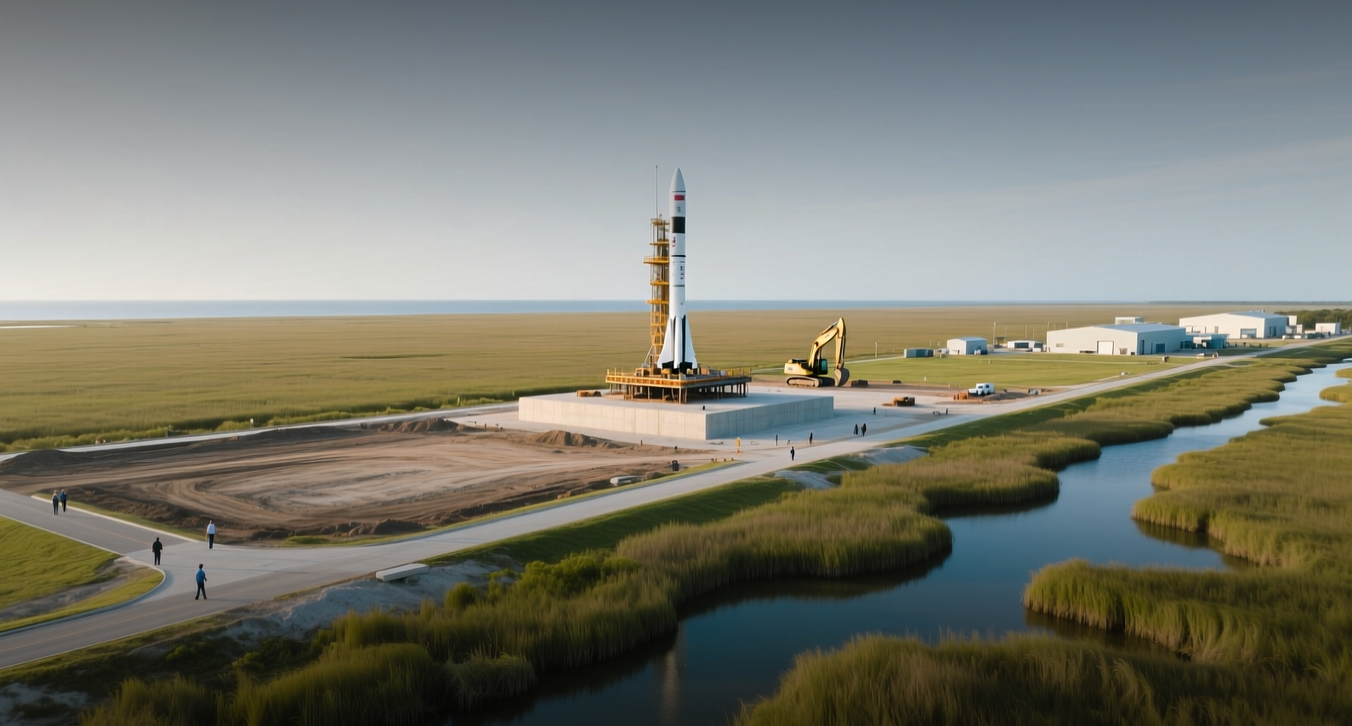
SpaceX will invest $100 billion to build its largest launch facility on 125,000 acres in Vermilion Parish, Louisiana, a project state officials call the biggest capital investment in state history and one that could reshape the region's economy by 2029.
"Starbase, Louisiana, is going to make that future possible," Gwynne Shotwell, SpaceX president and chief operating officer, told more than 200 attendees at the announcement in Abbeville on Tuesday.
The self-sustaining spaceport near Pecan Island will include propellant production, on-site power generation, deep-water shipping access, vehicle processing facilities and an airport, enabling launches "thousands of times a year." The project is expected to create at least 3,000 direct jobs, with Shotwell suggesting the real figure could approach 10,000 based on SpaceX's experience at Starbase, Texas, where 60 to 80 percent of new hires come from the local area.
The project marks a turning point for a state that has historically exported its natural resources while bearing the environmental costs. Gov. Jeff Landry framed the investment as "an inflection point in Louisiana's history," with construction slated to begin in 2027 and first launches as early as 2029.
The Vermilion Parish site will be SpaceX's sixth launch pad either completed or in active development, joining Starbase, Texas, and a planned facility in Florida. The company plans to use the site to launch its newest Starship vehicle, with the goal of making rocket launches as routine as commercial air travel. Elon Musk, SpaceX founder and chief executive, said in a prerecorded video that the company was "preparing to build a spaceport that, until now, has only existed in science fiction."
3,000 direct jobs and a $25 million PILOT
A PILOT (payment in lieu of taxes) agreement will direct $25 million to local taxing bodies — including the parish police jury, sheriff's office and school board — in the project's first year, with payments rising annually. SpaceX will also make a $20 million upfront payment and a separate $25 million donation to the Community Foundation of Acadiana to support regional planning tied to the project's growth.
State officials said Louisiana workers and businesses will have a direct pipeline into the project. SpaceX plans to source in-state vendors and contractors through Source Louisiana, while Louisiana Works will connect residents to training programs, college partnerships, apprenticeships and short-term technical courses tailored to the company's workforce needs. The Louisiana Legislature passed a package of bills this spring, at Landry's request, aimed at attracting a major aerospace project to the state.
The economic stakes extend beyond the launch pad itself. SpaceX's presence could attract suppliers, logistics firms and aerospace contractors to the region, creating a broader industrial cluster. But some residents have expressed concerns that jobs coming to the area may not go to locals, and that the influx of workers could strain housing and infrastructure in a parish with a population of roughly 60,000.
Coastal erosion and the ExxonMobil settlement
Vermilion Parish's coastline is eroding rapidly, with officials citing land loss of between 3 and 23 feet a year. SpaceX said it has worked with the Louisiana Department of Wildlife and Fisheries, the Coastal Protection and Restoration Authority and other state agencies to assess and limit the project's impact on wildlife, fisheries and surrounding habitat, including marsh and waterfowl habitat that draws hunters, anglers and birders.
Company and state officials said any unavoidable wetlands impacts must be fully mitigated by SpaceX, and that the company is not developing the full 125,000-acre tract — leaving large portions undeveloped to preserve habitat. SpaceX is also evaluating voluntary shoreline restoration work beyond what regulations require, and state officials said the project is not expected to interfere with existing coastal restoration efforts already underway.
Incentives tied to the project are performance-based, meaning SpaceX must hit investment, employment and other benchmarks before collecting them. Costs for necessary power generation and infrastructure upgrades will be covered by the company rather than passed on to existing ratepayers. The Louisiana Department of Transportation and Development is also evaluating road improvements to limit the project's effect on local traffic.
The project follows the dismissal of a coastal damages lawsuit brought by Vermilion Parish and the state against ExxonMobil, which cleared the way for SpaceX to build on nearly 130,000 acres of land previously owned by the oil company. The settlement resolved a long-running dispute over coastal erosion attributed to oil and gas operations, and Landry framed the SpaceX deal as a shift from extraction to construction.
"Generations of industries came to Louisiana not to build lasting prosperity, but to extract wealth," Landry said. "Today, Louisiana is here to build that future."
Shotwell said SpaceX views Louisiana's workforce, not just its geography and natural gas resources, as central to the project's success, and pledged that the company would hold town halls and community meetings in the months ahead as construction moves forward. The project's first launch is targeted for 2029, with the facility expected to reach full operational capacity in the following years.
This article is for informational purposes only and does not constitute investment advice.
