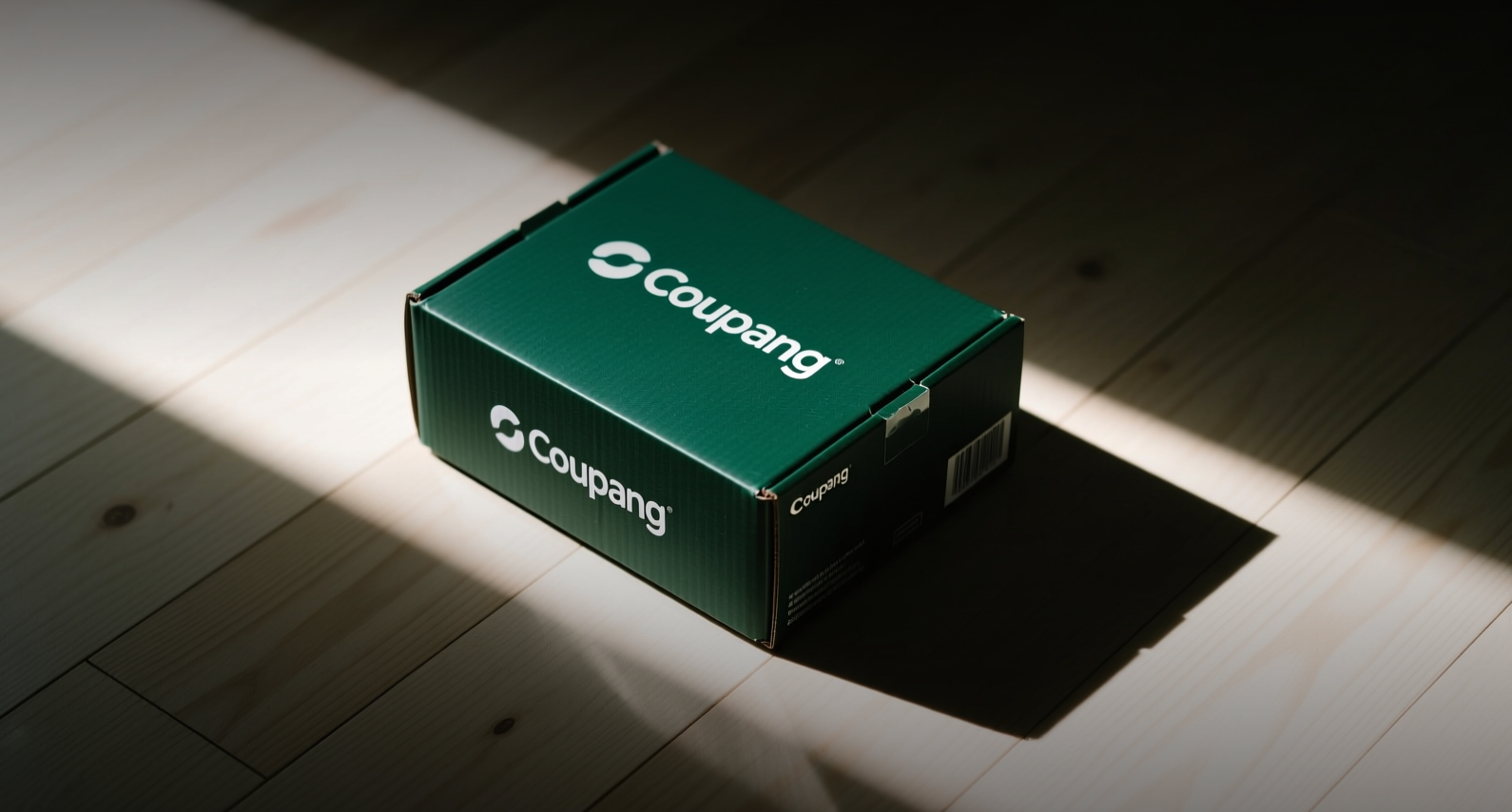
South Korea's top administrative court delivered Coupang its first procedural victory in a regulatory campaign that has cost investors more than 40 percent of the company's peak market value.
The Seoul High Court's Administrative Division 7 on Tuesday granted an injunction suspending the Korea Fair Trade Commission's May 1 decision to designate Bom Kim as the "same person" — the legally recognized controlling individual — of Coupang's Korean business group. The freeze holds until 30 days after a ruling in the main cancellation lawsuit, which has no scheduled hearing date.
"The court found that the applicants faced an urgent need to prevent irreparable harm from the designation," the ruling stated, according to the Korea Times. The judges also found "no evidence suggesting the suspension would seriously affect public welfare."
The KFTC redesignated Kim as the controlling individual after concluding that his younger brother, Kim Yoo-seok, a vice president at Coupang's Korean operating subsidiary, had participated in management in ways that exceeded what the enforcement decree permits. According to the commission's findings, Kim Yoo-seok chaired hundreds of regular and ad hoc meetings on logistics and delivery policy and received approximately 14 billion won in combined salary and stock compensation from the Korean entity over four years.
Coupang argued the designation was a category error. Because Coupang Inc. owns 100 percent of its Korean operating subsidiary, there is no tangled web of cross-shareholding through which a controlling founder could quietly siphon assets to family members — the precise harm the same-person framework was designed to prevent. Neither Bom Kim nor any of his relatives holds shares in the Korean affiliates, the company said.
The $730 Million Regulatory Toll
Tuesday's ruling is the first meaningful check on a regulatory campaign that has produced three major penalties since late 2025. On June 11, South Korea's Personal Information Protection Commission approved a fine of 624.7 billion won — approximately $409 million — against Coupang, the largest data-protection penalty in the country's history. The PIPC found that after a former employee accessed customer data of approximately 37.55 million people — roughly two-thirds of South Korea's population — Coupang missed legally mandated notification deadlines, manually deleted months of web access logs after being ordered to preserve evidence, and excluded its chief privacy officer from the internal investigation.
Five days before Tuesday's ruling, on July 9, the National Tax Service notified Coupang of a preliminary tax assessment of approximately 300 billion won — about $200 million — following a six-month special audit of transactions between Coupang and its fulfillment subsidiary and of cross-border dealings with the U.S. parent. A separate 2024 self-preferencing fine of $121 million is still being paid in installments.
The cumulative confirmed penalty exposure now stands above 1.2 trillion won, or roughly $730 million — approaching Coupang's entire 2025 operating profit of approximately $490 million. None of the fines is automatically stayed during appeal, and the PIPC fine is not tax-deductible in South Korea. A pending KFTC investigation into Coupang's WOW Membership subscription bundling has not yet produced a final decision.
Coupang's stock fell to a 52-week low of $14.92 from a high of $34.08 — a decline exceeding 56 percent from peak — before recovering to the $18-$20 range in recent weeks. The company reported a $266 million net loss in the first quarter of 2026, driven in part by breach-related voucher costs.
A Dispute With $525 Billion in Trade Consequences
Tuesday's ruling arrives in the middle of what has become one of the most visible regulatory confrontations between Seoul and Washington in years. On July 1, the Republican-led House Judiciary Committee released a 35-page interim staff report titled "Closed for Competition: South Korea's Discriminatory Attacks on American-owned Businesses." The report documented more than 10 government agencies launching investigations into Coupang after the breach, more than 4,000 document requests, and more than 650 employee interviews. One estimate in the report cited potential U.S. economic losses of up to $525 billion over the next decade if South Korea's treatment of American digital companies continued.
The Trump administration told reporters it is "deeply concerned" about the Korean government's "discriminatory targeting of U.S. technology companies," adding that Coupang has been "singled out." Coupang's investors — Greenoaks Capital and Altimeter Capital — filed a Section 301 petition with the U.S. Trade Representative in January 2026 alleging that South Korea's treatment of Coupang constituted unreasonable and discriminatory trade practices. They withdrew the petition in March after discussions with U.S. trade officials indicated Washington was preparing a broader Section 301 investigation into South Korean digital trade practices affecting all American technology companies.
South Korea rejected the House report as one-sided. Foreign Ministry spokesman Park Il said the investigations "have been conducted lawfully and without discrimination in accordance with domestic law." Korean Prime Minister Kim Min-seok told U.S. lawmakers there was "absolutely no discrimination" against Coupang.
For competition law specialists, the main lawsuit must eventually answer a question with no clear precedent: can the legal framework Korea built to govern domestic family conglomerates be applied to a foreign-listed company whose ownership chain is fully transparent, whose domestic affiliates are 100 percent subsidiaries, and whose founder holds no personal stake in those subsidiaries? The court's answer on Tuesday was procedural, not substantive. The harder question remains unanswered.
This article is for informational purposes only and does not constitute investment advice.