
Russia's live-fire drills off the disputed Kuril Islands mark the sharpest escalation in Moscow-Tokyo ties since the Soviet occupation of the archipelago in 1945.
Russia's live-fire drills off the disputed Kuril Islands mark the sharpest escalation in Moscow-Tokyo ties since the Soviet occupation of the archipelago in 1945.
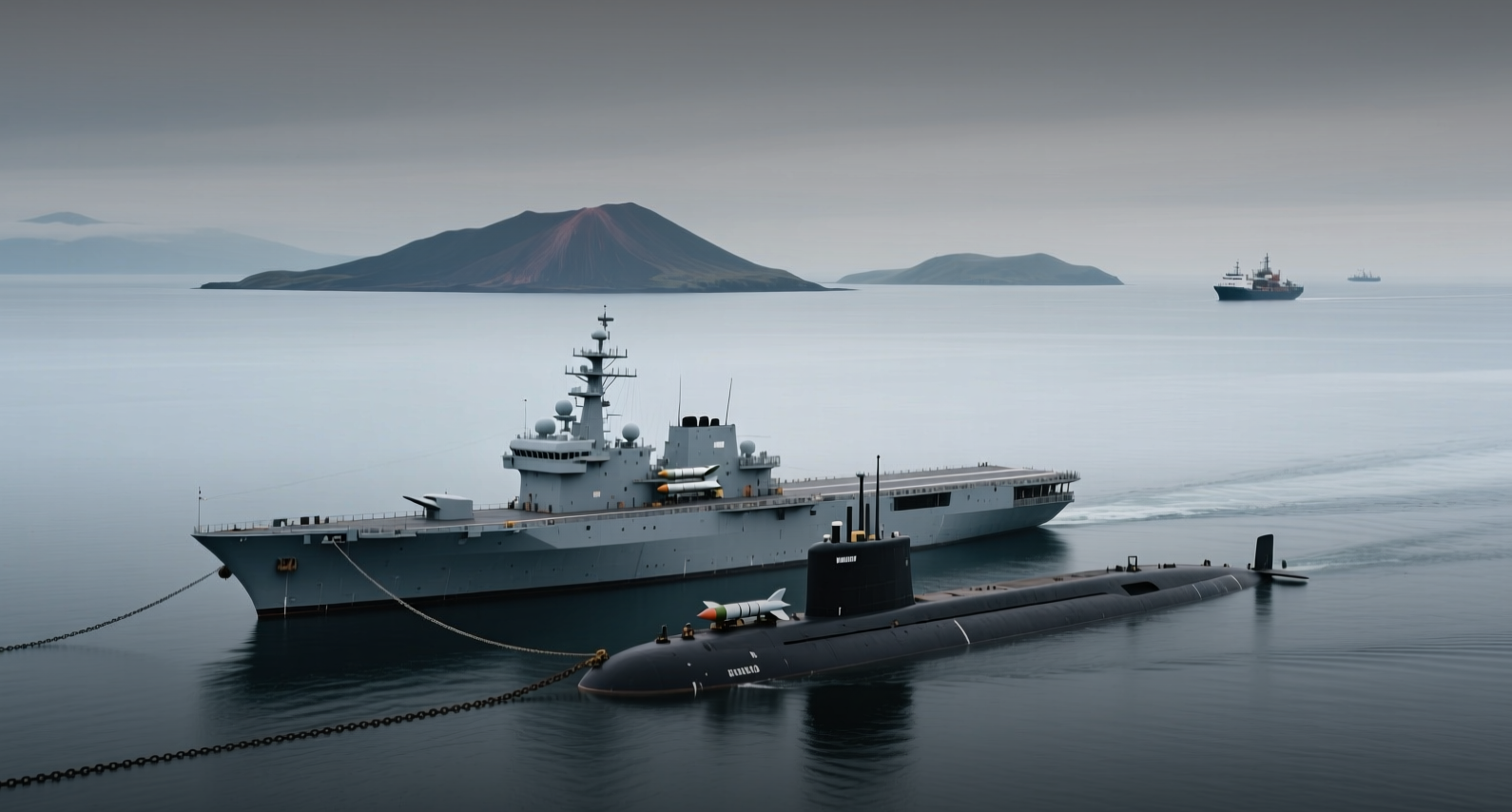
Russia's Pacific Fleet fired three missile types at mock enemy vessels off the Southern Kuril Islands on Thursday, escalating a territorial dispute that has left Japan increasingly isolated across Northeast Asia.
"The hypothetical enemy is therefore not Japan, but the United States," said James Brown, an expert on Russia-Japan relations at Temple University in Tokyo. He added that Moscow is also eager to show China it remains a potent military force after losses in Ukraine.
The missile cruiser Varyag launched two Vulkan anti-ship missiles, the nuclear-powered submarine Omsk fired a salvo of Granit cruise missiles, and a Bastion coastal system deployed on one of the islands fired an Oniks missile, the Pacific Fleet said. All targets were hit at a range of at least 300 kilometers (186 miles), and the exercises are scheduled to run until Aug. 29.
The drills follow Putin's first visit to Iturup on Aug. 13, which Japanese Prime Minister Sanae Takaichi called "unacceptable." Russian Foreign Minister Sergei Lavrov responded by summoning Japanese Ambassador Akira Muto, accusing Tokyo of having "crossed the line of decency."
A widening fault line
The four islands — called the Northern Territories by Japan and the Southern Kurils by Russia — were seized by Soviet forces in the final days of World War II, and the dispute has prevented the two nations from signing a peace treaty. Putin's visit was the first by a sitting Russian president since Dmitry Medvedev traveled there in 2010, a trip that drew Japanese protests but did not trigger live-fire drills.
Security analysts said the exercises rehearse Russia's defense of the Sea of Okhotsk, a stretch of water vital for Moscow's fleet of ballistic missile submarines. The escalation carries market implications beyond the bilateral dispute: Japan's defense sector stands to benefit from Tokyo's plans to boost military spending, while the yen and Japanese equities face pressure from the geopolitical uncertainty. The drills do not directly threaten energy or trade routes, so the commodity risk premium remains contained, though a sustained standoff could weigh on regional sentiment.
Takaichi's government is weighing countermeasures, including strengthening existing sanctions imposed on Moscow over the Ukraine conflict. Japan has joined other Group of Seven nations in sanctioning Russia since the 2022 invasion and has provided financial and non-lethal defense aid to Kyiv.
The hardline approach has strained ties beyond Moscow. Relations with Beijing have been in the deep freeze since Takaichi said late last year that Japan could be drawn into any conflict over Taiwan, a self-ruled island democracy China claims. China's envoy to Russia, Hanhui Zhang, said Thursday that Japan's right-wing forces are "attempting to revive the spirit of militarism."
South Korea has also protested Japan's continued territorial claims to the islets it calls Dokdo and Japan calls Takeshima, made through Tokyo's 2026 defense white paper. On Aug. 15, the 81st anniversary of Japan's surrender, Takaichi sent a ritual offering to the Yasukuni Shrine while her defense minister visited in person, drawing rebukes from Beijing and Seoul.
Lü Chao, an expert on East Asian studies at the Liaoning Academy of Social Sciences, said Japan's hardline diplomacy is unlikely to yield the desired results and will further isolate it in the region. Its continued military buildup is fueling concerns about a revival of militarism, putting countries across the region on heightened alert.
For investors, the standoff shows the risk that Northeast Asia's security architecture is fragmenting into rival blocs. Russia, China and North Korea have all criticized Japan's defense buildup, while Tokyo has deepened coordination with Australia and the Philippines. The drills near the Kurils, whatever their stated target, add a military dimension to a diplomatic rupture that shows no sign of easing.
This article is for informational purposes only and does not constitute investment advice.
