
Key Takeaways: Six months into the U.S.-Iran war, Qatar has lost $24 billion in gas sales as its LNG exports collapsed 96 percent, making it the conflict's biggest economic casualty.
Key Takeaways: Six months into the U.S.-Iran war, Qatar has lost $24 billion in gas sales as its LNG exports collapsed 96 percent, making it the conflict's biggest economic casualty.
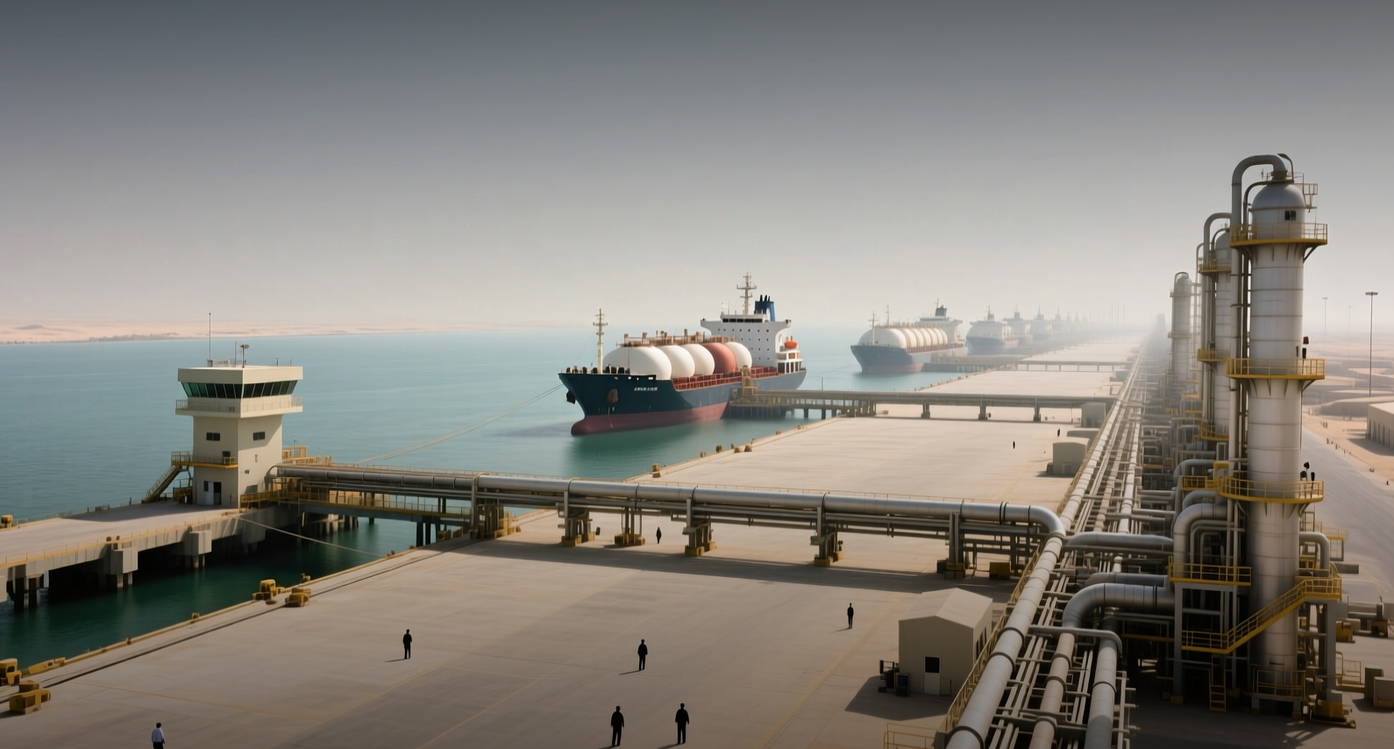
Six months into the U.S.-Iran war, Qatar's LNG exports have collapsed 96 percent, cutting $24 billion in revenue while U.S. producers fill the gap.
"The authorities have managed the crisis effectively, but the hit has been massive," said Tarik Yousef, senior fellow at the Middle East Council on Global Affairs. "They have been drawing on accumulated financial buffers to keep the economy going and maintain liquidity. But ultimately, that leaves a substantial hole in the budget."
Qatar has shipped just 18 LNG cargoes in six months, down from 509 in the same period last year, according to data intelligence firm ICIS. Two Qatari tankers have been attacked during the conflict. The International Monetary Fund forecasts Qatar's economy will contract 8.6 percent this year, the largest decline among the six Gulf states.
European gas storage has fallen to a historic low for the time of year — around 55 to 57 percent full at end-July, the second-lowest since 2016 — exposing the continent to possible price spikes if the coming winter is cold. U.S. LNG exports rose about 25 percent in the first half of 2026, partially offsetting the lost Qatari supply.
Qatar's LNG production was hit days after the conflict began when an Iranian drone and missile attack targeted its Ras Laffan facility, the world's largest LNG export plant, according to the Financial Times. Another missile attack in March reduced Qatar's export capacity by 17 percent. Repairs to the damage could take up to five years.
Before the war, Qatar supplied about one-fifth of the world's daily LNG. Neighboring Gulf exporters — Saudi Arabia, the UAE, Iraq and Kuwait — have seen their oil exports hit, but by nowhere near as much, as they have managed to move oil out of the Strait of Hormuz through alternative routes. The asymmetry in impact reflects Qatar's near-total dependence on a single export chokepoint for its gas, whereas oil producers have more flexibility in routing.
The disruption has forced Doha to draw on its financial buffers. Qatar has slashed government department budgets by up to 30 percent and reduced overseas aid spending by around 85 percent, according to the Financial Times. The country's $500 billion Qatar Investment Authority sovereign wealth fund provides substantial cushioning, and its population of roughly 3.2 million keeps domestic spending relatively contained.
A Qatari official told the FT: "Qatar is well-equipped to navigate the economic situation in the region. Our resilience through past crises, including the GCC crisis and Covid-19, gives us the capacity to weather the current one without changing our long-term economic trajectory."
The fiscal strain extends beyond Doha's borders. Gulf sovereign wealth funds collectively manage around $5 trillion, according to the FT, and a prolonged conflict could slow their overseas investment pace as governments redirect capital to domestic priorities. The IMF's 8.6 percent contraction forecast for Qatar this year compares with a regional average that, while negative, is far less severe for the other five Gulf states.
The last time European gas storage sat this low for the season was in 2016, when a cold snap pushed benchmark TTF prices sharply higher within weeks. If the coming winter proves similarly harsh, European utilities and energy-intensive manufacturers face renewed price pressure on top of already elevated input costs. European stock markets have fallen as the supply shock ripples through the continent's energy-dependent sectors.
U.S. LNG exporters have been the primary beneficiaries. Exports rose about 25 percent in the first half of 2026, with cargoes redirected to Europe and Asia to compensate for the Qatari shortfall. The shift strengthens the U.S. position as the world's swing supplier of LNG, a role Qatar had increasingly occupied before the war.
State-owned QatarEnergy did not respond to a request for comment. The company's ability to restore output hinges on the security situation in the Gulf, which shows no signs of stabilizing six months into the conflict.
This article is for informational purposes only and does not constitute investment advice.
