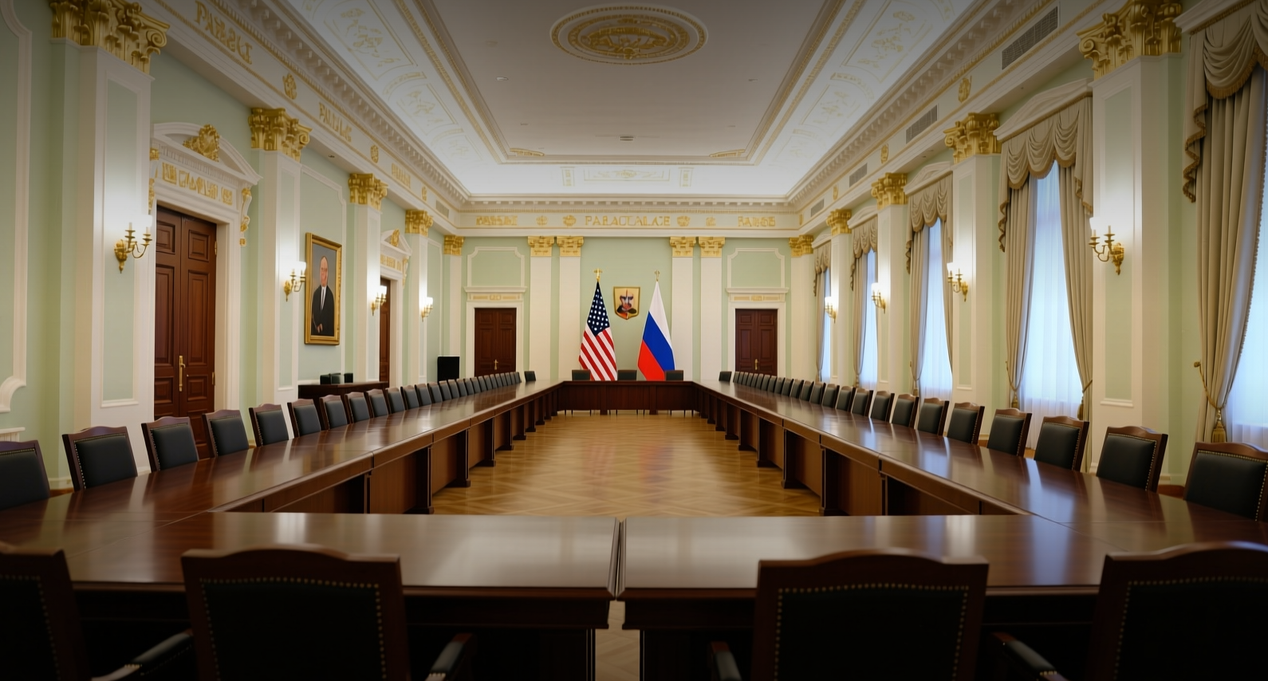
Russian President Vladimir Putin met U.S. envoys Steve Witkoff and Jared Kushner at the Kremlin for more than three hours on Saturday, reopening a direct Washington-Moscow channel that had been dormant since January, even as a 72-hour pause in strikes on Kyiv took effect only after Russia launched 167 attack drones and ballistic missiles at Ukrainian cities.
"The situation today is not simple," Putin told the two envoys at the start of talks in the Senate Palace, asking them to convey his "sincerest regards and thanks" to President Donald Trump. No joint statement was issued and the envoys left without taking questions, according to Russian presidential aide Yuri Ushakov, who described the session as "substantive, constructive and extremely frank."
The meeting marked the first high-level U.S. visit to Moscow for the peace effort since January, ending a freeze that set in after the Trump administration's attention shifted to its war with Iran in mid-February. Witkoff and Kushner were due in Kyiv on Sunday to meet President Volodymyr Zelenskyy — their first trip to the Ukrainian capital since Trump returned to office — after Trump said the pair carried "a proposal to end the war," without disclosing terms.
The diplomatic opening has not cooled the battlefield. Putin ordered a halt to strikes on Kyiv from midnight Saturday, a gesture Kremlin spokesman Dmitry Peskov tied to the envoys' planned visit, while Zelenskyy said Ukraine would refrain from attacking Moscow through Monday if Russia reciprocated. Yet hours before the pause began, Russian forces hit Kyiv and Boryspil international airports, and strikes on an industrial site in the Dnipropetrovsk region killed five workers. Ukraine's air force said it shot down or suppressed 128 of the 167 drones launched overnight.
Ceasefire optics versus unresolved territorial demands
The core obstacle remains territory. Peskov reiterated that Russia insists Ukrainian forces withdraw from the Donetsk and Luhansk regions and address the conflict's "root causes" before any ceasefire, conditions Kyiv has rejected. With Moscow judging its forces to hold the battlefield advantage, its negotiating demands have hardened, Ushakov said after the talks, citing "tangible progress" along the front line.
That asymmetry frames the risk for markets. A durable ceasefire would strip a geopolitical premium from European energy and defense-linked assets, while renewed escalation would push it back — yet analysts caution the gap between a strike pause and a settlement remains wide. "The visit is well timed because escalation is spiraling quickly, and if left to run, both sides seem to keep raising the stakes," said Sam Charap, senior political scientist at the RAND Corp. Alexey Gromyko, director of the Russian Academy of Sciences' Europe Institute, said the key question is "whether Washington is ready to stay engaged in the process, rather than returning only every six months."
The sequencing of the trip has also rankled European allies. Jovita Neliupšienė, the EU's ambassador to Washington, said "diplomacy works, but we must ensure we first consult our allies," adding that "Moscow has not changed its war aims" and that Europe's priority remains supplying Ukraine with everything it needs. The last time U.S. envoys met Putin in Moscow in January, the follow-through stalled for eight months with no tangible progress, underscoring how little a single high-level session has historically moved the two sides toward terms both can accept.
For now, the most concrete output is the reciprocal pause on strikes against each other's capitals — a narrow, reversible arrangement rather than a ceasefire. Whether Washington converts the reopened channel into sustained engagement, and whether Putin's 72-hour gesture extends beyond Kyiv, will determine if the weekend's diplomacy marks a genuine turn or another false start in a war now in its fifth year.
This article is for informational purposes only and does not constitute investment advice.