

Bitcoin miners are repurposing infrastructure for Nvidia's Rubin servers, opening a new revenue stream as block rewards decline.
Bitcoin miners are repurposing infrastructure for Nvidia's Rubin servers, opening a new revenue stream as block rewards decline.
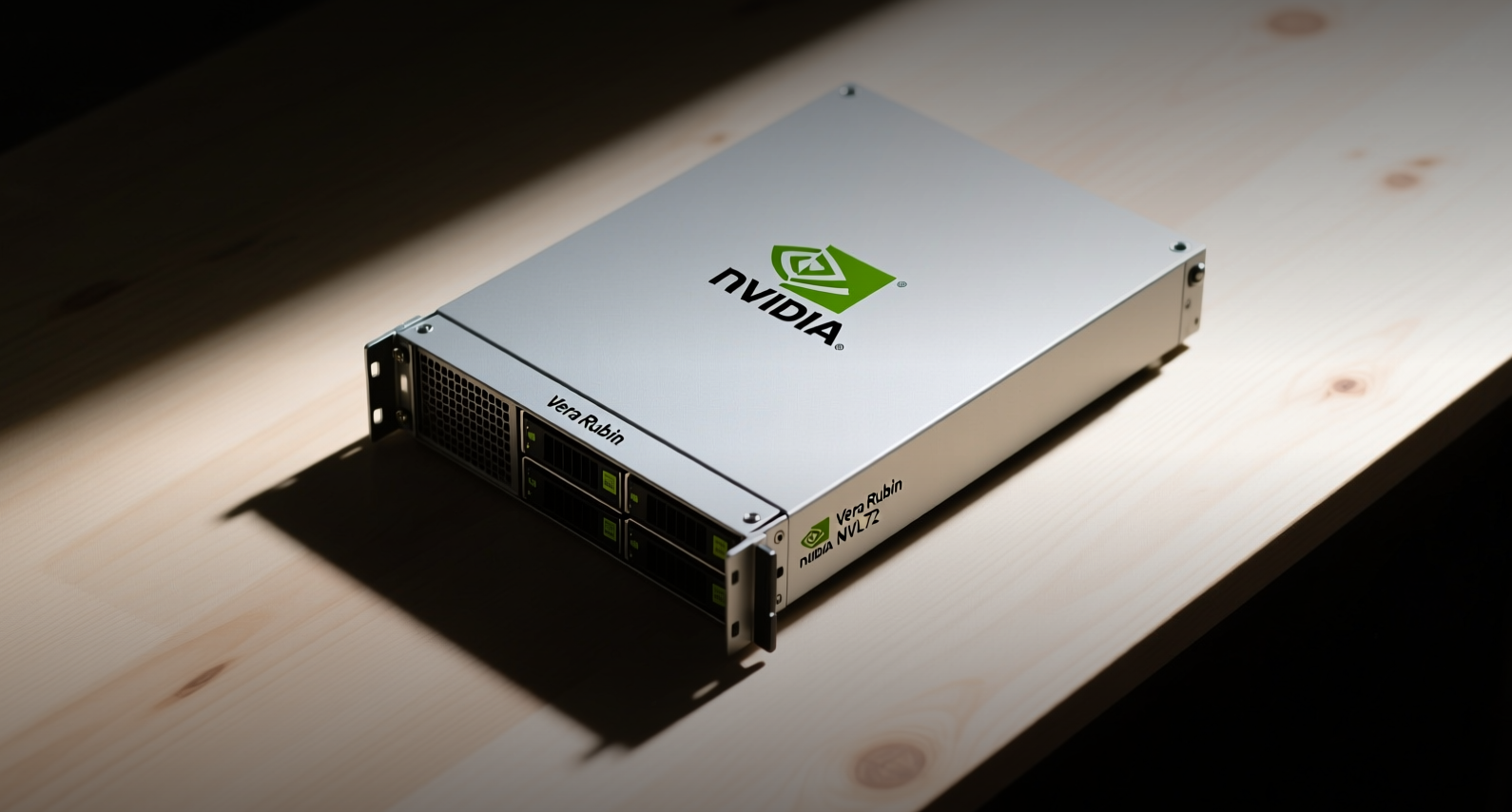
Bitcoin miners are repurposing infrastructure for Nvidia's Rubin servers, opening a new revenue stream as block rewards decline.
Nvidia's Rubin servers, launched July 27, 2026, give Bitcoin miners a path to tap $75.2 billion in data-center demand as block rewards shrink.
"Crypto is infrastructure, the same way electricity or the internet is — it doesn't compete with the next big thing because it underpins it," Brian Armstrong, CEO of Coinbase, said in a tweet, arguing that AI agents will need "real time programmable money" to transact.
Nvidia reported $75.2 billion in data-center revenue for the quarter ending April 2026, while its holdings in private companies reached $43.4 billion, nearly double the prior quarter's $22.3 billion. The Vera Rubin NVL72 rack pairs 72 Rubin GPUs with 36 Vera CPUs over NVLink 6, delivering up to 10 times the inference throughput per watt at a tenth of the cost per token, according to Nvidia's published specifications. Hashrate Index data showed that during the week of July 13, 2026, miners collected roughly 2,914 BTC in block rewards while transaction fees accounted for only 20 BTC, or 0.69%.
For Bitcoin miners, the shift matters because block rewards decline with each halving, making alternative revenue sources increasingly important. The ability to repurpose power infrastructure, cooling systems, and facility space for AI compute workloads offers a hedge against Bitcoin's declining issuance schedule. Nvidia's investment in Safe Superintelligence Inc. — alongside a long-term partnership to supply Vera Rubin systems — shows the chipmaker's willingness to fund compute demand directly, a model that could extend to mining operators.
Nvidia's first-quarter fiscal 2027 results showed $43.4 billion in non-marketable securities, up from $22.3 billion three months earlier, reflecting the company's strategy of taking equity stakes in compute-intensive customers. The investment in Safe Superintelligence Inc., led by Ilya Sutskever, includes what Nvidia described as rare access to the lab's research, with SSI's insights feeding back into chip design work. For mining operators, the precedent matters: Nvidia has shown it will invest directly in companies that need large-scale compute, potentially opening a funding path for miners transitioning to hybrid AI-Bitcoin operations.
The week of July 13, 2026, illustrated the challenge: 2,914 BTC in block rewards versus just 20 BTC in transaction fees, per Hashrate Index. That 0.69% ratio shows how far Bitcoin is from a fee-driven security model. GoMining's launch of GoBTC Pay — a protocol that uses its own mining pool to prioritize transaction confirmation — represents one attempt to connect mining economics to payment activity, though the company's stated roadmap of 12-hour final on-chain settlement by end of 2026 remains unverified.
The broader opportunity lies in the structural overlap between mining and AI infrastructure. Both require high-density power, advanced cooling, and low-latency connectivity. Bitcoin miners already operate some of the largest concentrated power loads in the world, giving them a cost advantage in repurposing sites for AI compute. As Nvidia's Rubin ramp accelerates through 2027, miners that can pivot quickly may capture a share of the AI infrastructure buildout that has so far been dominated by cloud providers like Amazon Web Services and Microsoft Azure.
This article is for informational purposes only and does not constitute investment advice.
