

NuScale Power reported $75,000 in quarterly revenue and announced a $750 million share sale, testing whether SMR investors will fund the dream.
NuScale Power reported $75,000 in quarterly revenue and announced a $750 million share sale, testing whether SMR investors will fund the dream.
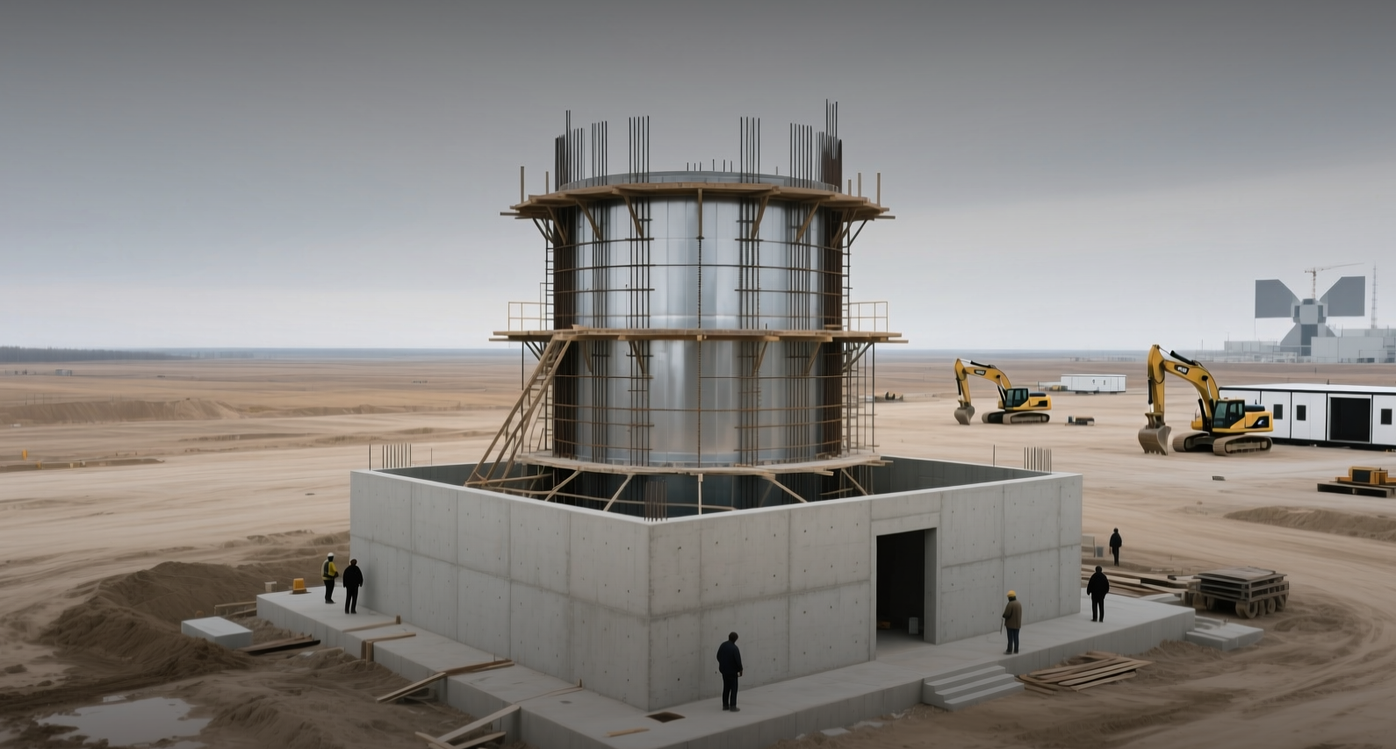
NuScale Power's $750 million share sale, announced two weeks after quarterly revenue collapsed 98.8 percent to $75,000, would dilute existing shareholders by roughly 21 percent as the small modular reactor developer races to commercialize its technology.
"Work for commercial readiness is nearly finished, with more than 60 specialized suppliers and over 30 agreements finalized," Chief Executive John Hopkins said.
NuScale posted a second-quarter loss of $0.13 a share, matching consensus, while revenue fell from $8.1 million a year earlier as milestone-driven engineering work wound down. The company holds $1.9 billion in cash and investments, equal to roughly 48 percent of its equity value, with zero debt and a current ratio of 37.88. The share sale, if executed entirely in new stock at the current $9.29 price, would add about 80.7 million shares to the roughly 298 million outstanding.
The TVA/ENTRA1 agreement, which Hopkins called the largest nuclear build-out in U.S. history, holds the potential for 6 to 8 gigawatts of new capacity. NuScale has already recorded a $507.4 million milestone payment to ENTRA1, a cost that shows its role in enabling the project. Third-quarter results are due Nov. 5, when investors will focus on confirmed orders and partner financing.
NuScale's balance sheet remains the strongest part of the story. The company carries no debt, and its current ratio of 37.88 gives it ample runway, though trailing twelve-month margins look extreme — a negative 6,854 percent operating margin — because near-zero revenue distorts the denominator, not because costs exploded. Cumulative net losses reached approximately $416 million, with research expenses up $6.6 million and administrative costs up $4.4 million from a year earlier.
The company's technology is further along than most competitors. Each authorized NuScale Power Module produces 77 megawatts, and 12 units can deliver up to 924 megawatts. The design has cleared regulatory hurdles, aligning with renewed demand for clean energy from AI data centers. But commercial validation has yet to materialize: NuScale and ENTRA1 remain in talks with the Tennessee Valley Authority on a power-purchase deal, and the RoPower initiative in Romania is pending satisfaction of outstanding requirements.
Three executives sold shares in August: Chief Financial Officer Robert Ramsey Hamady sold 29,880 shares at $9.39 on Aug. 27, Director Shinji Fujino sold 20,000 shares at $8.86 on Aug. 18, and Chief Operating Officer Carl M. Fisher sold 18,771 shares at $9.36 on Aug. 5. The sales coincided with earnings and the share-sale announcement, though they could reflect pre-scheduled plans.
Institutions moved the other way. Bank of America Corp. increased its position 33.4 percent to 2.06 million shares, and Bank of New York Mellon boosted holdings 21.9 percent to 482,517 shares. Options activity on Aug. 21 showed call volume at twice expected levels, with implied volatility rising above 81 percent and a put/call ratio of 0.36. Jim Simons, Ken Griffin, Paul Tudor Jones II, Steven Cohen, and George Soros all hold stakes.
Sell-side consensus is net bullish but far from unanimous. The median price target is $12.00, implying about 29 percent upside from $9.29, with targets ranging from $9 to $16. Eight analysts rate the stock a buy, five a hold, and three a sell — the lowest target sits essentially at the current price, suggesting the bear case sees no further re-rating.
Momentum indicators like RSI and Stochastic show the stock deeply oversold, suggesting a relief rally may be due, while trend-following measures confirm a downtrend, with ADX pointing to bearish momentum and a MACD bearish cross. The stock fell 4.62 percent to $9.29 on Aug. 28, down roughly 84 percent from its 52-week high of $57.42 reached last October.
The sell-off extended across the nuclear sector. Oklo fell 5.64 percent, Nano Nuclear Energy dropped 6.60 percent, and Cameco declined 5.94 percent on Aug. 28, as Treasury yields climbed after Federal Reserve Chair Kevin Warsh warned about inflation, pressuring long-duration cash flows. NuScale traded 37.8 million shares, 112 percent of its 65-day average, with short interest at 16.9 percent of the float.
NuScale trades at roughly 373 times trailing revenue of $10.7 million, a valuation that rests almost entirely on anticipated reactor agreements rather than current business. The $750 million share sale — equal to about 19 percent of the company's value — funds the commercialization path but tests whether investors will accept dilution for a technology that has yet to sign its first definitive customer contract. The immediate future hinges on converting the TVA/ENTRA1 and Romanian projects into contracted revenue, with Q3 results on Nov. 5 as the next checkpoint.
This article is for informational purposes only and does not constitute investment advice.
