
Indonesia's new commodity export monitor has reviewed more than 7,000 shipments since June, targeting underinvoicing that Jakarta says cost the country up to $908 billion.
Indonesia's new commodity export monitor has reviewed more than 7,000 shipments since June, targeting underinvoicing that Jakarta says cost the country up to $908 billion.
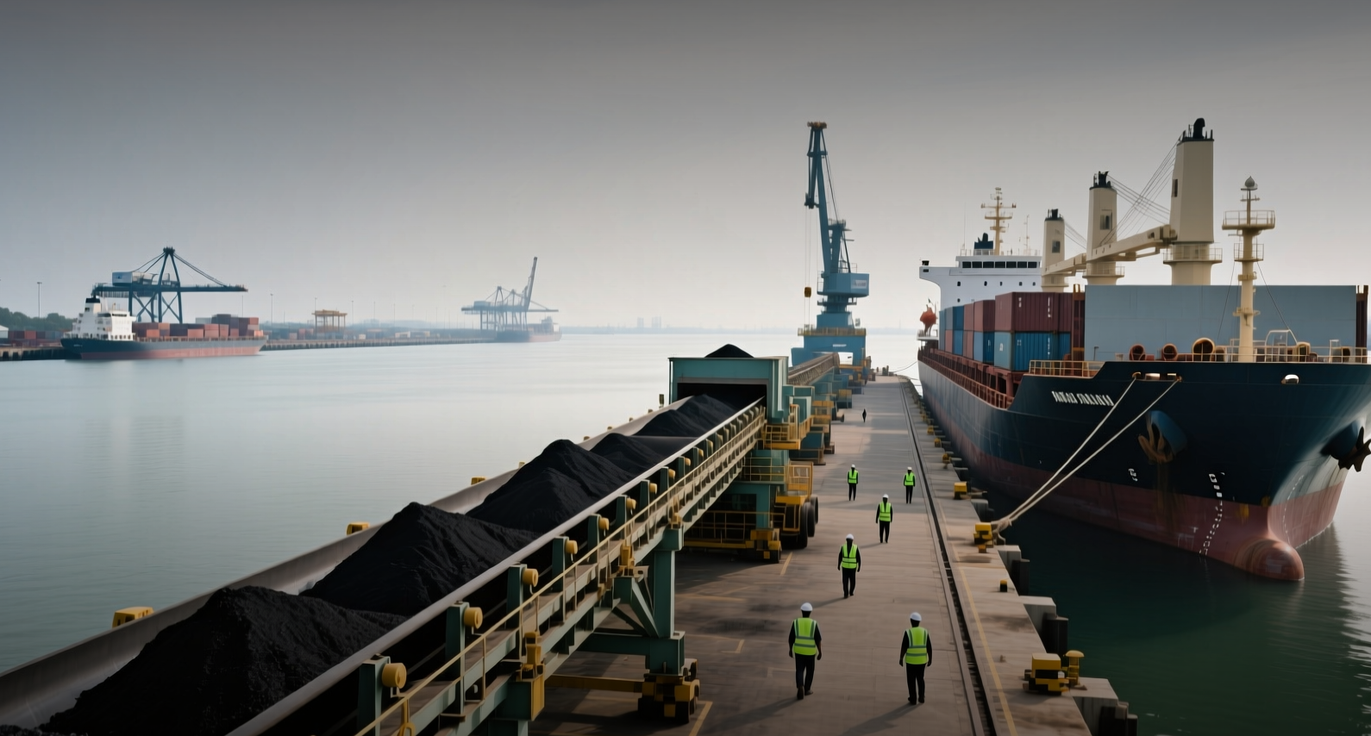
Indonesia's commodity export monitor has screened more than 7,000 shipments since June, tracking 100 outbound vessels daily as Jakarta moves to curb underinvoicing that President Prabowo Subianto says cost the country up to $908 billion.
"The priority for what we do and what we design is that we must maintain the flow of exports," Luke Mahony, chief executive officer at Danantara Sumberdaya Indonesia, said in an interview. "We're not getting directly involved in or taking ownership of the goods."
DSI, the export-control arm of Indonesia's sovereign wealth fund Danantara, oversees shipments of coal, palm oil and ferroalloys — commodities that make up about a quarter of the nation's exports. The entity has analyzed roughly 100 outbound vessels daily since June and plans to add ship-tracking to its oversight toolkit, Mahony said at a briefing. Existing contracts remain valid but will be reviewed for structural underinvoicing. Goldman Sachs analysts found Indonesia reported $46.2 billion less in coal exports than its trading partners recorded importing over 1995-2024, while palm-oil exports showed a $17.7 billion surplus in the opposite direction.
The transition to a designated Export SOE takes full effect Jan. 1, 2027, when strategic coal exports must be conducted through DSI under Government Regulation No. 24 of 2026. Bank of America economists said the extent of DSI's involvement in commercial export processes "remains highly unclear," while the entity plans to charge exporters and importers administrative fees to cover operating costs. If DSI successfully plugs export misinvoicing, Goldman Sachs said it could improve Indonesia's external position and government revenue.
Prabowo has said trading manipulation and fraudulent export reporting cost Indonesia up to $908 billion from 1991 to 2024 — a figure roughly three times the country's annual GDP. DSI's mandate covers the full commodity lifecycle, from the moment cargo leaves Indonesian ports to when export proceeds return to the country. Mahony, a former Vale Indonesia executive, described the entity as an intermediary between regulatory bodies and market participants.
DSI's initial funding comes from Danantara, the sovereign wealth fund managing around $1 trillion in assets. The entity will eventually charge exporters and importers a fee to cover administrative expenses, with Mahony saying the fee "isn't a tax" and will be benchmarked against what the market accepts. The board of directors has yet to be announced and the five-year plan is still being drafted, leaving key operational details unresolved.
When Indonesia first announced plans to integrate export processes for key resources, it stoked concerns about state intervention that would disrupt commodity flows. Mahony's clarification that DSI would monitor rather than participate in markets helped soothe those fears, though industry observers remain cautious about the entity's evolving mandate.
The coal sector faces the most immediate structural change. Government Regulation No. 24 of 2026, effective June 1, 2026, establishes the framework for strategic commodity exports through a designated Export SOE. Minister of Trade Regulation No. 15 of 2026 implements the framework for coal, with non-Export SOE approvals remaining valid until Dec. 31, 2026, or until the associated business license expires.
From Jan. 1, 2027, strategic coal exports must be conducted by DSI. The entity has said its initial role will focus on coordinating and supervising export distribution while allowing commercial relationships between producers and international buyers to continue. The Ministry of Energy and Mineral Resources has also indicated lower 2026 production direction, with public discussion centered on roughly 600 million tonnes compared with around 800 million tonnes in 2025.
Indonesia is the world's largest exporter of thermal coal and palm oil, and a major supplier of nickel and ferroalloys. Any disruption to these flows would ripple through global energy and food supply chains. The rupiah has been under pressure this year, hitting record lows in June, and analysts at Goldman Sachs said addressing export misinvoicing could improve Indonesia's external position. The government's push for commodity market credibility comes as Prabowo's administration seeks to boost state revenue to fund infrastructure and social programs.
For global buyers of Indonesian coal, palm oil and ferroalloys, the transition introduces new documentation requirements through CEISA 4.0 and additional reporting obligations involving DSI. Producers face margin pressure from potential administrative fees and tighter compliance costs, while the government stands to capture revenue that previously leaked through misinvoicing. The success of DSI's model will be measured not by its profit and loss, Mahony said, but by whether Indonesia gets fair prices and sells the maximum volume of commodities it can.
This article is for informational purposes only and does not constitute investment advice.
