

IBM's 25% stock crash erased $69 billion in market value and confirmed what software investors have feared: corporate America's AI bills are cannibalizing the rest of the tech budget.
IBM's 25% stock crash erased $69 billion in market value and confirmed what software investors have feared: corporate America's AI bills are cannibalizing the rest of the tech budget.
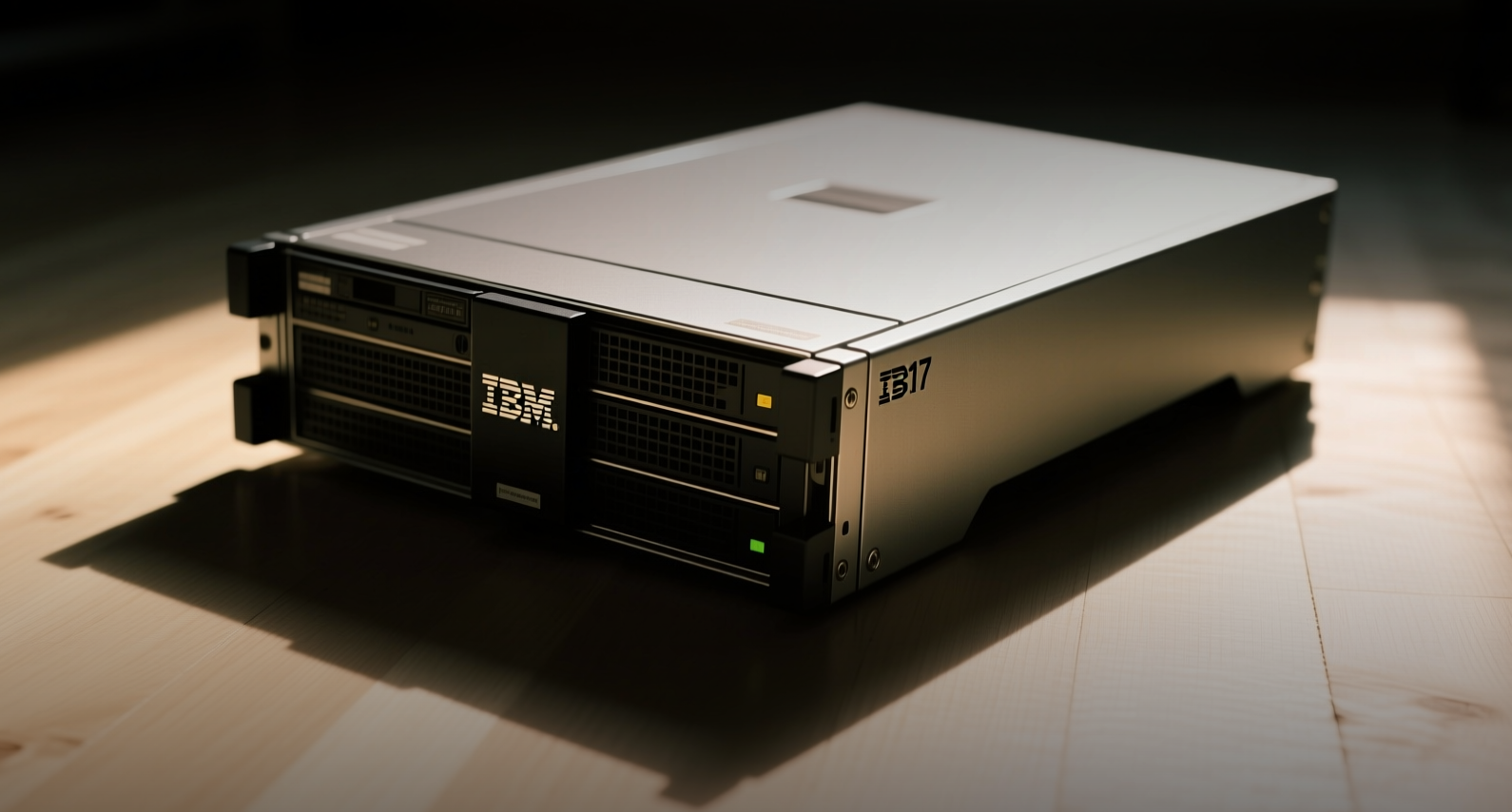
IBM's profit warning sent its shares down more than 25% on Tuesday, wiping out $69 billion in market capitalization, as customers redirected spending from software and mainframes to AI hardware and memory chips.
"These conditions require our teams to execute perfectly, and this quarter we faltered," Chief Executive Arvind Krishna said. "While we anticipated some supply chain-related impact in our expectations, we did not anticipate the magnitude of the capex reprioritization."
In June, clients shifted quarterly capital expenditures toward servers, storage and memory to secure supply-constrained AI infrastructure ahead of expected price increases, Krishna said. The company now expects infrastructure revenue to fall 7%, worse than its prior forecast of a low-single-digit decline. Sales of the z17 mainframe, IBM's flagship enterprise system designed for the AI age, also fell short.
The selloff dragged down software peers including Salesforce, Workday, Adobe and ServiceNow, which fell 2.1%, 3.5%, 4.3% and 5.8%, respectively. The broader concern: if a company as diversified as IBM can be blindsided by AI budget crowd-out, pure-play software vendors face even greater risk as the July 22 earnings season unfolds.
The warning marks a turning point in the AI spending cycle. For the past two years, enterprise technology companies benefited from a rising tide — customers increased overall IT budgets to accommodate AI experiments alongside existing software commitments. IBM's pre-announcement suggests that dynamic has flipped: AI is no longer additive but substitutional.
Memory chip makers and cybersecurity vendors were the clear winners from the shift. SK Hynix surged more than 20% on Nasdaq as investors priced in sustained demand for high-bandwidth memory used in Nvidia-based AI training clusters. CrowdStrike and Palo Alto Networks also jumped, as Barclays analysts said IBM's comments likely referred to heightened security concerns tied to Anthropic's recently launched Mythos AI model, which has accelerated corporate spending on vulnerability detection.
The Crowd-Out Mechanism
The mechanics are straightforward. AI infrastructure is capital-intensive — training clusters require thousands of graphics processing units, high-bandwidth memory and specialized networking equipment, all of which carry price tags that strain fixed annual IT budgets. When a bank or retailer commits $50 million to an AI buildout, that money must come from somewhere. IBM's core customer base of financial-services firms — including Bank of America, Citigroup, Goldman Sachs and JPMorgan Chase — appears to be making exactly that trade-off.
"This earnings season is going to be strewn with companies that fall in that category," said Gil Luria, head of technology research at D.A. Davidson. "They are hearing from their customers, 'We need to make room in our budget for AI.'"
BNP Paribas analysts said in a note Tuesday there was "no indication that this trend has yet abated." IBM is scheduled to report its official second-quarter results on July 22, when Krishna is expected to provide more detail on the outlook.
Investment Implications
For software investors, the question is whether this is a temporary budget shuffle or a structural repricing. Barclays analysts argued the mainframe delay is probably temporary, with customers postponing purchases while absorbing higher infrastructure costs. But the pattern — hardware eating software budgets — could persist as long as AI chip supply from Nvidia and others remains constrained and prices keep rising.
IBM's other software businesses, including Red Hat, continued to perform well, with revenue growth actually accelerating. That suggests the damage is concentrated in hardware-dependent segments rather than the broader software portfolio. Still, the 25% single-day decline — the largest in IBM's history — signals that the market is pricing in a more lasting shift.
Chris Versace, chief investment officer at Tematica Research, called the warning "confirmation that AI adoption and usage are rising and companies are prioritizing it to drive efficiencies and productivity." For traditional enterprise tech vendors, that prioritization comes at a direct cost.
This article is for informational purposes only and does not constitute investment advice.
