
A Hong Kong court's conviction of two Tiananmen vigil organizers extends the national security law's reach over the city's civil society, with sentencing scheduled for next week.
A Hong Kong court's conviction of two Tiananmen vigil organizers extends the national security law's reach over the city's civil society, with sentencing scheduled for next week.
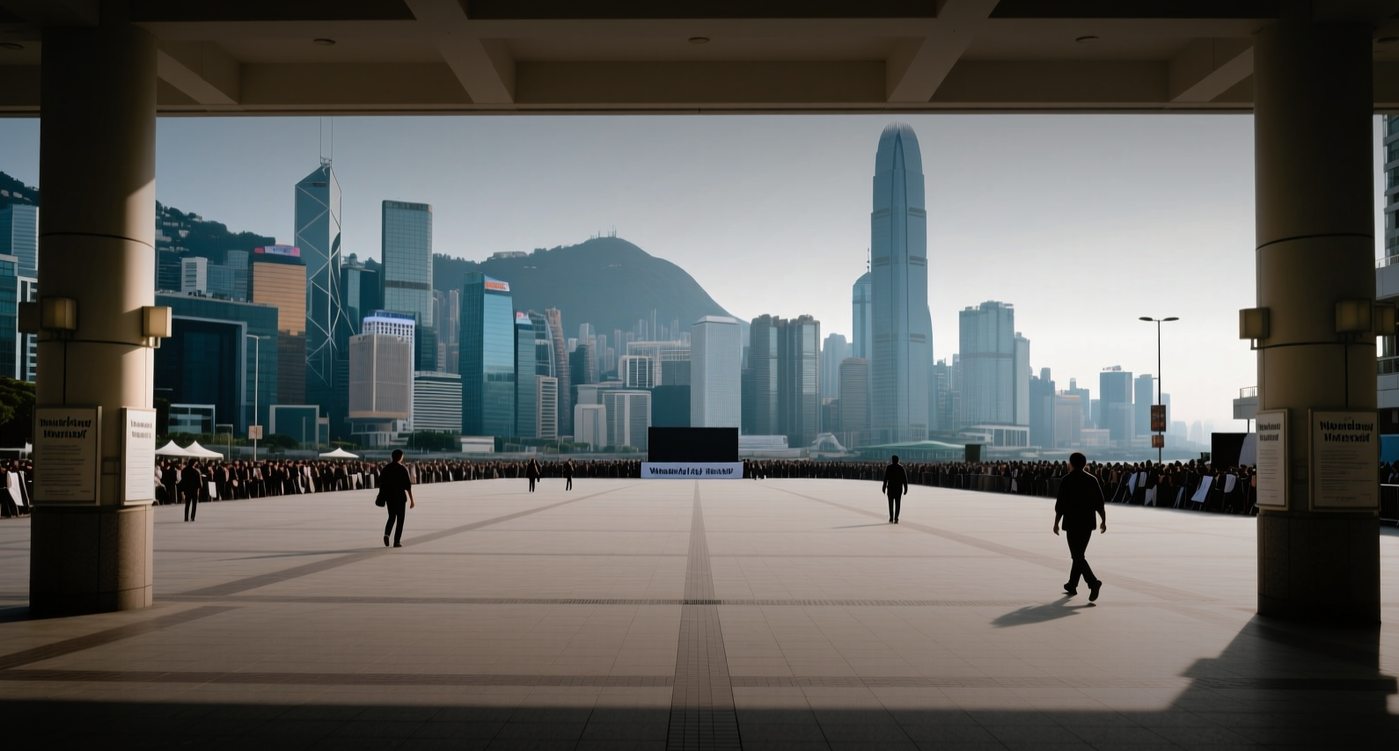
A Hong Kong court on Friday convicted two former organizers of the city's annual Tiananmen Square vigil of inciting subversion, a charge carrying a maximum 10-year prison term, in a case that tested the constitutional boundaries between free expression and national security under the 2020 security law.
"This is not a trial of the Hong Kong Alliance or the defendants, this is a trial of Hong Kong's justice system," Chow Hang-tung, who represented herself, told the court during closing arguments in June.
Lee Cheuk-yan, 69, and Chow, 41, former leaders of the Hong Kong Alliance in Support of Patriotic Democratic Movements of China, were charged in 2021. The three-judge panel ruled the alliance's call to "end one-party dictatorship" constituted incitement to subvert state power through "unlawful means," finding the phrase aimed to end the Communist Party's constitutional leadership rather than advocate for multiparty cooperation. The alliance itself was also found guilty.
The verdict extends a pattern of national security prosecutions that have dismantled Hong Kong's pro-democracy movement since the law's introduction in 2020, with dozens of civil society groups dissolving and leading activists jailed, including former media tycoon Jimmy Lai. Sentencing is expected next week, with Lee and Chow scheduled to plead for lesser penalties alongside codefendant Albert Ho, who pleaded guilty in January.
The prosecution argued that the alliance's long-standing slogan of "ending one-party rule" went beyond political advocacy, constituting an objective act of incitement through "unlawful means" — a position the court adopted. The judges wrote that the defendants "intentionally encouraged supporters of the alliance to wait for the right time to carry out the goal to 'end one-party dictatorship' by unlawful means."
Chow, a Cambridge-educated geophysicist who turned to politics after the 2008 Sichuan earthquake that killed nearly 70,000 people, rejected the characterization. "The key phrase in this case, 'ending one-party dictatorship,' is by nature a call for the rule of law," she told the court. "It seeks to end a state in which the party stands above the law and to restore our inherent rights, including that of democracy."
The case drew sharp international criticism. The U.S. State Department condemned the verdict, while UK Foreign Office Indo-Pacific minister Rosie Winterton said it demonstrated that "even peaceful acts of remembrance in Hong Kong are now treated by the authorities as threats to national security." France and Germany said they "deeply regret" the conviction, and the EU said the ruling confirmed the deterioration of freedom of expression in the city.
Hong Kong authorities defended the ruling. Chief Executive John Lee said the alliance had "deliberately sown seeds of hatred" toward the Communist Party and central government, and that their conduct endangered national security. The central government's office for safeguarding national security in Hong Kong voiced support for the court's lawful prosecution, saying the verdict "demonstrates the spirit of the rule of law."
Legal experts said the ruling establishes a precedent for how Hong Kong courts interpret the Chinese Constitution in national security cases. Willy Fu, a law professor and director of the Chinese Association of Hong Kong & Macao Studies, said the court "clearly set out how Hong Kong courts understand and apply the provisions of the Chinese Constitution," providing an important reference for future cases.
The verdict follows a series of national security prosecutions that have reshaped Hong Kong's legal landscape since 2020. The last major case involving the Hong Kong Alliance saw three activists sentenced to 4.5 months in jail in 2023 for organizing the vigil. The alliance itself dissolved in 2021 after police raided its offices and arrested its leadership.
For Hong Kong's financial community, the ruling carries indirect implications. The security law's enforcement has been a factor in Hong Kong's efforts to maintain its status as an international financial hub, with some Western firms reassessing their regional operations. However, the Hang Seng Index has shown limited direct sensitivity to individual national security prosecutions, with market focus remaining on broader economic factors including China's growth trajectory and U.S. trade policy.
Chow, who has been held in custody since her 2021 arrest, told supporters not to feel sorry for her. "I reject the characterization of me as 'unfortunate,'" she wrote. "It is actually a great fortune to be able to fight for one's own ideas. How many people in the world have such an opportunity?"
This article is for informational purposes only and does not constitute investment advice.
