
Gold traders are caught between a weakening dollar and rising Treasury yields, with the July PCE print set to break the stalemate.
Gold traders are caught between a weakening dollar and rising Treasury yields, with the July PCE print set to break the stalemate.
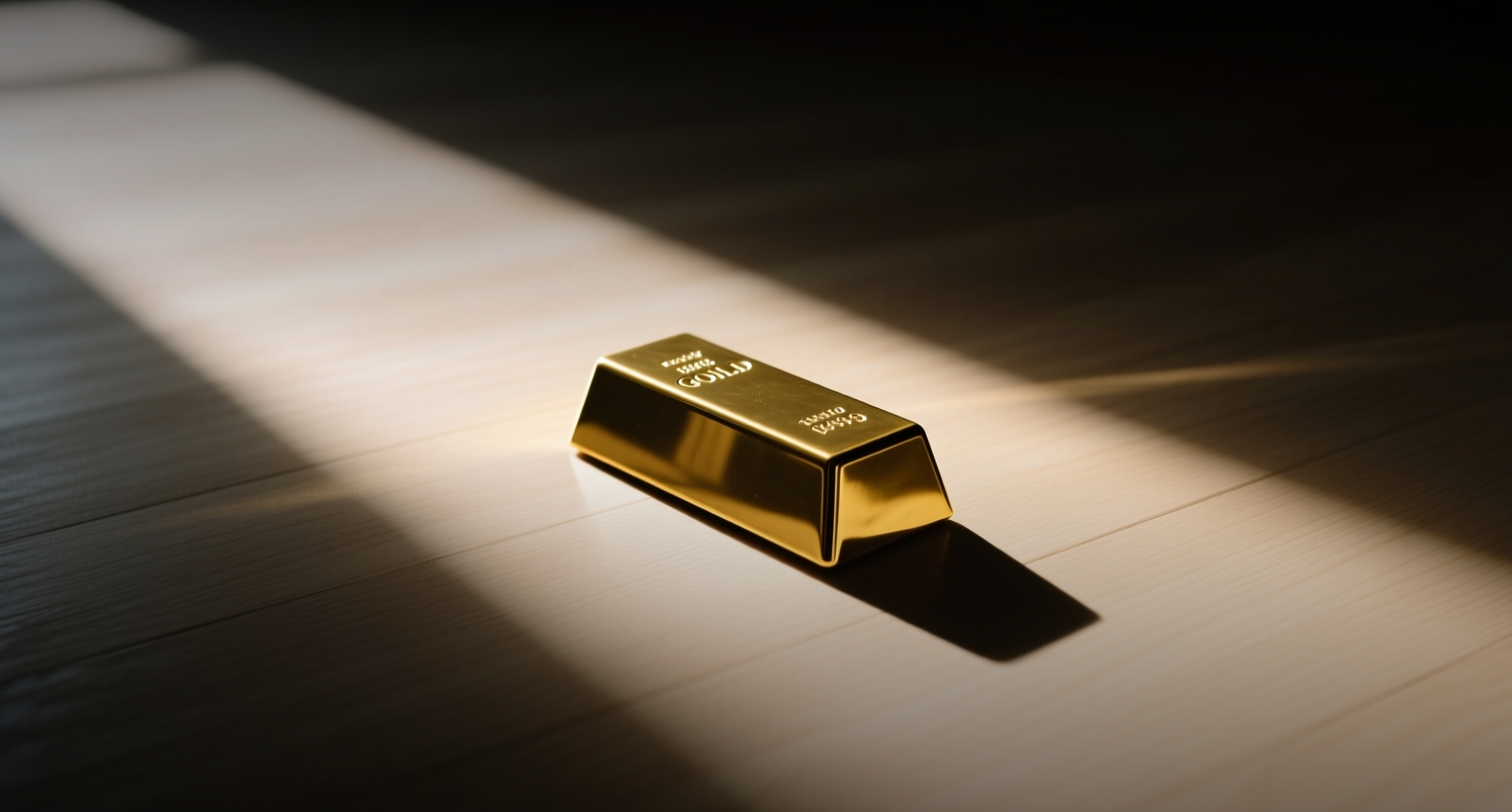
Gold traded in a narrow range near $4,020 per ounce on Wednesday, as a softer dollar offset pressure from rising Treasury yields ahead of the US PCE inflation report.
"The market is in wait-and-see mode. A weaker dollar provides a floor, but yields are capping any upside until we get clarity on inflation," said Omar Tariq, commodities analyst at Edgen.
The US Dollar Index slipped 0.2% to 99.80, making gold cheaper for international buyers, while the 10-year Treasury yield climbed 4 basis points to 4.32%. Gold has declined 2.6% over the past week from its 52-week high of $5,597.23 set in January, according to COMEX data.
The July PCE deflator, due Thursday, is the next catalyst. Economists expect the core measure to rise 0.2% month-over-month. A hotter print would reinforce higher-for-longer rate expectations, pressuring gold, while a softer number could push the metal toward resistance at $4,080.
Dollar-Yield Tug-of-War Intensifies
Gold's inverse relationship with the dollar has been the dominant driver this week. The greenback fell to its lowest level in three weeks against a basket of major currencies, providing support for bullion. At the same time, rising nominal yields lifted the opportunity cost of holding non-yielding assets, keeping gold's upside in check.
The 10-year real yield, which strips out inflation expectations, rose to 1.95%, up from 1.88% last week. Gold typically moves inversely to real yields, and the divergence this week reflects the competing forces of currency weakness and rate repricing.
PCE Data as the Deciding Factor
Thursday's personal consumption expenditures report is the Federal Reserve's preferred inflation gauge. The core PCE index, which excludes food and energy, is forecast to rise 0.2% month-over-month, according to a Bloomberg survey. The annual rate is expected to hold at 2.6%.
Gold at $4,020 per ounce is roughly 28% below its January all-time high of $5,597.23 but remains 22% above its 52-week low of $3,283.00. The metal has gained 121.8% over the past five years, outperforming the S&P 500's 68.8% return over the same period, according to SPDR Gold Shares data.
A PCE print in line with expectations would likely keep gold range-bound between $3,980 and $4,080. A downside surprise could trigger a break above $4,080 resistance, while a hotter number may test support at $3,950, a level not seen since late June.
This article is for informational purposes only and does not constitute investment advice.
