

Geely Auto will take over an idle Ford Spain assembly line to build EVs, bypassing the EU's 18.8 percent tariff on China-made cars.
Geely Auto will take over an idle Ford Spain assembly line to build EVs, bypassing the EU's 18.8 percent tariff on China-made cars.
Geely Auto will take over an idle Ford Spain assembly line to build EVs, bypassing the EU's 18.8 percent tariff on China-made cars.
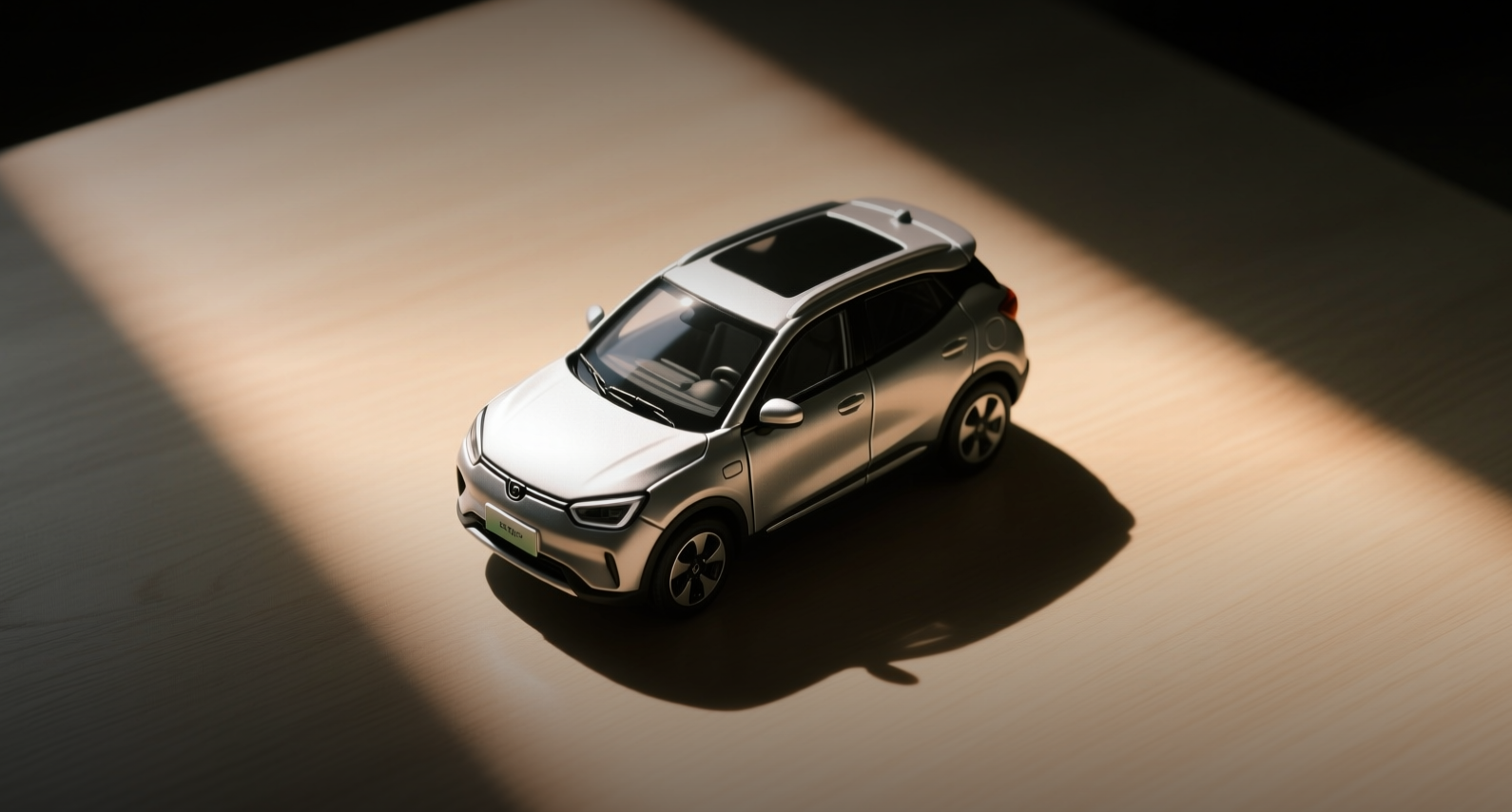
Geely Auto will take over an idle assembly line at Ford's plant near Valencia, Spain, to build its EX2 electric city car, bypassing the EU's 18.8 percent tariff on China-made EVs. Spanish Prime Minister Pedro Sanchez is expected to announce the deal Thursday at the Almussafes facility, ABC newspaper reported, citing people familiar with the transaction.
"The agreement would give Geely a manufacturing base inside the European Union, helping it to avoid EU tariffs on electric vehicles imported from China while providing direct access to the European market," ABC reported, citing its sources. Ford Europe President Jim Baumbick will attend the announcement alongside Sanchez.
The compact electric crossover measures about 4.13 meters and carries an 85-kilowatt motor with a 40-kilowatt-hour lithium iron phosphate battery, delivering a WLTP range of up to 325 kilometers. In China, the model sells as the Xingyuan under Geely's Galaxy sub-brand starting at about 65,800 yuan and ranks among the country's best-selling passenger cars. Body 3, the newest hall at Almussafes, has been idle since 2023 after Ford ended production of the Mondeo, Galaxy and S-Max. The line requires about 100 workers per shift due to high automation.
The deal gives Geely a production base inside the EU at a time when Chinese automakers are racing to establish European manufacturing to avoid tariffs. For Ford, offloading the underused hall cuts fixed costs at a site running well below capacity — annual output has fallen below 100,000 units from more than 300,000 before the pandemic — while preserving jobs and securing the next Bronco production for Valencia from 2028.
The Valencia deal adds to a growing list of Chinese automakers setting up production in Spain, which has drawn more such investments than any other European country. MG, owned by SAIC, confirmed in June it will build its first European plant at Ferrol in Galicia with an initial investment of 200 million euros and eventual capacity of 120,000 vehicles. SAIC faces combined anti-subsidy duties of 45.3 percent on top of the standard 10 percent import tariff, among the highest applied to any Chinese manufacturer.
Chery and Ebro Motors have restarted the former Nissan plant in Barcelona, assembling the Ebro S400 and S700 on Chinese platforms. Stellantis is moving through Leapmotor International, which it controls at 51 percent, adding an electric Opel crossover in 2028 at Figueruelas in Zaragoza sharing a line with the Leapmotor B10.
Chinese brands now account for more than 11 percent of car sales in Spain, up from 6.6 percent in 2024. Across Europe, Chinese brands reached 5 percent of the market in 2025 on 628,374 registrations, led by SAIC with 305,717 units and BYD with 187,657 registrations — the latter tripling its share from 0.4 percent to 1.4 percent.
The sale marks the latest step in Ford's European restructuring as the automaker shifts toward partnerships rather than standalone production. The electric Explorer and Capri already use Volkswagen's MEB platform, and two further electric models built on Renault architecture are due before the end of the decade.
Ford sold Volvo Cars to Geely in 2010 for $1.8 billion, having paid about $6.45 billion for the Swedish marque in 1999. Volvo has since become the anchor of a European portfolio that also includes Polestar and Lynk & Co.
Geely Auto shares, which trade in Hong Kong, may see positive momentum as the deal reduces tariff exposure and expands the company's European production footprint. Ford's strategy of offloading idle capacity while partnering on platforms allows it to focus capital on higher-margin models like the Bronco.
This article is for informational purposes only and does not constitute investment advice.
