
Eurostat's upward revision to 0.6% quarterly growth shows euro zone resilience, yet sustained Hormuz disruption from the Iran war could stall the recovery.
Eurostat's upward revision to 0.6% quarterly growth shows euro zone resilience, yet sustained Hormuz disruption from the Iran war could stall the recovery.
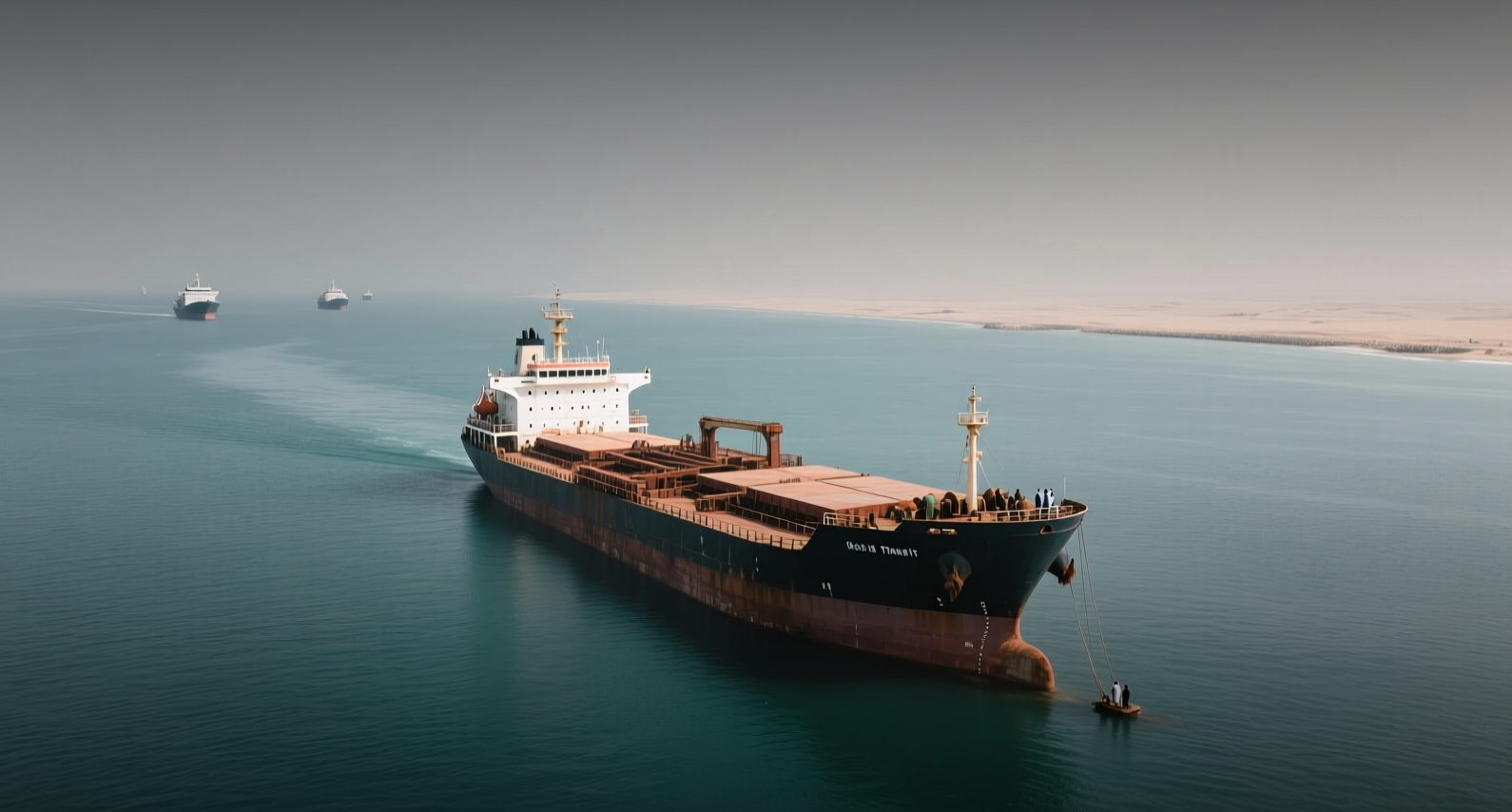
The euro zone's economy expanded 0.6% in the second quarter, beating the 0.4% initially reported, but the Iran war's blockade of the Strait of Hormuz threatens to unwind that momentum as Brent crude holds near $97 a barrel.
"With oil also flowing through pipelines in the region, we're probably two-thirds or more of preconflict flows," Chris Wright, U.S. Energy Secretary, told CNN, estimating that 9 million barrels a day still transit the strait.
Eurostat revised the bloc's quarterly GDP up from an initial 0.4% reading, with household consumption contributing 0.2 percentage point and foreign trade adding 0.9 percentage point. Annual growth now stands at 1.2%, up from 1.0% previously estimated, after the euro zone recorded zero growth in the first quarter as the war began Feb. 28.
The resilience faces a structural test. Iran's Supreme National Security Council said Sunday it plans to announce an "exclusion zone" outside the strait, threatening to place any vessel attempting transit on a sanctions list. The U.S. naval blockade has already redirected 92 commercial ships and disabled three, while Washington struck three Iranian oil tankers on Sept. 5 in response to ballistic missile attacks on U.S. warships.
Hormuz Escalation Pressures Energy Costs
Iran's oil exports have collapsed under the blockade, falling to roughly 220,000-255,000 barrels per day in August from about 740,000 bpd in July and peaks near 2 million bpd before the conflict, according to ship-tracking data. Treasury Secretary Scott Bessent said about 30 million barrels of Iranian crude remain that China has not already purchased, describing the campaign as "the largest effort to isolate a country economically."
The euro zone's exposure runs through energy prices. Brent crude has climbed to $97.43 a barrel, up 0.8 percent on the day, while WTI trades at $92.31. European shares have dipped as rising oil costs weigh on margins, with the DAX down 0.3 percent and the EURO STOXX 50 off 0.2 percent. German 10-year bund yields edged up to 3.36 percent ahead of this week's European Central Bank meeting.
The last time the euro zone confronted a comparable energy supply shock was the 2022 Russia-Ukraine war, when natural gas prices pushed inflation to double digits and the bloc narrowly avoided recession. The current shock differs in one respect: second-quarter data shows the economy accelerated even as the war entered its fourth month, driven by strong foreign trade and household consumption.
What's at Stake for the Euro Zone
The question is whether that resilience can hold. Iran's new leadership has shown a willingness to dig in, with Mohsen Rezaei, head of the Supreme National Security Council, saying Tehran is "pursuing diplomacy with guarantees" after the June memorandum of understanding collapsed within days. The U.S. has adopted a dual-pronged approach, striking Iranian tankers while targeting foreign financial institutions that handle Iran's money.
For the euro zone, the transmission chain is direct: sustained disruption to Hormuz flows keeps energy prices elevated, feeding through to inflation and squeezing household purchasing power. The second-quarter data showed household consumption contributed 0.2 percentage point to growth, but that contribution could reverse if energy costs continue to climb.
Bessent predicted the Strait of Hormuz would become "irrelevant to the oil industry within two years" as Gulf producers develop alternative pipeline routes. But for now, the waterway remains critical, and the euro zone's growth momentum depends on whether the blockade holds or escalates further.
This article is for informational purposes only and does not constitute investment advice.
