

AI's power hunger is turning Cummins' diesel and natural gas generators into a growth engine as hyperscalers pour $750 billion into data center infrastructure.
AI's power hunger is turning Cummins' diesel and natural gas generators into a growth engine as hyperscalers pour $750 billion into data center infrastructure.
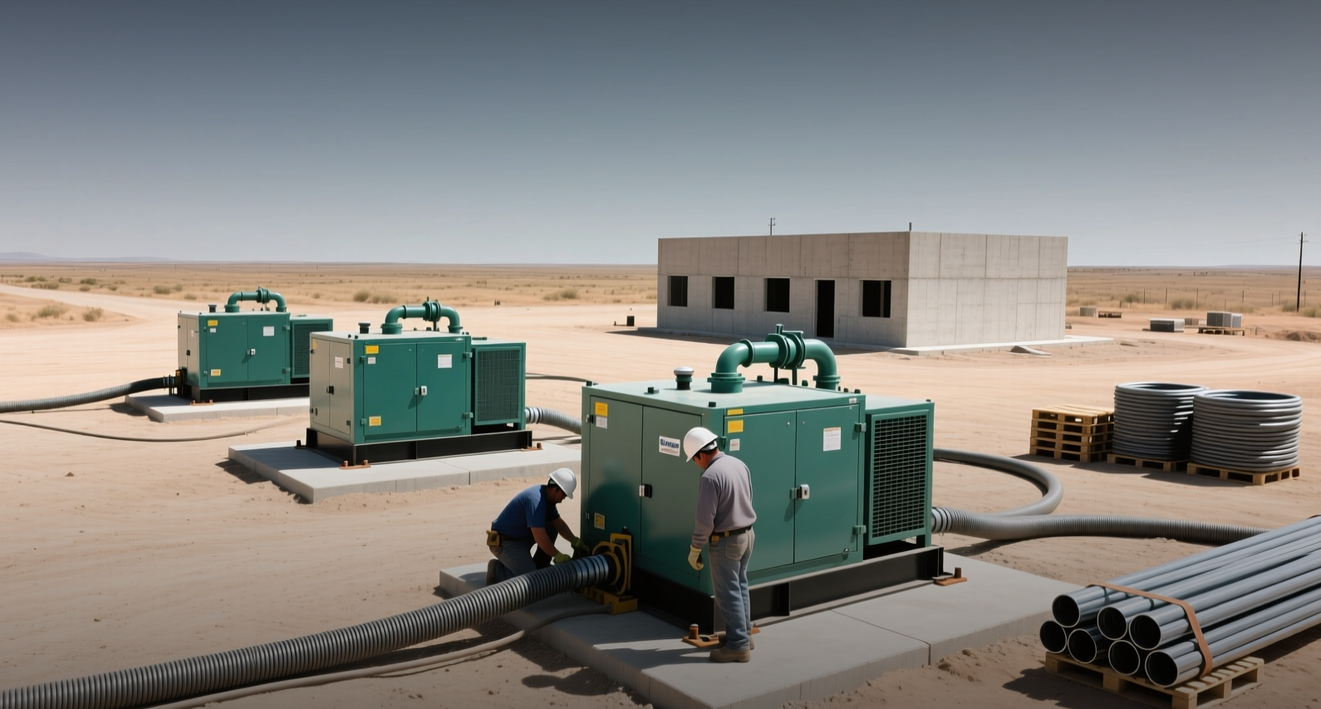
AI data centers are straining power grids, and Cummins is cashing in: power systems sales jumped 19 percent in the second quarter as hyperscalers prepare to spend $750 billion on AI infrastructure this year.
"Growth in the data center market is being driven partly by sales of diesel and natural gas generator sets used for backup power," Cummins said in its second-quarter earnings commentary, as AI racks become more power-hungry.
Traditional data center racks averaged around 12 kilowatts, while the latest AI racks could reach 600 kilowatts or more, Cummins said. The more electricity these facilities consume, the more backup generating capacity they need when the grid fails. Segment EBITDA margin reached 24.5 percent, up from 22.8 percent a year earlier, while the company's core engine business grew just 6 percent.
The opportunity extends beyond emergency backup. In June, Cummins agreed with Circe Energy to supply high-powered natural gas generators for a high-performance-computing data center in West Texas, part of a behind-the-meter microgrid providing primary power with deliveries scheduled from 2026 through 2030. Grid connections can take years, and AI developers are not waiting.
S&P Global estimates Alphabet, Amazon, Meta Platforms, Microsoft, and Oracle will collectively spend approximately $750 billion on capital expenditures in 2026, equal to about 38 percent of their combined revenue. Much of that spending is going into the data centers that support AI workloads, and power is emerging as the binding constraint.
Elon Musk's Space Exploration Technologies had to build its own natural gas power plant to supply its Colossus I and Colossus II data centers. Cummins is helping AI companies do the same, both with backup power and, increasingly, prime power. The company's generators range from diesel units for emergency backup to natural gas systems that can run continuously, giving data center operators flexibility as grid connections lag demand.
Cummins has long provided off-grid power to industries like mining, where operations sit in remote locations. This is not new technology, just a new application. The company's engines do not have to turn truck wheels; they can also generate electricity. Rivals including Caterpillar and Generac also supply generator sets, but Cummins' scale in high-output diesel and natural gas units gives it an edge in the largest facilities.
Cummins is not an AI pure play. Trucks, engines, components, and industrial equipment remain the bulk of its business. But AI is becoming a new source of growth, and Wall Street has noticed. The stock trades at roughly 30 times earnings, well above its five-year average of 17.5 times, with a market capitalization near $81 billion.
Investors do not have to bet on which AI model wins or which semiconductor eventually displaces today's graphics processing units. Every data center requires reliable backup power, and Cummins already sells the equipment that provides it. If hyperscalers really spend $750 billion this year, Cummins needs only a small slice of that infrastructure build-out for data centers to become a much larger part of its business.
The build-out is not a one-quarter phenomenon. Cummins said demand for data center power equipment is accelerating as AI workloads expand, and the Circe Energy deliveries run through 2030, giving investors multi-year visibility into the revenue runway. The premium valuation reflects the market pricing in sustained data center demand, but it also leaves little room for error if AI capital spending slows.
This article is for informational purposes only and does not constitute investment advice.
