
China's decision to bar mortgages on unfinished homes stripped 6.2 percent off Hong Kong-listed developer shares Monday, cutting off the presale funding that financed 68 percent of new-home sales in 2025.
China's decision to bar mortgages on unfinished homes stripped 6.2 percent off Hong Kong-listed developer shares Monday, cutting off the presale funding that financed 68 percent of new-home sales in 2025.
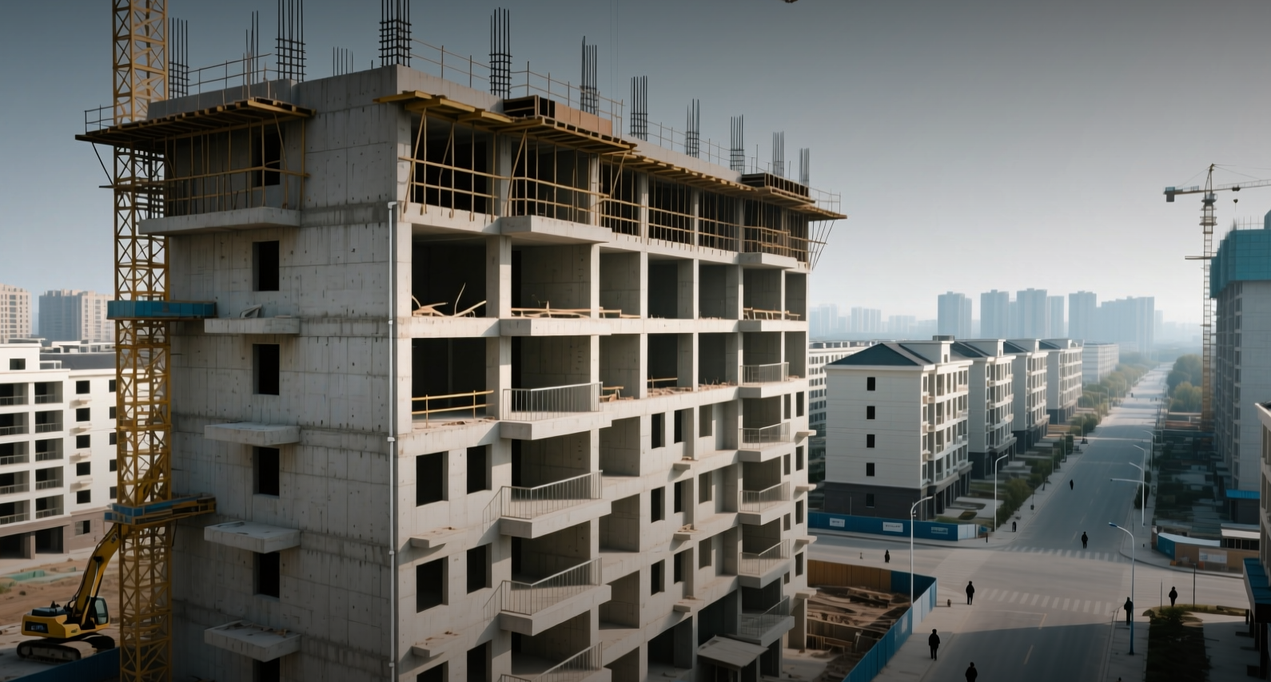
China's decision to bar mortgages on unfinished homes stripped 6.2 percent off Hong Kong-listed developer shares Monday, cutting off the presale funding that financed 68 percent of new-home sales in 2025.
Chinese property developers lost as much as 17.6 percent in Hong Kong trading Monday after Beijing barred mortgages on unfinished homes, a regulatory shift that severs the presale model that has financed the sector for decades.
"Developers can no longer rely on early mortgage proceeds to fund construction. Construction-phase funding must come from developers' own funding, development loans," Nomura said in a research report.
The CSI300 Real Estate Index closed down 4.7 percent, while an index tracking Hong Kong-listed Chinese developers fell 6.2 percent. Greentown China shed 17.6 percent, China Jinmao lost 15.9 percent and Yuexiu Property dropped 13.6 percent. Larger state-owned players China Resources Land and China Overseas Land & Investment each declined more than 9 percent, while financially sound private developers Longfor Group and Seazen fell 7.1 percent and 5.8 percent.
The overhaul removes a funding channel that supplied 40 percent of development capital, and one developer executive said 40 percent of cash flow would become unavailable for business use. With land sales revenue already down 30.8 percent year over year and development investment off 19.2 percent, the transition threatens to accelerate consolidation toward state-backed developers that borrow at 2 to 3 percent versus 5 to 6 percent for private rivals.
The rules, issued Friday by the central bank and financial regulator, require mortgages to be issued only after residential projects are completed. Local governments were also directed to promote sales of completed units to prevent delivery risks. The changes target a system where developers sold homes before construction finished and used buyer payments to fund ongoing projects.
Everbright Securities said the measures "have raised the bar for developers in terms of their financing ability and management skills," a shift that analysts expect to push weaker and smaller developers out of the market. State-owned developers now dominate a sector where most private property firms have defaulted, and the funding gap will widen that divide.
The new measures also extend the maximum personal mortgage term to 40 years from 30 years, a move analysts said could free up cash for household consumption. But Standard Chartered's chief economist for Greater China and North Asia, Shuang Ding, said housing demand "is likely to remain constrained by employment, and therefore the income outlook, and expectations of a further decline in home prices."
Existing home prices in smaller cities are down more than a quarter from 2020 levels, while the recovery in new-home prices in Beijing and Shanghai has stalled. The property sector's collapse, now entering its sixth year, has been a persistent drag on the world's second-biggest economy.
Nomura expects the new regime to reduce the supply of new apartments, pushing buyers toward existing housing. That could benefit property platforms focused on secondary-market transactions, including KE Holdings, also known as Beike, though its shares still fell about 2.5 percent Monday.
The last time Beijing attempted a comparable structural shift in housing finance was the 2021 "three red lines" policy that capped developer leverage. That move preceded a wave of defaults that began with Evergrande and reshaped the sector's ownership. The current overhaul, by contrast, targets the demand side of the funding equation, and its effects will compound as developers with high leverage, weak cash flows and limited access to credit struggle to adapt.
Banks are likely to become more selective in extending development loans, one bank source said, deepening a trend where credit flows mostly to high-quality projects and top-tier developers. That dynamic favors the state-owned champions that can borrow at 2 to 3 percent interest rates, compared with 5 to 6 percent for private developers.
This article is for informational purposes only and does not constitute investment advice.
