
Key Takeaways: China's private factory gauge climbed to 51.5 in August, its ninth straight month of expansion and the longest upturn in five years.
Key Takeaways: China's private factory gauge climbed to 51.5 in August, its ninth straight month of expansion and the longest upturn in five years.
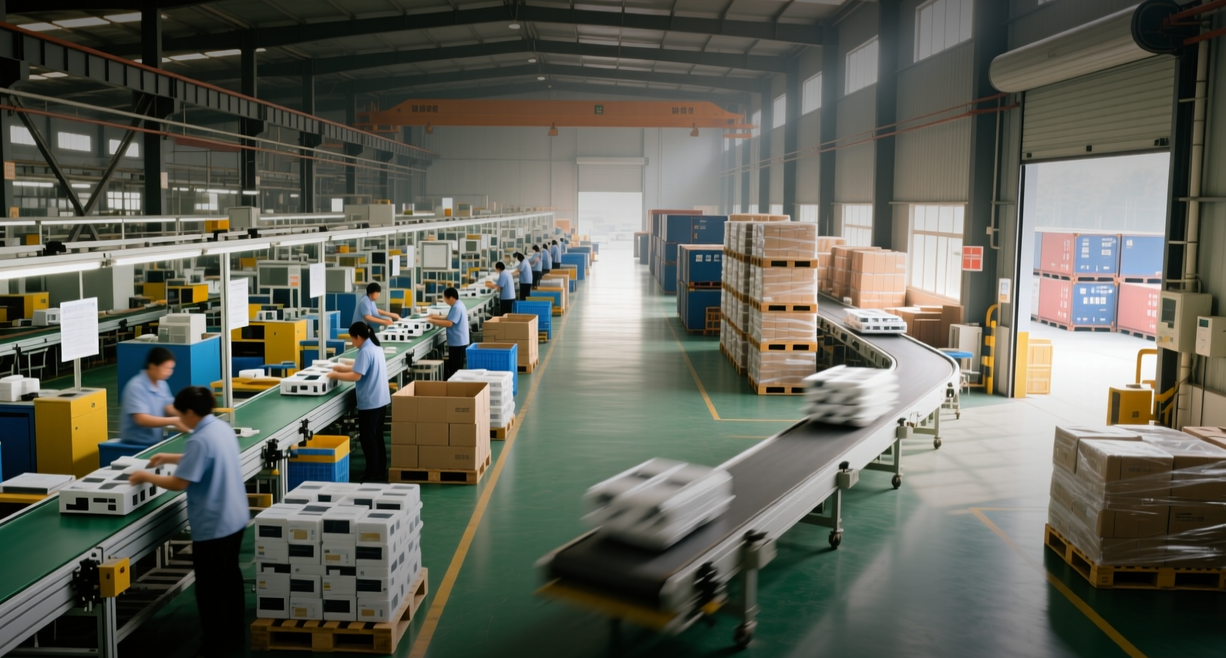
China's private factory gauge climbed to 51.5 in August, its ninth straight month of expansion and the longest upturn in five years.
China's RatingDog manufacturing PMI rose to 51.5 in August from 50.9 in July, beating the 51.0 consensus and extending the longest expansionary streak in nearly five years as new export orders grew at their fastest pace in six months.
"The improvement was broad-based, with new orders rising for a fifteenth straight month and export business growing at the fastest pace in six months," said Yao Yu, founder of RatingDog.
The reading, released Tuesday with S&P Global, marks a ninth consecutive month above the 50 no-change mark. Output expanded for a ninth month at the strongest rate since May, while backlogs rose for a seventh month at the fastest pace since March. Input price inflation accelerated for the first time in four months on higher metals and oil costs, yet manufacturers cut output prices for the first time in 2026 on competitive pressure. Business sentiment eased to a seven-month low.
The data landed a day after the official NBS manufacturing PMI also improved, giving traders confirmation from both the state-weighted and export-weighted surveys in the same week. Base metals rallied, with SHFE zinc breaking above 27,000 yuan a metric ton and LME zinc touching $3,980.5, the highest since May 2022, while the Australian dollar drew support as a liquid proxy for Chinese demand.
The manufacturing gauge's resilience comes as Beijing leans on export demand to offset a soft domestic property market. New export orders accelerated on strong consumer-goods demand, a channel more directly tied to Australian commodity exports than domestically stimulated activity. The last time new orders grew for this long was 2018, before the US-China trade war curtailed shipments.
On prices, input costs rose on higher metals and oil, but output prices fell for the first time in 2026 as competition and promotional activity squeezed margins. Yao said the input-price increase remained moderate. Employment held steady, with consumer-goods makers adding staff while intermediate and investment-goods firms trimmed headcount.
The cross-asset reaction was immediate. Base metals broadly rose on the Shanghai Futures Exchange, with SHFE zinc climbing 2.68 percent to a session high of 27,165 yuan a metric ton, the strongest since May 2022. LME zinc gained 2.29 percent to $3,980.5 a ton, while copper and aluminum each advanced. The Australian dollar, which trades as a liquidity proxy for Chinese economic conditions, drew support from the export-order strength.
The data also feeds into a broader picture of incremental support for the Australian growth outlook. Australia's Q2 GDP components released this week showed net exports added 0.1 percentage point to growth, with government demand and inventories contributing a further 0.33 percentage points.
Looking ahead, Yao said the manufacturing PMI is expected to remain in expansionary territory in the near term. The reading reduces pressure on Beijing to roll out additional stimulus, though the softening business-confidence gauge and the first output-price cut of the year point to persistent competitive pressure in the factory sector.
This article is for informational purposes only and does not constitute investment advice.
