
China's manufacturing sector expanded at its fastest pace in three months in August, driven by accelerating export orders and stronger domestic demand.
China's manufacturing sector expanded at its fastest pace in three months in August, driven by accelerating export orders and stronger domestic demand.
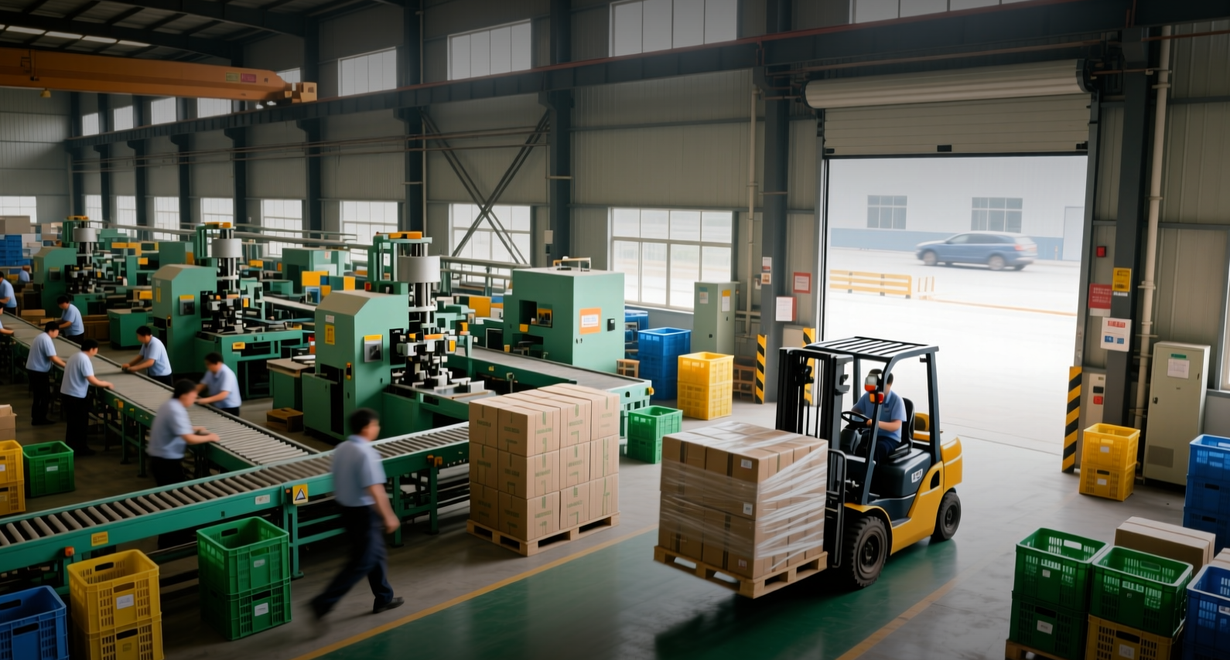
China's RatingDog Manufacturing PMI rose to 51.5 in August from July's four-month low of 50.9, beating the 51.0 consensus forecast in a Reuters poll, as output and new orders accelerated on the back of the sharpest rise in foreign sales in six months. The reading marks the ninth consecutive month of expansion above the 50-mark that separates growth from contraction, and the strongest print since June.
"The continued strength of these sectors points to ongoing optimization and upgrading of China's manufacturing structure," Huo Lihui, chief statistician at the National Bureau of Statistics, said in a statement accompanying the official PMI release.
New orders rose for the fifteenth consecutive month, the longest stretch of growth since 2018, while output expanded for nine straight months with the latest gain the strongest in three months. Employment held steady after increases in June and July, but stronger demand pushed backlogs of work to their fastest accumulation since March. Finished goods inventories grew at the sharpest rate since September 2025, and firms increased purchasing activity after scaling it back in July.
The private-sector survey diverges from the official NBS gauge, which showed manufacturing PMI at 49.8 percent in August, up 0.6 percentage points from July but still in contraction territory. The non-manufacturing business activity index stood at 49.0 percent, unchanged from July, while the composite PMI output index rose 0.2 percentage points to 49.5 percent. The NBS data showed the production index climbed to 50.4 percent and the new orders index rose to 50.6 percent, with both returning to expansion. Equipment manufacturing PMI came in at 51.4 percent and high-tech manufacturing at 52.9 percent, showing the resilience of new growth drivers.
On the price front, input cost inflation accelerated for the first time in four months, though modestly, as crude oil and non-ferrous metal prices moved higher. The NBS purchasing price index for major raw materials jumped 3.4 percentage points to 56.6 percent, while the ex-factory price index rose 2.6 percentage points to 50.4 percent. However, manufacturers cut output prices for the first time in 2026, citing intense competition and promotional discounting — a sign that pricing power remains constrained despite firmer demand.
The divergence between the private-sector and official surveys reflects an uneven recovery in the world's second-largest economy. Weakening demand at home has strained a broader recovery in the US$20 trillion economy, and external uncertainties including trade tensions and geopolitical risks continue to cloud the outlook. China's GDP growth slowed to 4.3 percent in the second quarter, the slowest in more than three years and below forecasts, after expanding 5 percent in the first quarter.
The export-led momentum visible in the RatingDog survey provides some relief for policymakers, but the softer official reading suggests the manufacturing recovery remains fragile. The large-enterprise PMI returned to expansion at 50.6 percent, up 1.1 percentage points, while smaller firms continued to lag. Business sentiment in the private-sector survey weakened to a seven-month low, with factories remaining optimistic about production over the next 12 months but expressing growing caution.
For global investors, the stronger-than-expected reading is a positive signal for China-exposed equities and commodity-linked assets, with the Australian dollar — often used as a China proxy — likely to find support. The data also reduces the near-term case for aggressive monetary easing from the People's Bank of China, which could weigh on rate-sensitive sectors while supporting the yuan. However, the persistent gap between the two PMI surveys and the softening of output prices suggest that deflationary pressures in the manufacturing sector have yet to fully abate, which could keep pressure on Beijing to deliver additional stimulus measures in the coming months. The next official PMI release for September is scheduled for the end of the month, and markets will watch whether the recovery broadens beyond the export-oriented segments.
This article is for informational purposes only and does not constitute investment advice.
