
Oil markets priced the risk before the barrels disappeared — and sold the news when the sanctions arrived.
Oil markets priced the risk before the barrels disappeared — and sold the news when the sanctions arrived.
Oil markets priced the risk before the barrels disappeared — and sold the news when the sanctions arrived.
Brent crude fell 2% to $92.60 a barrel on Aug 24 even as Washington unveiled its toughest sanctions package on Iran, as traders locked in gains after two weeks of 5% rallies.
"Sanctions have been the only thing to bring Iran to heel," said John Kilduff, partner at Again Capital.
WTI declined $1.76, or 2%, to $85.20 a barrel. Both benchmarks had logged a second consecutive weekly gain of more than 5% in prior sessions, with Brent settling at $94.39 on Aug 21 after rising 6.4% on the week.
The sell-off reflects profit-taking rather than a reassessment of geopolitical risk. JPMorgan models Brent near $114 a barrel if Strait of Hormuz disruption persists three months, while Goldman Sachs sees $120 in a shipping stress case.
The August price action encapsulates a recurring dynamic in geopolitical commodity markets: futures price expectations, not outcomes. When credible sanctions language emerged from Washington, traders repositioned within hours, before a single tanker changed course. By the time the US Treasury Secretary prepared to announce what was described as the toughest sanctions package ever imposed on Iran, a substantial risk premium was already embedded in prices — and the announcement triggered a classic buy-the-rumour, sell-the-news reversal.
The enforcement architecture matters as much as the policy itself. The August language, which included threats against third-country buyers trading with Iran, marked a move toward secondary sanctions. This category is analytically distinct from direct Iran-facing measures because it creates compliance pressure on neutral parties, particularly major importers in Asia, without those countries being direct targets of US foreign policy. Secondary sanctions have historically proven more disruptive to physical supply flows than direct measures, because they force purchasing decisions at the corporate governance level inside foreign firms that depend on access to US financial systems.
Hormuz transit has already collapsed 90%
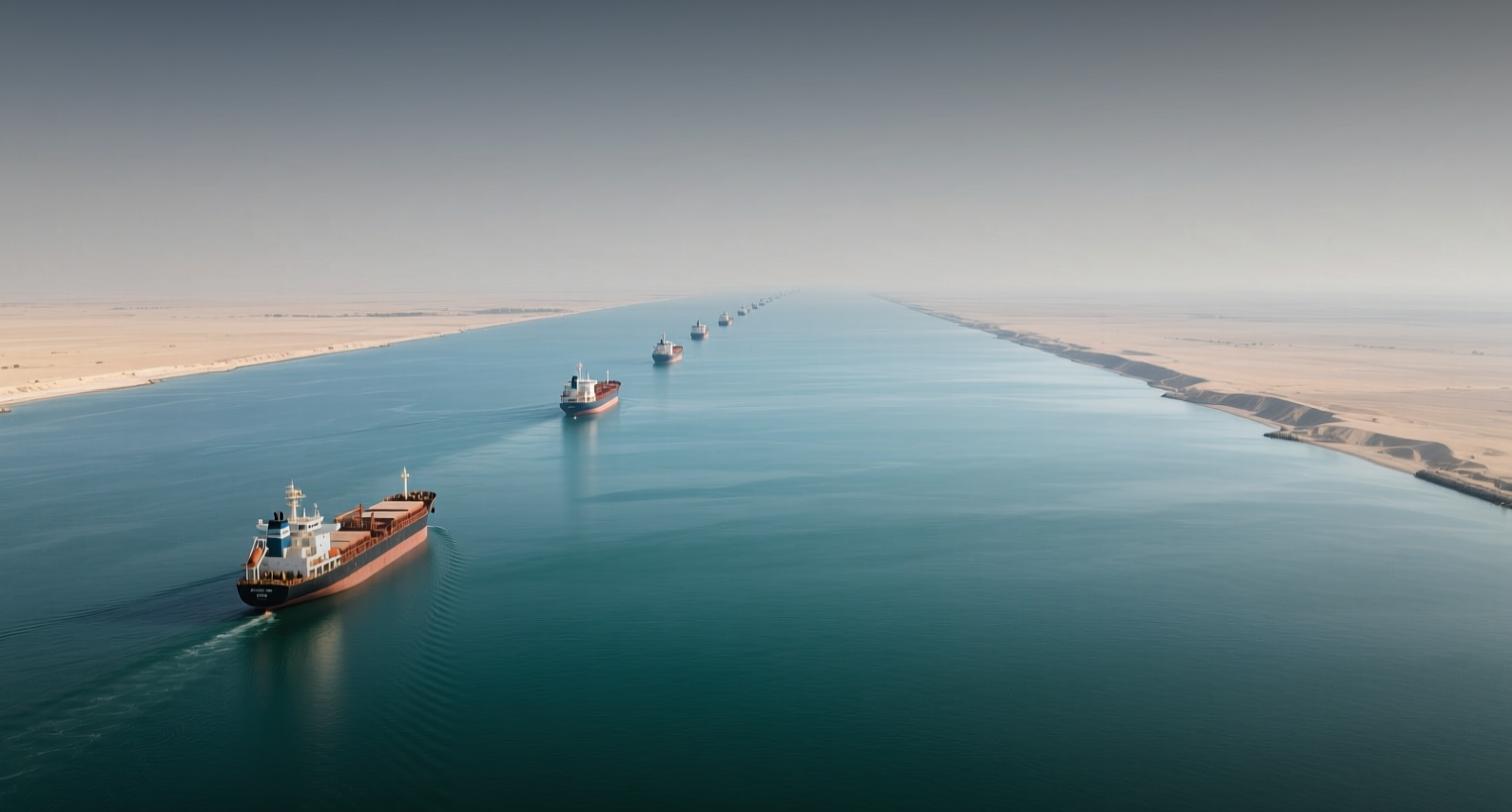
The deeper risk sits in the Strait of Hormuz, which carries roughly one-fifth of global oil supply and narrows to about 33 kilometres at its tightest point. UK Maritime Trade Operations data shows ship traffic through the strait has dropped 90% compared with pre-conflict levels, with only 18 ships exiting the Gulf and 21 entering since Feb 28 — about 4% of normal historical activity. The Omani passage inside the strait accounted for 14 of 16 recorded incidents between July 6 and Aug 6, and total incidents reached 74 from the start of the year through Aug 6.
The price impact of Hormuz disruption is not proportional to the volume of Iranian exports at risk. It scales with the probability that the entire transit corridor becomes operationally unreliable. Even a temporary closure or sustained inspection regime targeting non-Iranian vessels would force rerouting around the Cape of Good Hope, adding weeks of transit time and dramatically increasing freight costs across the full range of Gulf exporters.
Bank scenarios diverge on duration
JPMorgan estimates each additional month of Hormuz-related disruption could add roughly $7 to $8 per barrel to Brent. Under a three-month disruption scenario, the bank's modelling points to average monthly Brent prices around $114. Goldman Sachs projects $120 in its stress case if shipping disruptions persist beyond the initial shock, but its base case assumes eventual de-escalation, with Brent averaging $80 in Q4 and $75 the following year.
The divergence between base-case and stress-case pricing is unusually wide, which itself reflects elevated uncertainty. A useful way to read bank oil scenarios is by asking two questions: how long does the disruption last, and how fully does it interrupt transit rather than just Iranian exports?
Iran's response posture is not monolithic. Pragmatic elements within the leadership have shown preference for de-escalation, while hardline factions appear willing to absorb economic pressure rather than make concessions. Commonwealth Bank of Australia's commodities research highlighted that if maximum-pressure measures prove effective in economically isolating Iran, the country's incentive to respond through destabilising action in regional energy corridors could increase rather than decrease. This creates a counterintuitive risk: successful sanctions enforcement may increase, not reduce, the probability of a kinetic escalation that triggers the very Hormuz disruption that markets fear most.
The UAE's suspension of trade and financial transactions with Iran adds another layer. The UAE supplied about 30% of Iran's imports in 2024, worth roughly $21 billion, while around 13% of Iranian exports were linked to the UAE, according to Reuters. A prolonged suspension could disrupt supply chains, cross-border payments, and Iran's access to regional trade networks.
For refiners, importers, and airlines, the practical question is hedging concentration. Crude quality mismatches mean a refinery configured for light sweet Iranian grades cannot simply switch to heavy sour Arabian barrels without significant processing adjustments. Spare capacity from OPEC members frequently overstates the speed at which replacement barrels can reach global refineries.
If enforcement holds and Chinese buyers pull back, Brent drifts toward triple-digit territory. If diplomacy resumes and freight premiums compress, prices normalise toward Goldman's base-case range of $75 to $80.
This article is for informational purposes only and does not constitute investment advice.
