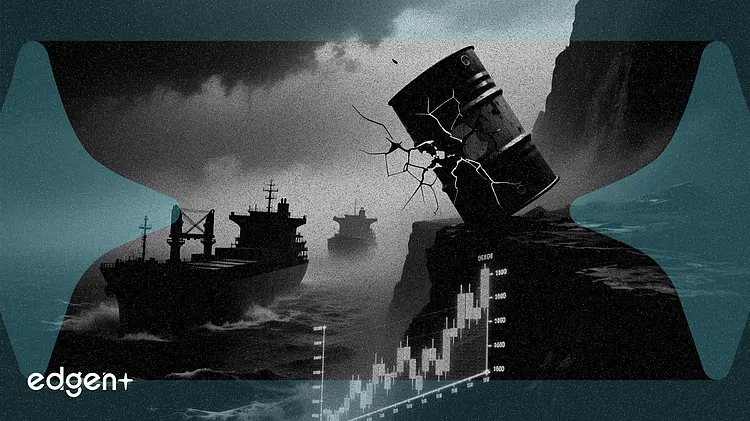
Global oil prices eased Wednesday after two Chinese supertankers laden with about 1 million barrels of crude exited the Strait of Hormuz, signaling a potential breakthrough in a conflict that has caused the worst-ever disruption to global energy supplies.
Brokerage firm Citi, however, warned that crude markets may still be underestimating the risk of a prolonged supply disruption. The firm expects Brent crude to climb to $120 per barrel in the near term, citing growing risks of extended disruptions as tensions in West Asia continue.
The apparent crack in the three-month blockade saw Brent crude futures fall to as low as $110.16 a barrel, while U.S. West Texas Intermediate crude slipped to $103.88 per barrel. The passage of the tankers, carrying Iraqi crude, is a significant development in a crisis that has blocked hundreds of vessels in the Gulf and damaged energy facilities across the region, which normally handles nearly one-fifth of global oil shipments.
The movement comes as U.S. President Donald Trump and his deputy, JD Vance, signaled progress in talks with Tehran. Trump, who said he was an hour from authorizing another attack, noted that Iranian leaders are “begging for a deal.” The U.S. president is facing intense political pressure to resolve the crisis as high fuel prices have caused his approval rating to plummet ahead of congressional elections in November.
Diplomatic Thaw or False Dawn?
Hopes for a resolution have brightened after positive comments from Washington, though the situation remains fragile. Vice President Vance acknowledged difficulties in negotiating with a “fractured Iranian leadership,” while Iranian officials maintained a defiant tone. Ebrahim Azizi, head of the Iranian parliament’s national security committee, said on X that Trump’s pause was due to the realisation that any move against Iran would mean “facing a decisive military response.”
Tehran’s latest peace proposal, which includes the lifting of sanctions and reparations for damages, appears little changed from a previous offer Trump rejected as “garbage.” The conflict, which began nearly three months ago, has killed thousands and has yet to achieve its stated U.S. goals of dismantling Iran’s nuclear program or curbing its support for regional militias.
Global Markets Adjust to Supply Shock
The disruption has forced other nations to adapt. The UK government this week relaxed sanctions on Russian crude, issuing a licence to allow the import of jet fuel and diesel refined in third countries. The move, which came into effect indefinitely, is a direct response to rising prices resulting from the closure of the Strait of Hormuz.
The pressure is also being felt by consumers. In the UK, the average price of a litre of petrol has eclipsed previous highs, standing at 158.5p on Tuesday, according to the RAC. The motoring group warned that prices are likely to increase to at least 160p a litre in the coming weeks unless there is a sustained drop in the price of oil.
This article is for informational purposes only and does not constitute investment advice.