
Key Takeaways: German automakers are losing their grip on China's premium car market as local EV brands pull ahead on technology and speed, leaving BMW, Mercedes-Benz and Volkswagen scrambling to catch up.
Key Takeaways: German automakers are losing their grip on China's premium car market as local EV brands pull ahead on technology and speed, leaving BMW, Mercedes-Benz and Volkswagen scrambling to catch up.
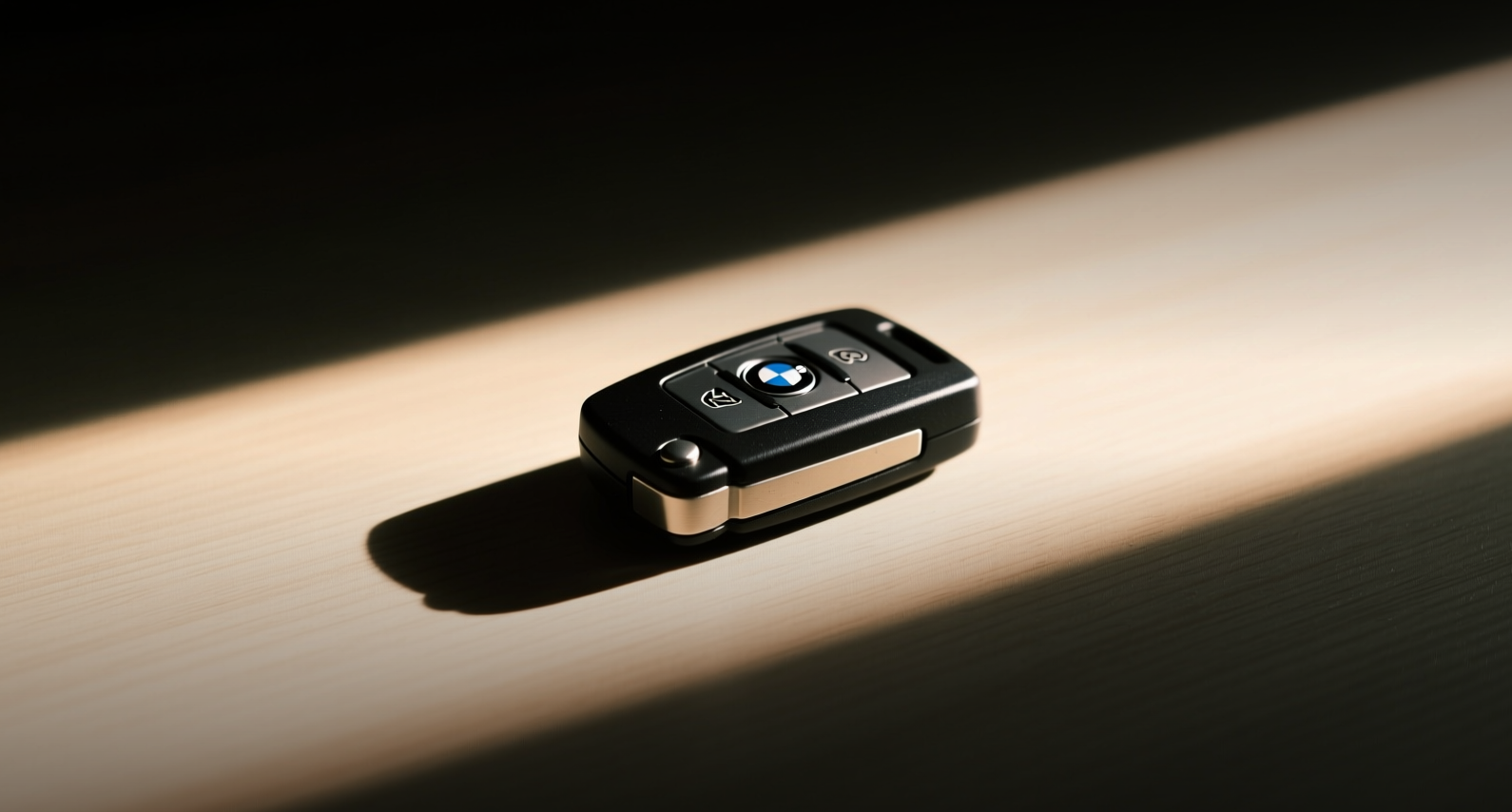
German automakers are losing their grip on China's premium car market as local EV brands pull ahead on technology and speed, leaving BMW, Mercedes-Benz and Volkswagen scrambling to catch up.
BMW's China sales plunged 30% in the second quarter, the company said Friday, marking its third straight year of decline in the world's biggest auto market. The Munich-based automaker issued a profit warning last month — its third in less than three years — partly blaming China weakness and the Middle East conflict for driving up fuel prices and damping demand for the combustion-engine models that still account for about 95% of its China sales.
"The dynamics here have been considerably underestimated," said Hendrik Schmidt, a top-10 investor at DWS, referring to BMW's management. He said direct China experience was limited among the company's top executives and supervisory board.
BMW's core automotive profit margin has collapsed to 1% to 3% in 2026, from 10% in 2023. Mercedes-Benz and Porsche have suffered similar compression, with margins falling to 3% to 5% and 5.5% to 7.5%, respectively, as price cuts and rising competition erode profitability across the German premium segment.
The broader German rout in China is stark. Volkswagen reported a 36.6% year-on-year sales decline in the second quarter, the steepest among its peers, while Mercedes dropped 28% in the first half. None of the three were able to offset China losses elsewhere: VW's global sales fell 8.6%, Mercedes 8% and BMW 4.9% in the quarter.
Why German heritage no longer sells in China
The engineering pedigree and combustion-engine heritage that command premium pricing in Europe and the US carry far less weight with Chinese buyers, who increasingly favor local brands offering intelligent EV features tailored to domestic tastes.
"Chinese consumers no longer buy into that," said Wang Xianbin, vice president of the Gasgoo Research Institute.
BMW's average transaction price in China was 341,000 yuan ($50,200) in 2025, below local brands such as Nio, Aito and Denza, according to Shanghai consultancy LandRoads. Among German premium brands, only Audi was priced lower, at 287,000 yuan.
Chinese rivals are developing increasingly sophisticated electric cars in as little as 18 months — roughly twice as fast as traditional automakers. Nio has driven its flagship ET9 sedan over speed bumps with a tower of champagne glasses balanced on the bonnet to showcase its advanced suspension system. Xiaomi and Geely's Zeekr have also emerged as formidable competitors.
"Chinese consumers today don't just pick a car based solely on deep discounts," Gasgoo's Wang said. Local rivals are "armed to the teeth with cutting-edge features," added Yale Zhang, managing director at Shanghai-based research firm Automotive Foresight.
Neue Klasse arrives late to a faster race
BMW is betting its future in China on the Neue Klasse, or "new class," electric vehicle platform, which underpins 40 new launches planned by next year. The first model for China, the iX3 SUV, is due to go on sale in November.
But the launch was delayed after BMW switched from in-house technology to Chinese partner Momenta for assisted-driving features — a capability many local consumers now consider essential. Only about 5% of BMW's China sales are fully electric, in a market where EVs account for 46% of all vehicle sales.
"If this had launched two years ago it could have been a game-changer," Automotive Foresight's Zhang said. "In today's Chinese auto market, it is hard to stand out."
Chang Yan, founder of the popular EV-focused blog Supercharged on China's Weibo platform, said BMW's marketing around range anxiety already sounds dated. "That was a concern from two or three years ago," he said. The attributes often celebrated as technological superiority in Europe — handling and performance — do not necessarily resonate in China, where domestic brands have become "far more aggressive in design and features."
Gasgoo's Wang said BMW's product development remains heavily driven from Munich and the company does not fully understand what Chinese consumers want. "Overall, it's clear that BMW is one step behind," he said.
What's at stake for investors
BMW shares have underperformed German premium rivals and the broader European auto sector since the outbreak of the Iran war. The stock trades at a discount to historical multiples as the market prices in prolonged China weakness. If the Neue Klasse fails to gain traction against established Chinese EV competitors such as BYD, which unseated Volkswagen as China's top-selling carmaker in 2024, BMW could face years of market share erosion in its most profitable market. A successful launch, however, could signal a turnaround — though analysts caution that the window for catching up is narrowing as Chinese brands accelerate their product cycles.
This article is for informational purposes only and does not constitute investment advice.
