
Content
Le Marché s'est déplacé des chiffres vers les récits
Fondamentaux vs.PumpamentalsUne nouvelle réalité
Qu'est-ce que les fondamentaux financiers ?
PumpamentalsL'essor du trading alimenté par le hype
Le rôle crucial de l'intelligence artificielle dansPumpamental...
La puissance de l'humeur sociale
Définir l'humeur sociale
Pourquoi les sentiments influencent-ils les prix aujourd'hui
Suivi de l'humeur par l'intelligence artificielle
Les actions Meme et le phénomène de l'investissement viral
Même Actions, définies
La montée historique du prix de GameStop
La Finance comportementale : pourquoi les investisseurs suiven...
Les moteurs psychologiques derrièrePumpamentals
LeVolfefeIndex : Mesurer l'influence sociale
Données alternatives et analyse du sentiment renforcée par l'i...
Comprendre les données alternatives
Edgen AI : façonner l'avenir du trading
Comment Edgen AI donne aux traders un avantage compétitif
Caractéristiques principales du Core Edgen AI :
Pourquoi cela est-il important
Adaptez-vous ou devenez obsolète

Markets Confusing? Ask Edgen Search.

Instant answers, zero BS, and trading decisions your future self will thank you for.

Try Search Now

Des fondamentaux aux « Pumpamentals » : comment l'opinion publique influence désormais les marchés
Edgen
· Mar 31 2026
Des fondamentaux aux « Pumpamentals » : comment l'opinion publique influence désormais les marchés

Le Marché s'est déplacé des chiffres vers les récits

Les marchés financiers ont changé. Les rapports de résultats, les bilans et les indicateurs traditionnels ne dominent plus les mouvements des prix. Les réseaux sociaux sont maintenant Wall Street. Un seul tweet d'un influenceur puissant, un seul mème viral, peuvent faire monter le cours d'une action en quelques minutes.

Les investisseurs traditionnels sont habitués à suivre les états de revenus, l'EBITDA et les ratios de dette. Les traders modernes suivent l'humeur sociale, les mouvements des portefeuilles blockchain et les récits de marché virals.Edgen AI permet aux traders de lire en temps réel l'orientation du marché, en capturant les changements avant qu'ils ne se produisent.

Fondamentaux vs.PumpamentalsUne nouvelle réalité

Qu'est-ce que les fondamentaux financiers ?

L'investissement traditionnel se concentre sur les indicateurs de la santé d'une entreprise :

  • Rentabilité
  • Croissance des revenus
  • La stabilité financière

En bref, les investisseurs analysent les rapports trimestriels, les niveaux de dette et la qualité de la direction.

PumpamentalsL'essor du trading alimenté par le hype

Puis sont apparus les actions de type "meme". GameStop (GME), AMC et des actifs similaires ont connu une forte hausse sans résultats solides. Les prix ont augmenté fortement en raison de la dynamique des réseaux sociaux.

Les communautés en ligne ont généré des vagues d'achats massives, poussées par l'excitation et l'émotion du groupe. Ce phénomène (les fondamentaux de la pompe

Le rôle crucial de l'intelligence artificielle dansPumpamentals

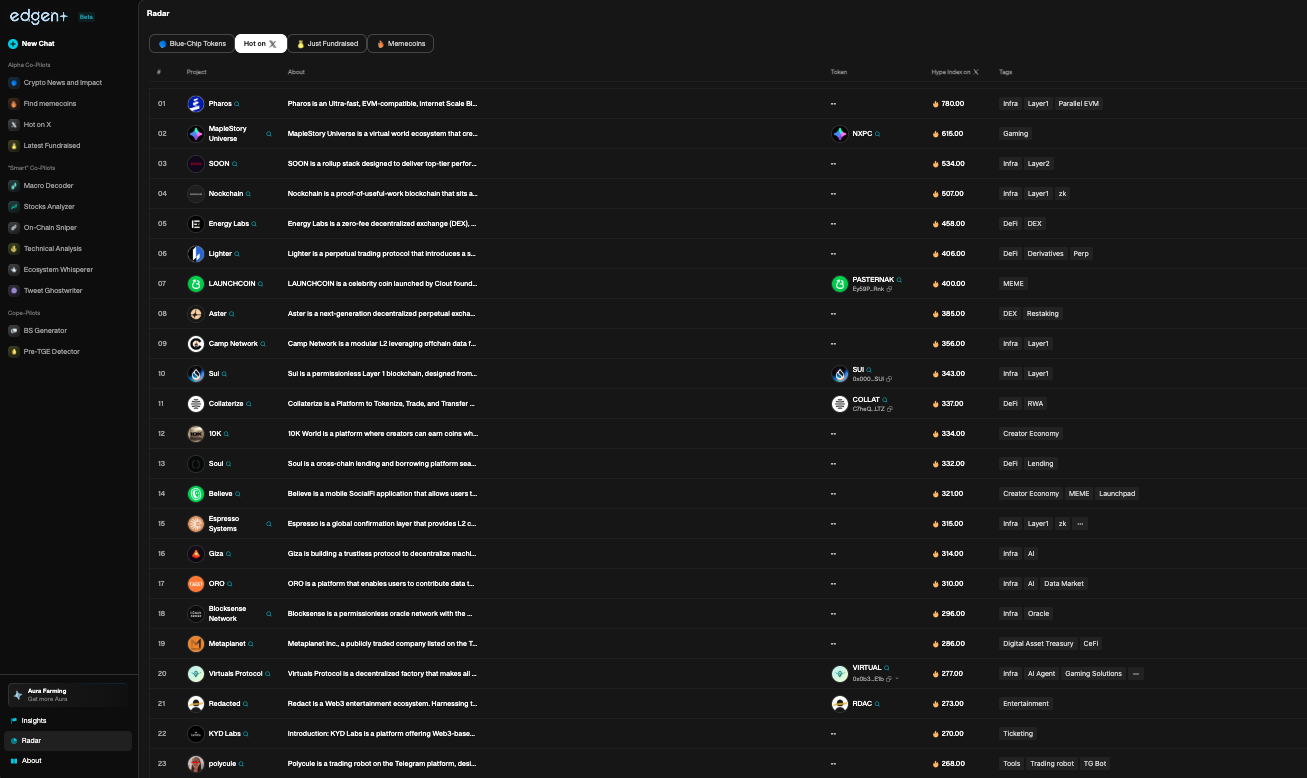
L'IA est devenue essentielle pour le suivi et la prévision de l'opinion publique. Edgen AI utilise :

  • Tendances de consensus sur Twitter/X
  • Activité en temps réel d'un portefeuille de blockchain (alertes des grands porteurs, argent intelligent)
  • Les récits des marchés émergents concernant les actifs de type "mème"

Le trading sans outils d'IA signifie la perte de signaux alpha.Edgen AIaide les traders à anticiper les changements du marché en avance.
Crypto Trading

La puissance de l'humeur sociale

Définir l'humeur sociale

L'opinion sociale reflète l'enthousiasme ou la négativité en ligne envers des actifs spécifiques. Les traders qui suivent Twitter, Reddit et les forums en ligne perçoivent les réactions des prix plus rapidement que par les médias traditionnels.

Pourquoi les sentiments influencent-ils les prix aujourd'hui

  • Informations instantanées : les réseaux sociaux transmettent des signaux immédiatement, plus rapidement que les actualités financières traditionnelles.
  • Influence du retail : Les investisseurs individuels s'organisent en ligne, remettant en question la finance traditionnelle.
  • Des insights alimentés par l'IA : Edgen AI surveille les changements d'humeur en temps réel, offrant des signaux précoces cruciaux.

Suivi de l'humeur par l'intelligence artificielle

Edgen AI scanne en permanence les réseaux sociaux et les transactions sur la blockchain. Les traders obtiennent un avantage en :

  • Repérer les tendances virales tôt
  • Surveillance des portefeuilles influents (argent intelligent et baleines)
  • Évaluer l'impact des leaders d'opinion (KOL)

Le trading par IA est essentiel pour l'investissement moderne.

Crypto Trading

Les actions Meme et le phénomène de l'investissement viral

Même Actions, définies

Les actions des entreprises spéculatives montent rapidement en raison de la hype sociale plutôt que des fondamentaux. Les investisseurs individuels se coordonnent via des communautés comme r/WallStreetBetscréant des vagues d'achats explosives.

La montée historique du prix de GameStop

GameStop (GME) a négocié à des niveaux faibles jusqu'à ce que les communautés de Reddit s'organisent.Massif coordonnél'achat a déclenché une couverture à la baisse, poussant les actions de 20 à 500 dollars en quelques jours.

La logique financière traditionnelle n'a pas pu prédire cela. La dynamique motivée par les réseaux sociaux a dominé.

La Finance comportementale : pourquoi les investisseurs suivent la foule

Les moteurs psychologiques derrièrePumpamentals

La finance comportementale explique les décisions du marché motivées par des émotions plutôt que par la logique :Explore key behavioral biases and their impact on financial decisions.

  • Crainte de manquer quelque chose (FOMO) : Les investisseurs se précipitent pour acheter des actifs en hausse.
  • Comportement mémétique : Les gens suivent l'opinion populaire, en ignorant les avertissements traditionnels.
  • Biais de confirmation : Les investisseurs privilégient les informations qui s'alignent avec leurs croyances existantes, en ignorant les risques.

LeVolfefeIndex : Mesurer l'influence sociale

Les influenceurs comme Elon Musk ont un impact important sur les prix des actifs. Les tweets de Musk seuls ont provoqué des variations importantes dans le prix du Dogecoin et de Tesla. LeVolfefeL'indice suit l'impact du marché des publications sociales influentes, soulignant l'importance des analyses sociales alimentées par l'intelligence artificielle, comme Edgen AI.

Crypto Trading

Données alternatives et analyse du sentiment renforcée par l'intelligence artificielle

Comprendre les données alternatives

L'investissement traditionnel utilisait les états financiers et les rapports trimestriels. Maintenant, les traders utilisent l'effet de levier :

  • Les tendances des réseaux sociaux
  • Les transactions de crypto monnaie sur la chaîne
  • Analyse des recherches Google
  • Données de sentiment du marché alimentées par l'IA

Les données alternatives révèlent des opportunités du marché avant qu'elles ne s'expriment dans l'évolution des prix.

Edgen AI : façonner l'avenir du trading

Comment Edgen AI donne aux traders un avantage compétitif

Edgen AI fournit une infrastructure complète pour le trading du côté acheteur, en suivant simultanément :

  • Les mouvements des portefeuilles intelligents (les grands détenteurs et les influenceurs)
  • Consensus social et récits viraux (Twitter/X)
  • Les changements de sentiment pilotés par l'IA

Négocier aujourd'hui sansDes insights alimentés par l'IAC'est comme investir avec des bandeaux sur les yeux.

Caractéristiques principales du Core Edgen AI :

  1. Edgen RadarSurveillance en temps réel de l'orientation du marché et des tendances.
  2. Edgen SearchRéponses immédiates appuyées par des analyses orientées marché.
  3. Edgen InsightsDes informations de marché alpha et opportunes issues du collectif de la communauté.

Pourquoi cela est-il important

Les marchés des actifs numériques et des cryptomonnaies prospèrent également sur les cycles de hype. Les plateformes commeWallStreetBetsa montré que la dynamique sociale l'emporte sur les indicateurs financiers traditionnels dans les mouvements des prix.

Edgen AIaide les traders à identifier et à agir sur cesles fondamentaux de la pompetôt, capturer l'alpha avant que les tendances ne soient pleinement établies.

Adaptez-vous ou devenez obsolète

Le paysage de l'investissement a évolué. Les rapports financiers seuls ne font plus bouger les marchés. À la place, l'opinion sur les réseaux sociaux, les récits des influenceurs et l'analyse guidée par l'intelligence artificielle façonnent le trading.

Edgen AI fournit aux traders les outils pour :

  • Suivre et répondre aux changements de sentiment en temps réel
  • Surveiller les mouvements de l'argent intelligent
  • Réagir de manière décisive aux récits du marché émergent

Les traders qui ignorent les analyses alimentées par l'intelligence artificielle font face à des concurrents qui négocient plus vite, plus intelligemment et mieux informés.

Le futur est arrivé. Le succès dans le commerce dépend maintenant de votre capacité à utiliser les outils d'IA. L'ère deEdgen AIle commerce a commencé. Restezavant, ouReste en arrière. Ton tour.


Recommend
banner.jpg

What is a money person? The plain-English alternative to a financial advisor

The short version: a money person is a smart, warm friend who happens to be good with money and explains it like a person, not a bank. Practically, it's a second opinion on your whole financial picture — cash, debt, tax exposure, concentration, and the goals you're working toward — that tells you in plain language what to look at first. It's not a traditional advisor managing your portfolio for 1% a year, and it's not a coach cheering you on. It's the honest read a good advisor's first meeting would give you, without the fee or the asset minimum. It's the role Ed Wealth was built to play. Strip away the label and a money person does four concrete things: Just as important is what it doesn't do: it doesn't take custody of your money, it doesn't sell you products for commission, and it doesn't pretend a forecast is a promise. It's a second opinion: it shows you the structure and lets you decide. People reach for four different things when they say "I should talk to someone." They're not
Edgen
·
Jul 10 2026
banner.jpg

Is a financial advisor worth it? Advisor vs robo vs money person

The short version: a financial advisor is worth it when your money has real complexity — a business, concentrated stock, an estate, a divorce, or turning savings into retirement income. There, a fee pays for itself. But most people don't have a complexity problem; they have a clarity one, and paying 1% of your assets a year — about $3,000 on a $300,000 portfolio, every year — is a lot to pay for reassurance. You have three tiers to choose from: a human advisor (~1% of assets), a robo-advisor (~0.25%), and a money person — a flat-fee second opinion that doesn't grow as your savings do. Start with the honest case for paying. A good advisor earns their fee when your situation is genuinely complex: selling a business, a big block of company stock or options, an estate with kids, a divorce, a windfall, or building a retirement-income plan with real moving parts. In those moments, one right call can save you many times the fee, and the job becomes picking a good one (that's how to choose a f
Edgen
·
Jul 10 2026
banner.jpg

Do You Actually Need a Financial Advisor? (An Honest Test)

The short version: you need a financial advisor when your money has genuine complexity — equity comp across several employers, a business sale, an estate with kids involved, a divorce, a sudden windfall, or a retirement-drawdown plan with real moving parts. If your situation is closer to "I earn well but somehow feel behind," that's a clarity problem, not a complexity one, and hiring someone to manage your money for about 1% a year is an expensive way to solve it. Here's how to tell which one you have. Almost everyone reaching for an advisor falls into one of two camps, and confusing them is where money gets wasted. A complexity problem is when there are real moving parts that interact: decisions where a wrong move costs far more than any fee. Selling a company, exercising stock options with a tax bill attached, splitting assets in a divorce, planning how to draw income across a 30-year retirement. Here, a good advisor earns their keep. A clarity problem looks different. Good income, a
Edgen
·
Jul 06 2026
banner.jpg

How to Choose a Financial Advisor in 2026 (and Whether You Even Need One)

The short version: picking a financial advisor isn't about finding the "smartest" one. It comes down to three boring questions that actually predict whether you'll be treated well: are they legally a fiduciary, how do they get paid, and do you even need one yet. Get those right and the rest is noise. Here's how to run the check — and what to do if you want guidance but can't (or don't want to) meet a $250,000 minimum. Before you choose one, ask whether this is the right tool at all. A full-service advisor earns their fee when your situation is genuinely complex — a business sale, equity comp across several companies, estate planning, a divorce, a sudden windfall, or a retirement-income plan with real moving parts. But a lot of people reaching for an advisor don't have a complexity problem. They have a clarity problem: a good income, a few scattered accounts, and a nagging sense of being behind. That doesn't need someone to manage your money for 1% a year. It needs a clear read on where
Edgen
·
Jul 06 2026
Redeem miles for gift cards and each is worth ~1 cent; redeem for long-haul business and they're worth 2.5-4+. With programs now dynamically priced, the one check that decides every redemption.

How to redeem airline miles without wasting them

The single biggest mistake with miles is redeeming them for the easy stuff: gift cards, merchandise, seat upgrades at the gate. Do that and each mile is worth about one cent. Redeem the *same* miles for flights, especially long-haul or premium-cabin flights, and they're often worth two to five cents each, sometimes more. So the real skill isn't earning miles; it's not throwing away their value at the finish line. Here's how to actually use them. A mile has no fixed price; its value depends entirely on what you redeem it for. The way to judge any redemption is simple math: (cash price of the flight) ÷ (miles it costs) = cents per mile. If a flight costs $400 or 20,000 miles, that's 2 cents a mile, a solid deal. If a $90 flight costs 18,000 miles, that's half a cent, which is terrible; pay cash and keep the miles. Run this check before every redemption. It instantly separates a great use from a waste, and it's the one habit that makes miles worth having. As a rule of thumb, most major ai
Edgen
·
Jun 30 2026
Short-term goals (under ~3 years) belong in safe cash; long-term goals (5+ years) can take market risk. The best HYSAs now pay ~4-5% APY. How to sort yours and run both.

Long-term vs short-term financial goals (and how to plan both)

The difference comes down to one thing: time. A short-term goal is money you'll need within roughly three years (an emergency fund, a trip, a wedding, next year's tax bill), so it has to be *safe and reachable*. A long-term goal is five-plus years out (retirement, a house down the road, a kid's education), so it can take market risk, because time smooths the bumps out. Get that match right and you've done most of the work. It's not the size, it's the deadline. A $2,000 goal you need in six months is short-term; a $2,000 goal you won't touch for fifteen years is long-term, and they belong in completely different places. This is the part that actually matters, and where people lose money without realizing it. Short-term money should not be in the stock market. If your emergency fund is in stocks and the market drops 20% the same month your car dies, you're selling at the worst possible time. Short-term goals go somewhere stable and accessible, and a high-yield savings account is the clas
Edgen
·
Jun 30 2026
Mortgages near 6.5%, home prices flat, and the Fed split on rate cuts vs hikes. With timing a coin flip, the 3 questions that actually decide whether to buy now or wait.

Should you buy a house now or wait? How to actually decide

The honest answer: buy when you'll stay put for at least five years and you'll still have an emergency fund left after the down payment. Otherwise, waiting (and renting) is often the smarter money move, not the weaker one. "Rent vs buy" isn't a math problem with one right answer, and it's almost never really about timing the market. It's about your *life*, in three questions. Before the three questions, here's the mid-2026 backdrop — because "now or wait" usually hides a bet on rates and prices, and the data says that bet is a coin flip. The picture: mortgages are still pricey, prices have gone flat (more than half of the 20 big metros saw year-over-year declines in March), and the cheap-money era hasn't returned. So "buy before it runs away" and "wait for the crash" are *both* weak arguments right now. The whole "wait for rates to drop" plan rests on the Fed, and the Fed is split down the middle. In its June 2026 projections, policymakers were divided: 8 expected no change this year,
Edgen
·
Jun 30 2026
Most financial goals fail because they're wishes, not systems. Here's the 3-part anatomy of a goal that sticks (a number, a date, one automatic move), plus why 37% of adults can't cover a $400 surprise.

How to set financial goals you'll actually hit

A financial goal you'll actually hit has three things a vague wish doesn't: a number, a date, and one automatic move that happens whether or not you remember it. "Save more" is a wish. "$6,000 in a separate account by next December, $500 auto-transferred on payday" is a goal. The gap between those two sentences is the reason most goals quietly die, and it has almost nothing to do with willpower. Key Takeaways A real financial goal answers three questions: how much, by when, and what for. Drop any one and it stops working. "Pay off debt" has no number and no date, so there's nothing to aim at or measure, while "$8,000 of card debt cleared in 18 months" tells you exactly whether you're on track and the day you're done. The "what for" matters more than people expect. A goal tied to something real (a buffer so a bad month isn't a crisis, a deposit on a first place) survives the months when motivation dips. In our experience reading how people actually use a money tool, the goals that get
Edgen
·
Jun 30 2026
A big RSU grant just vested — now what? Here's what a modern money tool actually surfaces first, using Ed as a worked example: a reality check, the 22% tax gap most high earners miss, and the concentration risk nobody flags.

Your RSUs Just Vested. Here's What a Money Tool Surfaces First.

You just had a big RSU grant vest. Congratulations — and now the awkward part: a six-figure pile of your own company's stock, a vague sense you should "do something," and no one actually telling you what. An advisor, a spreadsheet, and a piece of software each handle this moment differently. Here's what a modern money tool surfaces in a moment like this — using Ed as a worked example — so you can decide what kind of help actually fits. Key takeaways You connect your brokerage and bank through read-only aggregation, so the tool can read balances but can't move a dollar. Ed's framing is simple: precise about your money, blind to your identity. Instead of sorting your lattes into categories, Ed opens on a single Financial Reality Check — a read on whether your money could survive a bad month. For a lot of high earners, that one number lands harder than any budget, because it answers a question the other apps never ask. (If the Reality Check is the numbers side, your money type is the beha
Edgen
·
Jun 26 2026
A money personality test is more than a quiz if it measures behavior, not just vibes. Here's the science behind money types, how Ed's test works, and how to use your result.

What Is a Money Personality Test? The Science Behind Your Money Type

The short version: a good money personality test should feel like a roast and work like a mirror — fun on the surface, behavioral underneath. The useful ones don't tell you what you know; they show you how you act with money, and the one blind spot worth watching. Key takeaways Here's the uncomfortable backdrop. U.S. financial literacy has been stuck for a decade — adults answer only about 49% of the standard knowledge questions correctly, essentially flat since 2017 (TIAA Institute–GFLEC, 2025) — even as free financial information became infinite. If facts fixed money, they'd have fixed it by now. They don't, because the thing that actually drives your outcomes lives one level below the facts: how you're wired to behave when money is on the line. That's the whole premise of financial fitness — and it's what a money personality test is built to surface. Not what you know. What you do. The idea has real research behind it — money behavior is patterned and measurable, and a few tradition
Edgen
·
Jun 23 2026

Investir, enfin, tu n'es plus seul.

Essaie Edgen gratuitement. Sans carte, sans engagement.