Content
Comment utiliser l'IA pour des investissements cryptos plus in...
L'avenir de l'investissement crypto intelligent
II. Comprendre l'écosystème d'Edgen
1. Qu'est-ce qui rend Edgen différent ?
2. Utiliser l'IA pour des décisions plus intelligentes
3. Intégrer l'analyse On-Chain et les signaux de marché
4. Gérer les risques dans des conditions volatiles
III. Fonctionnalités avancées qui redéfinissent la connaissanc...
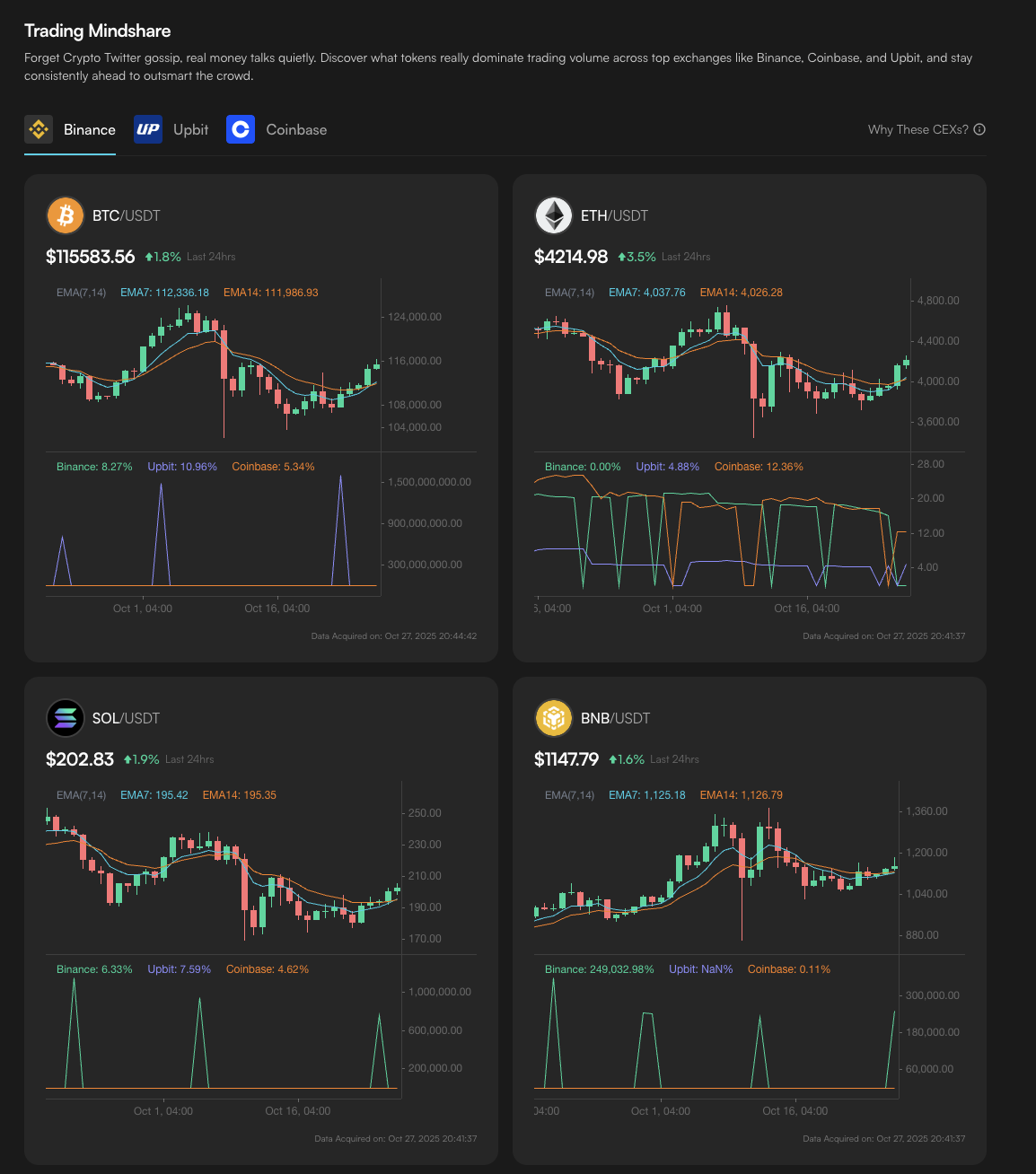
1. Part de marché des opérations (Trading Mindshare)
2. Signaux techniques
3. Diagnostics de portefeuille
IV. Rester informé grâce aux nouvelles intégrées
V. Construire une routine d'investissement intelligente
VI. Maîtriser le marché avec Edgen

Markets Confusing? Ask Edgen Search.

Instant answers, zero BS, and trading decisions your future self will thank you for.

Try Search Now

Comment utiliser l'IA pour des investissements cryptos plus intelligents
Edgen
· Mar 31 2026
Comment utiliser l'IA pour des investissements cryptos plus intelligents

Comment utiliser l'IA pour des investissements cryptos plus intelligents

Titre SEO : Comment utiliser Edgen AI pour des investissements cryptos plus intelligents

Description : Découvrez comment Edgen AI combine l'analyse on-chain, les signaux prédictifs et l'intelligence de portefeuille pour aider les investisseurs crypto à prendre des décisions plus rapides et basées sur les données.

Mots-clés : Edgen AI, investissement crypto, analyse blockchain, co-pilote d'investissement IA, intelligence on-chain, signaux prédictifs, optimisation de portefeuille, découverte d'alpha, prévision de marché

L'avenir de l'investissement crypto intelligent

Le succès dans la cryptomonnaie dépend du timing, des données et de la clarté. Les prix changent en quelques secondes, le sentiment se retourne du jour au lendemain, et les opportunités disparaissent aussi vite qu'elles apparaissent. Les investisseurs qui restent en tête sont ceux qui comprennent avant que le marché ne réagisse.

Edgen a été conçu dans ce but. Il unifie l'analyse IA, les données blockchain et l'intelligence sociale en un système adaptatif unique. Grâce à des agents tels que Technical Signals, Pre-TGE Detector et Trading Mindshare, il transforme le bruit du marché en informations structurées.

Ce guide explique comment utiliser l'écosystème d'Edgen pour prendre des décisions plus pertinentes, gérer la volatilité et découvrir des opportunités dans l'ensemble du paysage des actifs numériques.

II. Comprendre l'écosystème d'Edgen

1. Qu'est-ce qui rend Edgen différent ?
Edgen AI fusionne l'apprentissage automatique, la transparence de la blockchain et les données comportementales pour offrir aux investisseurs une image complète du marché. Son système intégré fournit :

  • Des informations sur le marché en temps réel
  • La génération de signaux alpha
  • L'analyse prédictive des risques
  • Le suivi du sentiment du marché
  • Des outils d'optimisation de portefeuille

Tous les modules fonctionnent en synchronisation au sein de l'application Edgen, de sorte que les mises à jour restent cohérentes sur tous les appareils.

2. Utiliser l'IA pour des décisions plus intelligentes

Les algorithmes d'Edgen détectent les inefficacités avant qu'elles ne deviennent visibles. Le rapport 360° agrège les indicateurs techniques et fondamentaux, produisant des prévisions et des analyses de tendances en temps réel.

Pour les nouveaux utilisateurs, le centre d'apprentissage d'Edgen offre une voie de démarrage claire pour l'intégration d'outils prédictifs dans les flux de travail quotidiens.

3. Intégrer l'analyse On-Chain et les signaux de marché

L'On-Chain Sniper d'Edgen surveille l'activité de la blockchain pour identifier les mouvements de baleines et les tendances d'accumulation précoce. Combiné aux signaux Alpha, il convertit les données de transaction en points d'entrée et de sortie exploitables.

Le Pre-TGE Detector met en évidence les lancements de tokens à venir, aidant les utilisateurs à se positionner tôt avant une plus large connaissance du marché.

4. Gérer les risques dans des conditions volatiles

La volatilité des cryptomonnaies est à la fois une opportunité et un risque. La suite de gestion des risques d'Edgen permet aux utilisateurs de définir des alertes personnalisées et des règles d'automatisation pour les baisses de prix ou les inversions de sentiment.

Lors des récentes fluctuations du marché, ce système a fourni des avertissements en temps réel qui ont aidé les traders à verrouiller les gains ou à réduire l'exposition avant des changements soudains.

III. Fonctionnalités avancées qui redéfinissent la connaissance du marché
1. Part de marché des opérations (Trading Mindshare)

Cet agent mesure les flux de liquidités en analysant les données des principales bourses. Il interprète les changements dans le ton et le niveau d'intérêt de la communauté, fournissant une première indication de l'humeur concrète du marché au-delà du sentiment social.

2. Signaux techniques

Edgen évalue des indicateurs tels que le RSI, le MACD et les bandes de Bollinger par le biais de l'apprentissage automatique. Chaque résultat est vérifié par rapport au comportement historique du marché pour garantir sa fiabilité.

3. Diagnostics de portefeuille

Le rapport 360° intègre les positions, les métriques de sentiment et le positionnement on-chain dans un résumé de performance continue. Associé à Pivot Alert, il permet une gestion proactive du portefeuille grâce à des avertissements précoces et des recommandations de rééquilibrage.

IV. Rester informé grâce aux nouvelles intégrées

Edgen regroupe les mises à jour vérifiées provenant de plusieurs sources du marché.
Les utilisateurs peuvent suivre :

  • L'analyse du réseau Bitcoin et Ethereum
  • Les rapports du secteur DeFi et les flux de tokens
  • Les développements du marché NFT
  • Les changements réglementaires et macroéconomiques affectant les actifs numériques

Ce flux garantit que les décisions reposent sur un contexte précis et à jour.

V. Construire une routine d'investissement intelligente

La force d'Edgen réside dans la connexion de toutes les couches de l'intelligence du marché en une seule boucle de rétroaction.

  • L'analyse on-chain montre ce que font les grands détenteurs.
  • Les signaux techniques révèlent où les tendances se renforcent ou s'affaiblissent.
  • Les données de sentiment expliquent comment les récits évoluent.
  • Les diagnostics de portefeuille traduisent tout cela en recommandations claires.

Plus vous utilisez Edgen de manière cohérente, plus ses modèles s'adaptent rapidement à vos habitudes d'investissement, affinant les alertes et les prévisions selon votre stratégie personnelle.

VI. Maîtriser le marché avec Edgen

Les données sont l'actif le plus précieux dans le trading. Edgen AI donne aux investisseurs la capacité d'interpréter ces données avec précision et confiance.
Grâce à l'analyse prédictive, la découverte d'alpha et le contrôle des risques, il transforme l'information en avantage stratégique.

Commencez à utiliser Edgen AI today pour découvrir comment l'intelligence, la clarté et le timing peuvent définir la prochaine étape de votre parcours d'investissement crypto.


Recommend
Redeem miles for gift cards and each is worth ~1 cent; redeem for long-haul business and they're worth 2.5-4+. With programs now dynamically priced, the one check that decides every redemption.

How to redeem airline miles without wasting them

The single biggest mistake with miles is redeeming them for the easy stuff: gift cards, merchandise, seat upgrades at the gate. Do that and each mile is worth about one cent. Redeem the *same* miles for flights, especially long-haul or premium-cabin flights, and they're often worth two to five cents each, sometimes more. So the real skill isn't earning miles; it's not throwing away their value at the finish line. Here's how to actually use them. A mile has no fixed price; its value depends entirely on what you redeem it for. The way to judge any redemption is simple math: (cash price of the flight) ÷ (miles it costs) = cents per mile. If a flight costs $400 or 20,000 miles, that's 2 cents a mile, a solid deal. If a $90 flight costs 18,000 miles, that's half a cent, which is terrible; pay cash and keep the miles. Run this check before every redemption. It instantly separates a great use from a waste, and it's the one habit that makes miles worth having. As a rule of thumb, most major ai
Edgen
·
Jun 30 2026
Short-term goals (under ~3 years) belong in safe cash; long-term goals (5+ years) can take market risk. The best HYSAs now pay ~4-5% APY. How to sort yours and run both.

Long-term vs short-term financial goals (and how to plan both)

The difference comes down to one thing: time. A short-term goal is money you'll need within roughly three years (an emergency fund, a trip, a wedding, next year's tax bill), so it has to be *safe and reachable*. A long-term goal is five-plus years out (retirement, a house down the road, a kid's education), so it can take market risk, because time smooths the bumps out. Get that match right and you've done most of the work. It's not the size, it's the deadline. A $2,000 goal you need in six months is short-term; a $2,000 goal you won't touch for fifteen years is long-term, and they belong in completely different places. This is the part that actually matters, and where people lose money without realizing it. Short-term money should not be in the stock market. If your emergency fund is in stocks and the market drops 20% the same month your car dies, you're selling at the worst possible time. Short-term goals go somewhere stable and accessible, and a high-yield savings account is the clas
Edgen
·
Jun 30 2026
Mortgages near 6.5%, home prices flat, and the Fed split on rate cuts vs hikes. With timing a coin flip, the 3 questions that actually decide whether to buy now or wait.

Should you buy a house now or wait? How to actually decide

The honest answer: buy when you'll stay put for at least five years and you'll still have an emergency fund left after the down payment. Otherwise, waiting (and renting) is often the smarter money move, not the weaker one. "Rent vs buy" isn't a math problem with one right answer, and it's almost never really about timing the market. It's about your *life*, in three questions. Before the three questions, here's the mid-2026 backdrop — because "now or wait" usually hides a bet on rates and prices, and the data says that bet is a coin flip. The picture: mortgages are still pricey, prices have gone flat (more than half of the 20 big metros saw year-over-year declines in March), and the cheap-money era hasn't returned. So "buy before it runs away" and "wait for the crash" are *both* weak arguments right now. The whole "wait for rates to drop" plan rests on the Fed, and the Fed is split down the middle. In its June 2026 projections, policymakers were divided: 8 expected no change this year,
Edgen
·
Jun 30 2026
Most financial goals fail because they're wishes, not systems. Here's the 3-part anatomy of a goal that sticks (a number, a date, one automatic move), plus why 37% of adults can't cover a $400 surprise.

How to set financial goals you'll actually hit

A financial goal you'll actually hit has three things a vague wish doesn't: a number, a date, and one automatic move that happens whether or not you remember it. "Save more" is a wish. "$6,000 in a separate account by next December, $500 auto-transferred on payday" is a goal. The gap between those two sentences is the reason most goals quietly die, and it has almost nothing to do with willpower. Key Takeaways A real financial goal answers three questions: how much, by when, and what for. Drop any one and it stops working. "Pay off debt" has no number and no date, so there's nothing to aim at or measure, while "$8,000 of card debt cleared in 18 months" tells you exactly whether you're on track and the day you're done. The "what for" matters more than people expect. A goal tied to something real (a buffer so a bad month isn't a crisis, a deposit on a first place) survives the months when motivation dips. In our experience reading how people actually use a money tool, the goals that get
Edgen
·
Jun 30 2026
A big RSU grant just vested — now what? Here's what a modern money tool actually surfaces first, using Ed as a worked example: a reality check, the 22% tax gap most high earners miss, and the concentration risk nobody flags.

Your RSUs Just Vested. Here's What a Money Tool Surfaces First.

You just had a big RSU grant vest. Congratulations — and now the awkward part: a six-figure pile of your own company's stock, a vague sense you should "do something," and no one actually telling you what. An advisor, a spreadsheet, and a piece of software each handle this moment differently. Here's what a modern money tool surfaces in a moment like this — using Ed as a worked example — so you can decide what kind of help actually fits. Key takeaways You connect your brokerage and bank through read-only aggregation, so the tool can read balances but can't move a dollar. Ed's framing is simple: precise about your money, blind to your identity. Instead of sorting your lattes into categories, Ed opens on a single Financial Reality Check — a read on whether your money could survive a bad month. For a lot of high earners, that one number lands harder than any budget, because it answers a question the other apps never ask. (If the Reality Check is the numbers side, your money type is the beha
Edgen
·
Jun 26 2026
A money personality test is more than a quiz if it measures behavior, not just vibes. Here's the science behind money types, how Ed's test works, and how to use your result.

What Is a Money Personality Test? The Science Behind Your Money Type

The short version: a good money personality test should feel like a roast and work like a mirror — fun on the surface, behavioral underneath. The useful ones don't tell you what you know; they show you how you act with money, and the one blind spot worth watching. Key takeaways Here's the uncomfortable backdrop. U.S. financial literacy has been stuck for a decade — adults answer only about 49% of the standard knowledge questions correctly, essentially flat since 2017 (TIAA Institute–GFLEC, 2025) — even as free financial information became infinite. If facts fixed money, they'd have fixed it by now. They don't, because the thing that actually drives your outcomes lives one level below the facts: how you're wired to behave when money is on the line. That's the whole premise of financial fitness — and it's what a money personality test is built to surface. Not what you know. What you do. The idea has real research behind it — money behavior is patterned and measurable, and a few tradition
Edgen
·
Jun 23 2026
A financial reality check scores where you actually stand across safety, control, progress, upside, and Mental Load. Here's why a money score matters, how Ed's checkup works, and what to do with your weakest area.

What Is a Financial Reality Check? Why Your Credit Score Isn't Enough

The short version: your credit score measures how safe you are to lend to. Almost nobody has ever seen the number that measures whether you are actually secure. A financial reality check is that second number. Key takeaways Ask people for their credit score and many can recite it. Ask whether they could survive three months without income, or where their money quietly leaks each month, and you get a shrug. That's the gap. A credit score answers a lender's question — how risky is it to extend this person debt? It can be high while your life is fragile, or low while you're genuinely fine, because it was never built to measure you. A financial reality check answers the question the credit score ignores: are you safe, clear, progressing, building, and at ease? Here's the simple version, with the research behind each axis.
Edgen
·
Jun 23 2026
SpaceX opens Thursday at a $1.77 trillion valuation — the largest IPO ever. Only 4.2% of stock actually trades. Musk is locked up for 366 days. The next 366 days run on an unusually clean calendar of supply releases. Here are the 13 dates worth watching.

SpaceX goes public Thursday with a possible $5 trillion hit. Here's the calendar that actually matters.

SpaceX prices Wednesday night and opens Thursday on Nasdaq at $135 per share — a $1.77 trillion valuation, the largest IPO ever. Most coverage will frame what comes next as a sentiment trade, an Elon story, or a race to Goldman's $5 trillion bull case. The reality is more grounded and more useful: the next 366 days are governed by an unusually clean calendar of supply releases — when 95.8% of the company can or cannot trade, when index funds add weight, when the lock-up cliff arrives, when Musk himself becomes a potential seller for the first time. Read the calendar and you've already understood the structure most market commentary will spend the next quarter trying to explain. Here are the 13 dates worth watching. Two things keep showing up in headlines that don't survive a careful read. The first is the idea that index funds are about to be forced into a massive single-event SpaceX buy. They aren't. Nasdaq did create a fast-track inclusion rule that lets SpaceX join the Nasdaq 100 wi
Edgen
·
Jun 10 2026

Investir, enfin, tu n'es plus seul.

Essaie Ed gratuitement. Sans carte, sans engagement.