

Memory capacity and bandwidth constraints, not GPU compute, will determine how far artificial intelligence can scale.
Memory capacity and bandwidth constraints, not GPU compute, will determine how far artificial intelligence can scale.
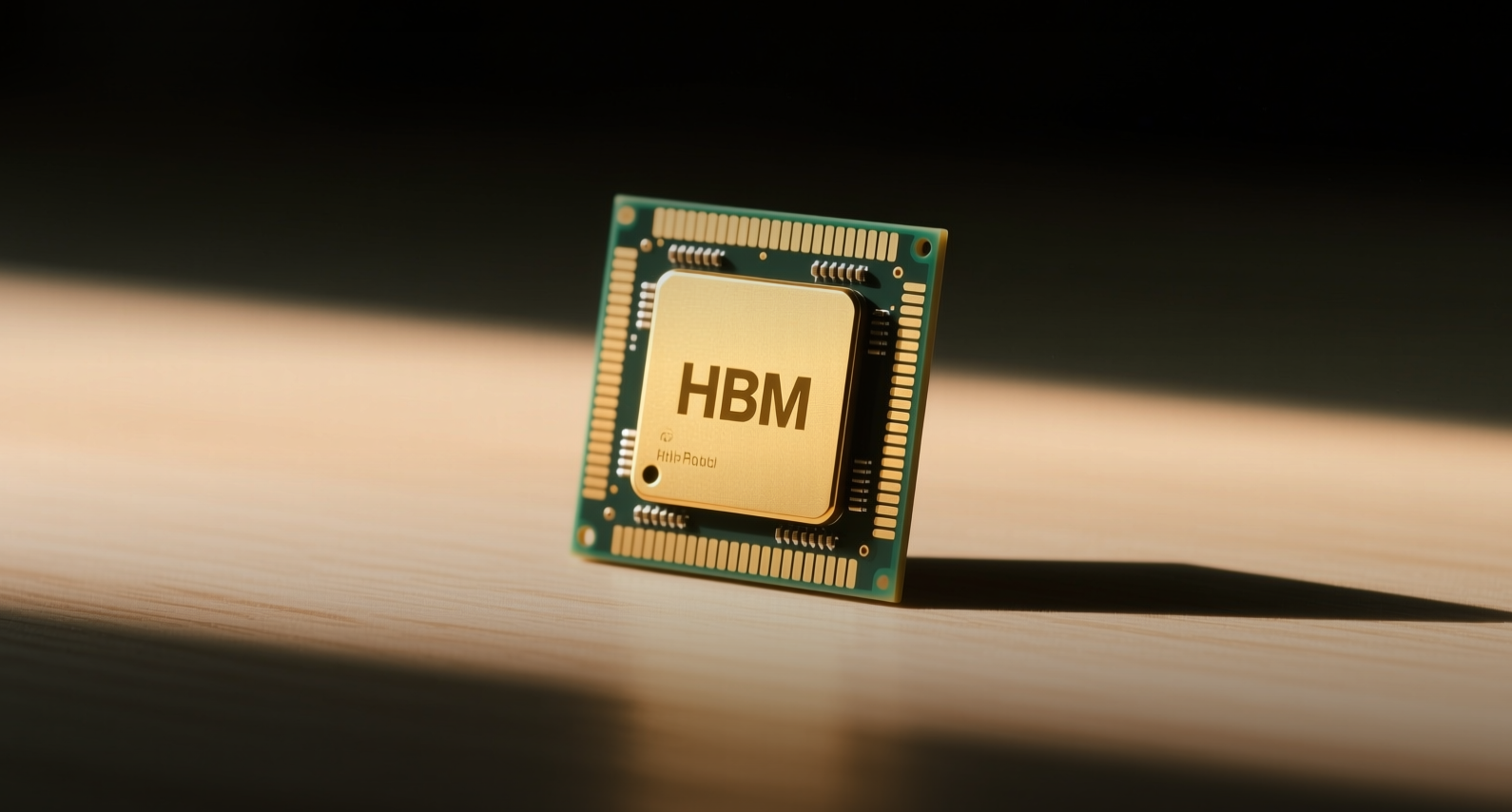
Memory capacity and bandwidth constraints, not GPU compute, will determine how far artificial intelligence can scale.
Morgan Stanley warns the artificial intelligence industry is hitting a "memory wall," projecting cloud storage spending will reach $418 billion by 2030 as capacity constraints, bandwidth limits and rising costs threaten to cap AI expansion.
"GPU determines how fast AI runs, but the memory system determines how far AI goes," the Morgan Stanley global technology team wrote in the report, which identifies six innovation directions to break the bottleneck.
The bank estimates storage-related components now account for 73% of bill-of-materials costs in CPU servers, with DRAM per-gigabyte prices near three-decade highs. DDR5 single-channel bandwidth is expected to grow just 14% from 2024 to 2026, from 44.8 GB/s to 51.2 GB/s, while monthly AI inference token generation is projected to surge more than 320-fold over the same period, from roughly 10 trillion to 3.2 quadrillion tokens.
The report points to a thematic rotation in AI-related investment from pure GPU plays toward the broader memory and storage ecosystem. Morgan Stanley projects the total addressable market for new memory technologies excluding HBM will expand from $1.2 billion in 2025 to $23 billion by 2030, and to $276 billion when including high-bandwidth memory. The share of cloud capital expenditure allocated to storage is expected to rise to 40% by 2027 from 12% in 2023.
The Six Innovation Vectors
Morgan Stanley's framework identifies advanced process technology, storage architecture innovation, advanced packaging, peripheral interconnect chips, processing-in-memory and new materials as the six areas where breakthroughs are needed. On the process front, DRAM has entered the 1-gamma node era with Samsung, SK Hynix and Micron all ramping production, though line-width shrinkage has fallen below 10% from the prior generation, indicating the physical limits of planar DRAM.
In packaging, the HBM roadmap is advancing toward HBM4 and HBM4E, with 16-layer HBM4E expected to reach mass production by 2027, delivering single-stack bandwidth of 1.5 TB/s to 2 TB/s or more. SanDisk's high-bandwidth flash, which uses through-silicon vias to connect multiple 3D NAND arrays, offers up to 4 TB of memory capacity — 8 to 16 times that of HBM — with first samples expected in the second half of 2026. Wafer-on-wafer stacking is projected to grow from $10 million in 2025 to $9.8 billion by 2030, a compound annual growth rate of 322%.
The Supply Chain Squeeze
The structural nature of the memory shortage is visible across the semiconductor supply chain. High-bandwidth memory now consumes about 23% of total DRAM wafer capacity, up from roughly 19% in 2025 and single-digit percentages two years ago, according to TrendForce. Because each gigabyte of HBM produced removes approximately three gigabytes of conventional DRAM supply from the manufacturing pool, the AI buildout is simultaneously creating and constraining its own memory supply.
The constraint extends beyond DRAM. Server CPU availability has tightened as vendors manufacture processors on both 3-nanometer and 5-nanometer nodes in parallel, with lower-than-expected yields on advanced nodes compounding the bottleneck. Enterprise server lead times for large DRAM orders have extended beyond 40 weeks, and CPU procurement backlogs have reached approximately 22 weeks, according to supply chain advisory firm SHI Insights.
The competitive picture is shifting as chipmakers adapt their strategies for the inference era. Nvidia has incorporated Groq's language processing units into its CUDA ecosystem to reduce inference latency, while Cerebras Systems has developed wafer-scale chips that it claims are six times faster than Nvidia's LPUs and 15 times faster than its GPUs. Advanced Micro Devices, which acquired memory optimization software company MEXT, is using its chiplet design to offer cost-effective inference solutions as the ratio of GPUs to CPUs in data centers is expected to shrink from about 8-to-1 to roughly 1-to-1 with the rise of agentic AI.
For investors, the implication is that the next phase of AI infrastructure spending will flow increasingly to memory and storage companies. Morgan Stanley estimates agentic AI alone could contribute 26% to 77% of global DRAM demand by 2030. Micron Technology, which reported fiscal third-quarter revenue of $41.5 billion — a 346% year-over-year increase — has committed more than $250 billion in US spending through 2035 to expand domestic DRAM production. SK Hynix's chief executive has described 2027 as potentially "the worst year in the industry's history from the supply perspective," while Intel's CEO has said no meaningful relief is expected until 2028.
This article is for informational purposes only and does not constitute investment advice.
