


Memory has become the semiconductor industry's largest revenue category, with Gartner projecting it will account for 54 percent of the $1.56 trillion market in 2026.
Memory has become the semiconductor industry's largest revenue category, with Gartner projecting it will account for 54 percent of the $1.56 trillion market in 2026.
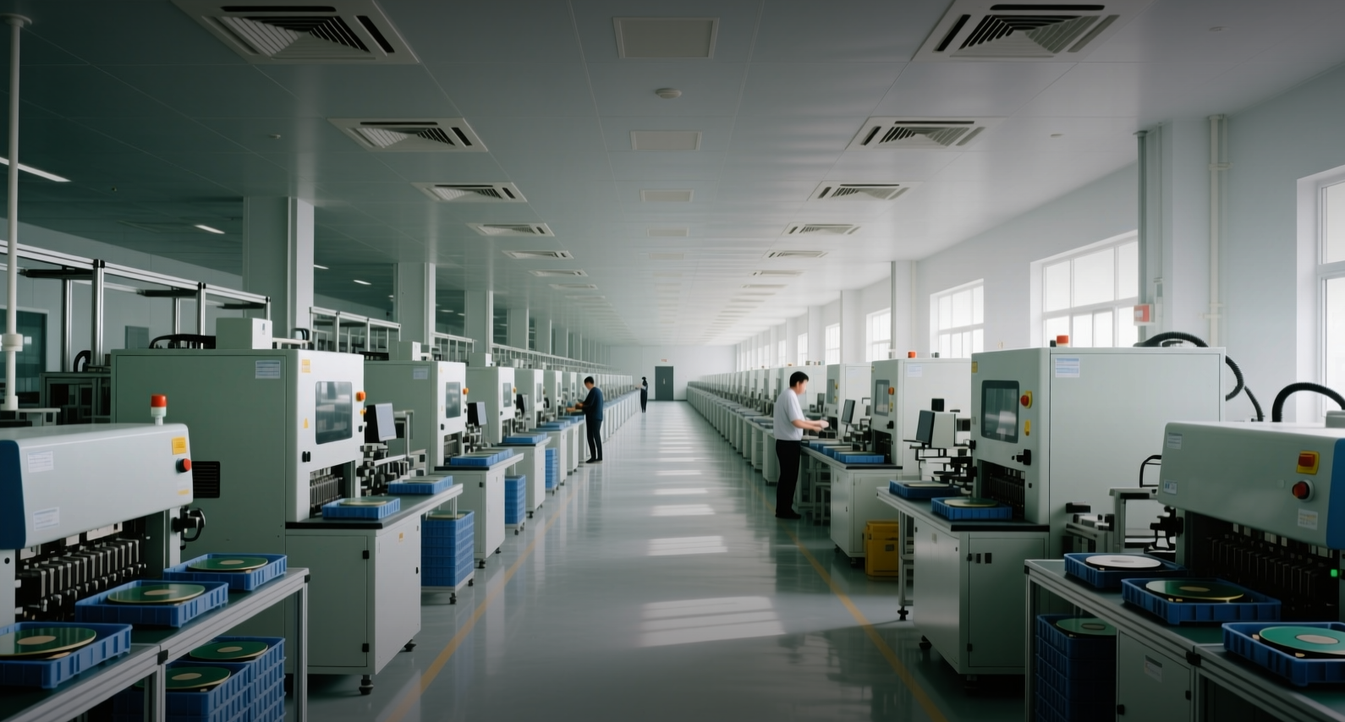
Memory chips are set to account for 54 percent of global semiconductor revenue in 2026, up from 27 percent a year earlier, as AI data center demand for high-bandwidth memory reshapes the industry's economics.
"AI infrastructure has fundamentally changed the dynamics of the memory market," Shrish Pant, Director Analyst at Gartner, said in the firm's August 24 forecast.
Gartner projects memory revenue of $837.3 billion in 2026, with DRAM climbing 246.6 percent year-over-year and NAND flash jumping 371.9 percent. The firm expects memory to surpass $1 trillion in 2027 as the broader semiconductor market reaches $1.94 trillion. AI data centers will account for 36.5 percent of total semiconductor revenue in 2026, rising above 53 percent by 2030.
The shift concentrates pricing power in three suppliers — Samsung Electronics, SK hynix, and Micron Technology — while pushing the combined cost of DRAM and NAND flash in a smartphone above the price of a top-tier SoC for the first time, forcing device makers to raise prices.
The clearest evidence of the demand shift comes from procurement, not forecasts. Nvidia increased its supply and capacity commitments from $119 billion to $279 billion in a single quarter, with $92 billion due in the remainder of fiscal 2027, $87 billion in 2028, and $88 billion in 2029. Nvidia CFO Colette Kress described "extreme pricing conditions in memory," adding that price increases have exceeded prior expectations and could climb further next year.
SK hynix holds 56.4 percent of the high-bandwidth memory market and has signed long-term agreements with about 10 customers. Micron says 16 strategic customer agreements cover roughly 20 percent of its DRAM volume and one-third of its NAND volume over their contract periods. Samsung has also secured multiyear memory supply agreements with major customers.
The pricing pressure has reached consumer hardware. According to the Chinese tech leaker Digital Chat Station, the combined cost of 12GB of DRAM and 256GB of NAND flash in a smartphone has risen 340 percent, from about $70 a year ago to roughly $310 (2,200 yuan) in the third quarter of 2026. That exceeds the approximately $280 price of a top-tier SoC such as Apple's A20 Pro, which uses TSMC's 2nm process.
The cost shift explains why Google's Pixel 11 Pro ships some models with 12GB of RAM rather than 16GB, and at a higher price than the Pixel 10 Pro. Android manufacturers face a double squeeze: they must pay Qualcomm or MediaTek for chipsets while absorbing memory costs that Apple, which designs its own silicon, partially avoids.
Memory's share of semiconductor revenue reached roughly 34 percent in 2018, then fell to 26.7 percent the following year as DRAM average selling prices dropped 47.4 percent. Analysts warn the current cycle, while larger in scale, carries the same structural risk.
New capacity is coming. SK hynix plans a $4 billion Indiana facility for advanced HBM packaging and has approved 54.3 trillion won (about $38.3 billion) of investment through 2031. The company and Sandisk have also introduced a High Bandwidth Flash standard that could let flash-based architectures handle workloads currently requiring scarce HBM.
For investors, the question is whether long-term agreements provide enough visibility to justify current valuations. Micron shares, up 189 percent year-to-date, trade near $935 with a consensus price target of $1,303. The stock's next event is the Sept. 30 earnings report. Nvidia's $279 billion procurement commitment creates a new supply chain risk: if AI accelerator demand slows even modestly, the downstream impact on memory producers would be magnified by the scale of those commitments.
The more measured thesis is that AI has extended and enlarged the memory cycle — not abolished it. When today's $837 billion memory market eventually meets tomorrow's supply, pricing will determine who keeps the gains.
This article is for informational purposes only and does not constitute investment advice.
