


Baidu's autonomous ride-hailing platform is expanding into Central Asia for the first time, signing a strategic partnership with Kazakhstan's Turlov Private Holding to deploy robotaxis in the country.
Baidu's autonomous ride-hailing platform is expanding into Central Asia for the first time, signing a strategic partnership with Kazakhstan's Turlov Private Holding to deploy robotaxis in the country.
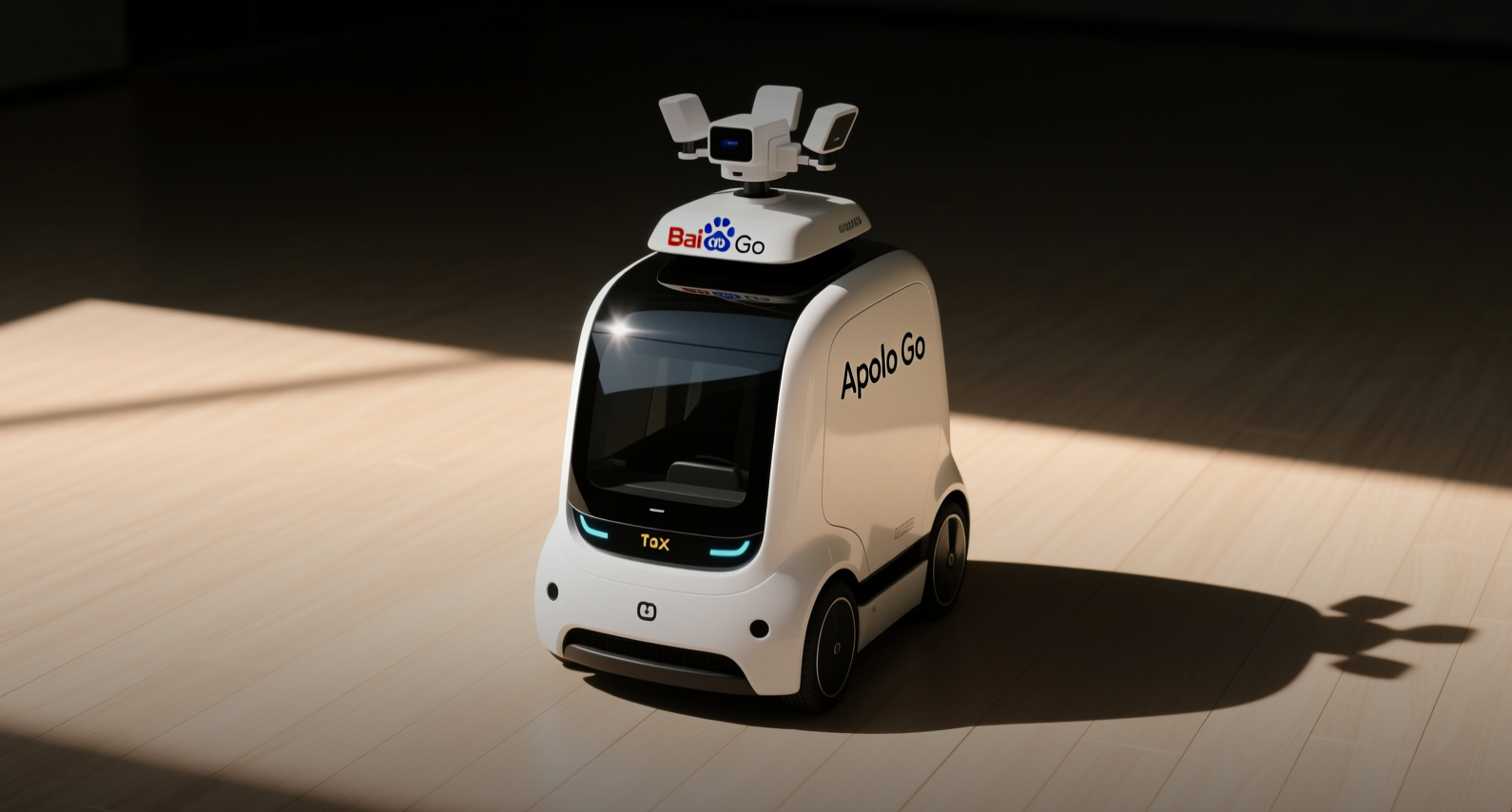
Baidu's Apollo Go signed a strategic cooperation agreement with Kazakhstan-based Turlov Private Holding Ltd. to introduce autonomous ride-hailing services in the Central Asian nation, marking the first entry of Chinese robotaxis into the region. The deal was signed in Shanghai ahead of the 2026 World Artificial Intelligence Conference, with Kazakhstan's Deputy Prime Minister and Minister of AI and Digital Development, Zhaslan Madiyev, in attendance.
"This partnership opens a new corridor for autonomous mobility in Central Asia," Madiyev said. "Kazakhstan is committed to becoming a regional hub for AI-driven transportation."
Apollo Go had provided more than 22 million rides to the public as of April 2026, with fully driverless ride orders reaching 3.2 million in the first quarter alone. Weekly orders peaked at more than 350,000 in March. The company's fleet has accumulated over 330 million kilometers of autonomous driving mileage worldwide, including more than 220 million kilometers without a safety driver, while maintaining a strong safety record, Baidu said.
The Kazakhstan deal is the latest in a series of international expansions for Apollo Go, which as of May operated in 27 cities globally, including Hong Kong, Dubai and Abu Dhabi. In the Middle East, the platform began fully driverless commercial operations in Dubai at the end of March under an exclusive agreement with state-owned Dubai Taxi Company, and has also entered a global partnership with Uber Technologies. In Europe, Apollo Go obtained a permit in May to operate L4 robotaxis across roughly 80 square kilometers in three cantons of eastern Switzerland, including St. Gallen, with road testing beginning June 1. The company also announced in February it would enter the South Korean market starting with the Seoul metropolitan area.
Kazakhstan, the largest economy in Central Asia, has been actively courting foreign technology investment as part of its digital transformation strategy. The creation of a dedicated Ministry of AI and Digital Development signals the government's intent to position the country as a testing ground for emerging mobility technologies. For Baidu, the partnership provides access to a market with relatively less regulatory friction than the US or parts of Europe, where autonomous driving approvals have moved more slowly.
The expansion also pits Apollo Go against a growing field of global competitors. Waymo, owned by Alphabet, operates commercial robotaxi services in San Francisco, Los Angeles and Phoenix, while Tesla has promised a dedicated robotaxi vehicle. In China, Apollo Go competes with Pony.ai and WeRide, both of which have also pursued international licenses. Pony.ai, for instance, has obtained permits in California and South Korea.
Baidu's stock (9888.HK) fell 3.8% on the day of the announcement, though the decline was more likely tied to broader market moves than the Kazakhstan deal specifically. The partnership itself carries limited near-term revenue impact — robotaxi operations in Kazakhstan will require regulatory approvals, fleet deployment and local infrastructure before generating meaningful rides. However, the cumulative effect of Apollo Go's global expansion, now spanning 27 cities across Asia, the Middle East and Europe, strengthens Baidu's positioning as one of the few companies operating Level 4 autonomous vehicles commercially across multiple continents.
Baidu does not break out Apollo Go's financials separately, but the autonomous driving unit represents a key pillar of the company's long-term growth narrative beyond its core advertising and cloud businesses. With more than 22 million rides completed and a safety record of over 330 million kilometers, Apollo Go has accumulated the operational data that competitors would need years to replicate.
This article is for informational purposes only and does not constitute investment advice.
