
Anthropic's rumored acquisition of robotics startup Physical Intelligence would mark the latest in a year of aggressive dealmaking by leading AI labs.
Anthropic's rumored acquisition of robotics startup Physical Intelligence would mark the latest in a year of aggressive dealmaking by leading AI labs.
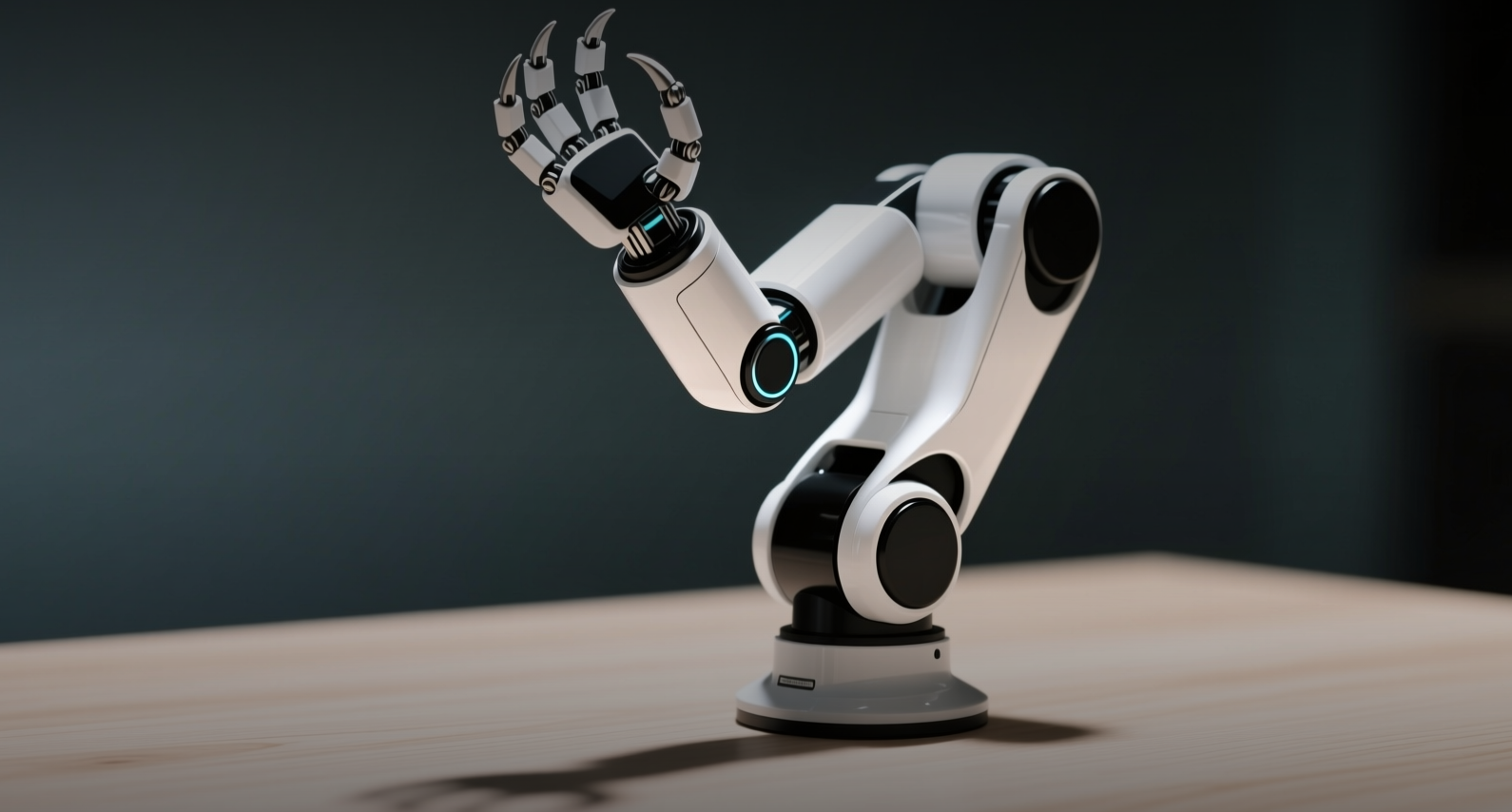
Anthropic's rumored acquisition of robotics startup Physical Intelligence would mark the latest in a year of aggressive dealmaking by leading AI labs.
The deal, first reported by TechCrunch, would add embodied AI capabilities to Anthropic's portfolio as the company competes with OpenAI for enterprise customers willing to spend on integrated solutions rather than raw API access.
"These acquisitions are about converting model capability into enterprise revenue faster than the other guy," a person familiar with the dealmaking strategy said. "If you can't build it in six months, you buy it."
Neither Anthropic nor Physical Intelligence has confirmed the talks. Physical Intelligence, a San Francisco-based startup, develops foundation models for robots to perform complex physical tasks — stacking boxes, folding laundry, assembling components — without task-specific programming. The startup was valued at roughly $2 billion in its last funding round, according to PitchBook data. Anthropic has raised more than $14 billion since its founding, including a $4 billion commitment from Google in late 2025.
For Anthropic, acquiring Physical Intelligence would signal a bet beyond language models into the physical world, where AI could control manufacturing, logistics and warehouse automation. That would put it in more direct competition with Tesla's Optimus robot program and Google's DeepMind robotics division, both of which have invested billions in embodied AI. The robotics AI market is projected to reach $35 billion by 2030, according to Goldman Sachs.
The acquisition spree by Anthropic and OpenAI reflects a structural shift in how AI labs deploy their capital. With hundreds of billions in market value tied to their models, both companies are racing to build moats around their technology stacks — not just through better training data or larger compute clusters, but through ownership of the applications that sit on top.
OpenAI has been the more aggressive buyer, acquiring at least eight companies in the past 18 months, including consumer products and developer tools. Anthropic has been more selective, focusing on infrastructure and safety-related acquisitions. A Physical Intelligence deal would be its largest and most strategically significant to date.
Physical Intelligence's approach — using large foundation models trained on diverse physical tasks rather than programming robots for specific jobs — could reduce deployment costs by as much as 60%, the startup has claimed. Anthropic's Claude model family, known for strong reasoning and safety alignment, could provide the cognitive layer for such systems. The combination would create a full-stack robotics platform: Claude for reasoning, Physical Intelligence's models for physical control.
The deal would also give Anthropic a tangible product story beyond API access. While OpenAI has pursued partnerships with robotics companies and invested in physical-world AI through its venture arm, Anthropic has largely remained a pure-play model provider. Acquiring Physical Intelligence would change that, giving it a direct route into the $35 billion robotics AI market.
The rumored acquisition comes as both Anthropic and OpenAI face mounting pressure to show that their massive capital raises are translating into sustainable revenue. Enterprise customers are increasingly asking for integrated solutions — models that can act on their outputs, not just generate text. That dynamic has pushed both labs to build or buy their way into applications.
For investors, the question is whether these acquisitions will generate returns commensurate with their price tags. Physical Intelligence's $2 billion valuation would make it Anthropic's most expensive acquisition by a wide margin. The company did not disclose the rumored deal price. Anthropic's existing investors include Google, which has committed $4 billion, and Salesforce, which participated in its most recent funding round.
Anthropic's move into physical-world AI, if confirmed, would reshape the competitive terrain of embodied intelligence. Rivals including Tesla, Google and Amazon all have robotics programs that could face a new well-funded competitor. For now, the rumor shows a broader truth about AI in 2026: the winners will be defined not just by the models they build, but by the applications they own.
This article is for informational purposes only and does not constitute investment advice.
