
ZisK's four-GPU benchmark claim has cut the headline hardware count in Ethereum's real-time proving race, but missing workload details keep the result provisional.
ZisK's four-GPU benchmark claim has cut the headline hardware count in Ethereum's real-time proving race, but missing workload details keep the result provisional.
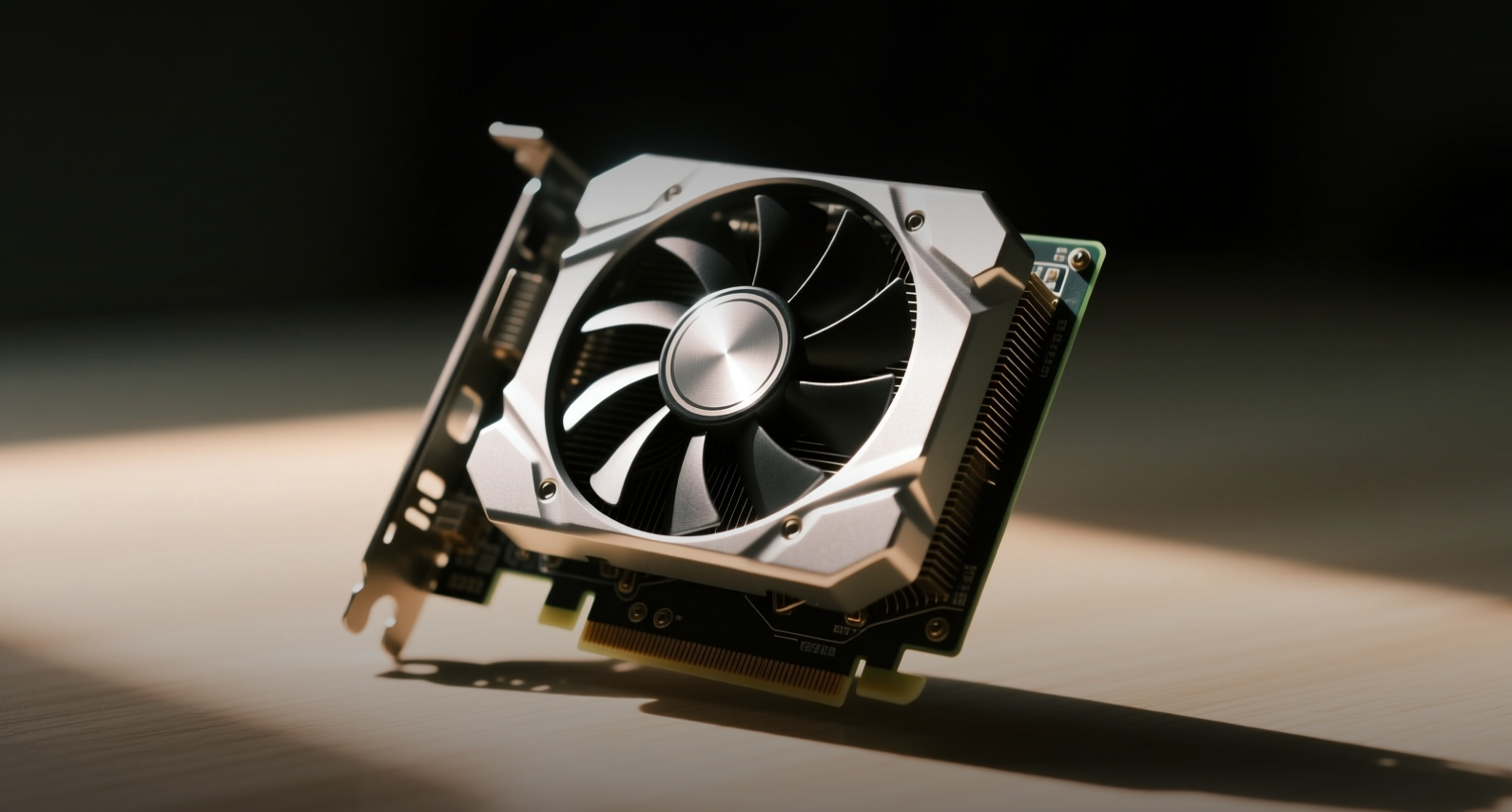
ZisK's v1.1.0-alpha prover reported a 9.62-second p99 on four RTX 5090 GPUs, cutting the headline hardware count in Ethereum's real-time proving race.
Jordi Baylina, technical lead at Polygon Hermez zkEVM, called the result a milestone combining four-GPU proving with claimed 128-bit security and post-quantum resistance.
Ethereum's working standard calls for at least 99 percent of mainnet blocks to be proved within 10 seconds. If ZisK's p99 was calculated over an equivalent mainnet-block workload and timing boundary, 9.62 seconds would sit 0.38 seconds below that threshold. The project has yet to publish the block range, sample size, p99 calculation, timing boundary, proof size, or measured whole-system power for the four-GPU run.
The claim weakens the data-center-scale objection raised in CryptoSlate's February analysis of a roughly 12-GPU, seven-second setup, but the missing workload and measurement details leave the operational case for home proving unresolved.
The six-part test
The Ethereum Foundation paired its latency target with five other conditions intended to preserve decentralization: on-premises equipment costing no more than $100,000, power use no higher than 10 kilowatts, fully open-source code, at least 128-bit security, and proofs no larger than 300 KiB without trusted setups.
ZisK's repository is licensed under MIT or Apache 2.0, and the project claims 128-bit security for the new result. The latency condition remains provisional because the announcement lacks the workload and measurement details needed for an equivalent test.
The hardware arithmetic looks promising while leaving household practicality unresolved. Nvidia specifies 575 watts of total graphics power for a reference RTX 5090. Four cards carry a combined GPU-only rating of 2.3 kW, below the 10 kW ceiling before CPUs, memory, storage, conversion losses, and cooling enter the calculation. Nvidia launched the RTX 5090 at $1,999, putting four cards at $7,996 at launch MSRP, leaving substantial room below $100,000 for the rest of a multi-GPU machine.
A rig can fit beneath a nominal budget and still strain a smaller operator's power delivery, cooling, or host-hardware capacity. Fast proof generation also has to satisfy Ethereum's proof-size and setup rules.
OpenVM shows why benchmark boundaries matter
OpenVM's July production release reported a 9.8-second p99 on eight 5090 GPUs across 7,200 Ethereum mainnet blocks beginning at block 24,000,000. The run used 100-bit provable security and produced proofs under 300 kB.
ZisK's four-GPU number may represent a genuine efficiency gain, while the missing equivalent inputs prevent a reliable ranking. The security levels differ, ZisK has not attached a proof size to its result, and its tested block population and timing boundary remain unpublished.
The Ethproofs API defines proving time as including witness generation while excluding data fetching and proof-submission latency. A p99 calculated around a different interval can look similar while measuring a different operational burden. Ethproofs currently lists ZisK versions through v0.18.0 and exposes a 16-GPU RTX 5090 ZisK configuration, but has yet to show an independent four-GPU v1.1.0-alpha p99 result.
An OpenZeppelin review published in November 2025 examined a limited set of ZisK binary and main constraints at a historical commit. It reported 13 findings, including one critical and two high-severity issues, with none marked resolved in that report.
A disclosed mainnet block set, full timing definition, sub-300-KiB proofs without a trusted setup, measured wall power, and an independently runnable release would turn the result into evidence for a home-proving breakthrough. For now, the claim has weakened the simple data-center-scale objection while leaving the operational case open.
This article is for informational purposes only and does not constitute investment advice.
