

Key Takeaways: Xiaomi's self-developed silicon now spans phones, AI computing, and autonomous driving.
Key Takeaways: Xiaomi's self-developed silicon now spans phones, AI computing, and autonomous driving.
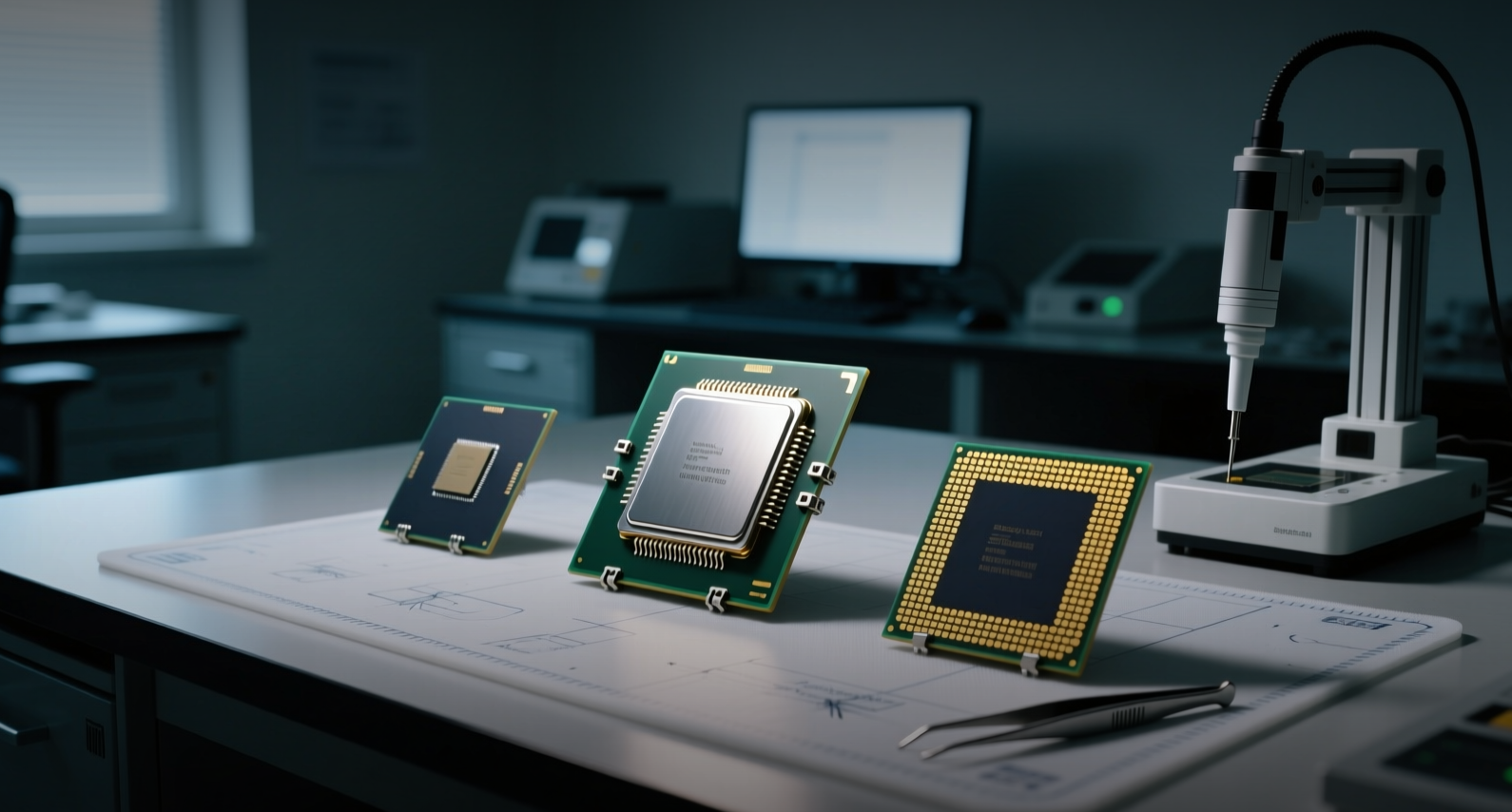
Xiaomi unveiled three in-house Xring chips on Aug. 24 — a 3nm phone SoC, a 6nm AI accelerator, and a 3nm driving processor — extending self-developed silicon beyond phones into cars and edge AI.
Two people familiar with the matter said TSMC will manufacture the O3 using its 3-nanometre process, with the chip expected to power Xiaomi's upcoming flagship folding phone at 200,000 to 300,000 units. The sources declined to be identified because the plans are not public.
The O3 integrates 24 billion transistors with a 10-core CPU, 16-core GPU, and 200 TOPS NPU, delivering a claimed AnTuTu score of 5.22 million — the first mobile SoC to cross the 5-million mark. It is Xiaomi's first mobile chip with LPDDR6 memory support, offering bandwidth up to 113.8GB/s. The O100 uses 6nm 3D wafer-level stacking with 1.22TB/s near-memory bandwidth for on-device AI inference. The D100 packs a 20-core CPU and 16-core NPU supporting up to 160GB of unified memory, capable of running AI models with up to 200 billion parameters locally.
Xiaomi has invested more than 20 billion yuan ($3 billion) in Xring development, with its semiconductor design unit growing to more than 3,000 people from 2,500 last year. The company plans to invest at least 50 billion yuan ($7 billion) over a decade, betting that in-house chips will reduce dependence on Qualcomm and MediaTek while differentiating its premium devices.
The O3 will debut in the Xiaomi 18 Fold in September, entering a foldable market where Huawei shipped 1.6 million units in China in the second quarter, holding a 68 percent share. Honor followed with 13.7 percent and Oppo with 8.5 percent, according to Smart Analytics Global.
Xiaomi's first proprietary processor, the Xring O1, launched in May 2025 and has shipped more than 1 million cumulative devices including smartphones, tablets, and watches. About 150,000 smartphones based on the O1 have reached consumers since launch, the sources said.
The chip push comes as the broader smartphone market contracts. Xiaomi sold 65 million handsets in the first half of 2026 at an average price of 1,329 yuan ($197.74), down from 84 million units at 1,141 yuan in the same period of 2025. Global smartphone shipments are expected to decline 14 percent in 2026, according to International Data Corporation.
Xiaomi also showcased an AI Cube prototype — a desktop terminal running all three Xring chips simultaneously, deploying 120B and 3B parameter models locally on HyperOS. The device is not connected to the internet and has no confirmed sales plans, according to Xiaomi staff at the event.
The O100 and D100 are scheduled for commercial deployment in 2027. The O100 targets on-device AI across phones, cars, and robots, while the D100 is Xiaomi's first domestic 3nm intelligent-driving AI chip.
Chip development carries heavy upfront costs that must be spread across device shipments. If the same compute architecture can serve phones, vehicles, and other local AI devices, the addressable base for amortizing R&D expands significantly. Xiaomi's electric-vehicle business generated 23.9 billion yuan in revenue and delivered 104,199 vehicles in the second quarter, providing a growing platform for the D100 driving chip.
The company's push mirrors strategies already adopted by Apple, Samsung, and Huawei, which have all moved key silicon in-house to control product features and improve bargaining power with suppliers. For investors, the question is whether Xiaomi's chip investments translate into margin gains or remain a cost center — a distinction that will only become clear as O100 and D100 reach commercial scale in 2027.
This article is for informational purposes only and does not constitute investment advice.
