
Xiaomi's new humanoid robot completed four months of factory training, lifting its self-tapping nut installation success rate to 98 percent.
Xiaomi's new humanoid robot completed four months of factory training, lifting its self-tapping nut installation success rate to 98 percent.
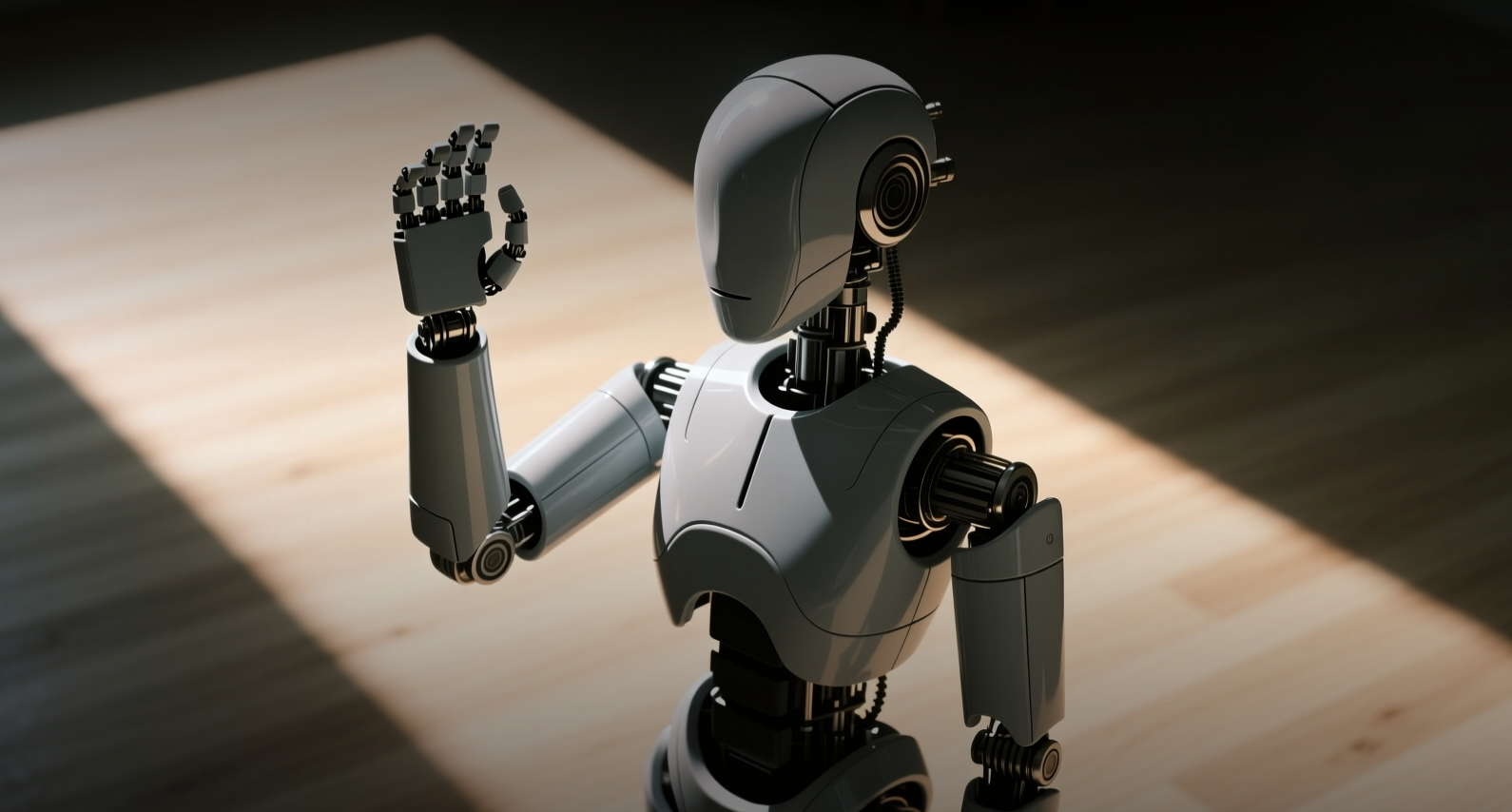
Xiaomi's new humanoid robot, trained for four months on an auto-factory line, lifted its dual-side self-tapping nut installation success rate to 98 percent, within one point of human worker qualification.
"Moving robot operations from the laboratory to a real factory presents an enormous chasm that is difficult to cross — production cadence," Xiaomi founder Lei Jun said. "In the lab, technical exploration can afford ten thousand failures for a single success; a real factory must achieve success on ten thousand out of ten thousand tasks."
The robot, codenamed "Tieda" under the CyberOne product line, stands 1.70 meters tall, weighs 66 kilograms, and carries 66 degrees of freedom across its body, 33 concentrated in its hands. At the World Robot Conference in Beijing, it performed as a "florist," autonomously grasping bouquets, sprinkling fragrance sachets, and handing them to audience members — movements Xiaomi said are driven by an embodied large model rather than pre-scripted routines. By July, the robot's success rate at the self-tapping nut station had climbed from 90.2 percent to 98 percent, while center console side panel sorting and bin folding each reached 90 percent.
The robot remains in prototype stage with no external revenue, but Xiaomi President Lu Weibing said the company will tie robotics into its "human, car and home" strategy across smart factories and households. The unveiling came a day after Xiaomi reported second-quarter revenue of 108.9 billion yuan ($16.2 billion), down 6.1 percent year-over-year, with research and development spending up 18.9 percent to 9.23 billion yuan.
Xiaomi first entered humanoid robotics around 2021, unveiling the first-generation CyberOne the following year with 21 degrees of freedom and a focus on interaction rather than industrial operation. The new prototype's hardware is sized to match frontline manufacturing workers, with a light-gray integrated body and matte silver helmet-style head.
The factory trial began in March, when Lei Jun said Xiaomi's robot had entered the auto factory for an "internship." At the self-tapping nut installation station in the die-casting workshop, the robot ran continuously for three hours, achieving a 90.2 percent success rate while meeting the 76-second production-line cadence. Xiaomi built on its general-purpose VLA foundation model Xiaomi-Robotics-0, combining multimodal perception with reinforcement learning. In July, the company said its embodied foundation model Xiaomi-Robotics-1 ranked first globally on the Robocasa365 and RoboDojo benchmarks.
At a new workstation in the final assembly logistics area, the robot handles center console side panel sorting by leaning forward and extending a dexterous hand into the material bin, then transferring the flexible panel between hands to adjust grip before placing it in a rack cart slot. In bin folding and recycling, it pries open the locking latch ring, folds and compresses the empty bin, then stacks it at a designated storage location.
Xiaomi's robotics business remains in prototype iteration and internal validation, with no independent external revenue. Lu Weibing said during the earnings call that humanoid robots remain a considerable distance from large-scale commercialization, and that Xiaomi must first fully operationalize its existing businesses, deploying in smart factories and smart homes.
The company's second-quarter results showed total revenue of 108.9 billion yuan, down 6.1 percent year-over-year but up 9.9 percent quarter-over-quarter, with adjusted net profit of 6.2 billion yuan, down 42.6 percent year-over-year. R&D spending reached 9.23 billion yuan, up 18.9 percent, primarily invested in smart electric vehicles and AI. Lei Jun has said Xiaomi plans to invest more than 60 billion yuan in AI over the next three years, with humanoid embodied intelligence among key investment areas.
Xiaomi shares rose 2.3 percent on the Hong Kong exchange following the robot's debut, with JPMorgan raising its price target to 32 Hong Kong dollars while maintaining a Neutral rating, expecting the share price and earnings to bottom in the third quarter. The robot's factory results, while still short of full commercialization, give Xiaomi a working reference point in a sector where rivals including Unitree and Chery's AiMOGA are also racing toward production. Xiaomi's approach — validating performance in controlled industrial settings before a wider rollout — contrasts with competitors that debut products publicly first and find applications later. The robot is scheduled for exhibition in Europe after its domestic debut.
This article is for informational purposes only and does not constitute investment advice.
