
Key Takeaways:
- Xanadu targets 1,000+ logical qubits by 2031, up from 200 by 2029
- Fault tolerance milestone set for 2028-2029 with logical error rate of 10⁻¹⁶
- Company holds about $686 million in total funding for the roadmap
Key Takeaways:
Xanadu's photonic roadmap targets 1,000+ logical qubits by 2031, a fivefold jump from 2030 levels, placing the Toronto company against superconducting rivals IBM and Google in the race to fault-tolerant machines.
"We've cut our loss ratio dramatically, and that progress is what gives us confidence in reaching fault tolerance in 2028-2029," Christian Weedbrook, founder and chief executive officer at Xanadu, said. "What's left is largely a materials, fabrication and systems engineering challenge, along with further architecture optimizations."
The roadmap targets cutting the company's photon-loss indicator from 24.1x in 2026 to 1.0x by 2030, with logical error rates improving to 10⁻¹⁶. Xanadu plans up to 200 logical qubits by 2029, up to 500 by 2030 and 1,000+ by 2031, with a quantum data center slated for 2029-2030.
Xanadu, listed on Nasdaq and the Toronto Stock Exchange under XNDU, holds about $686 million in total funding, including $312.8 million in cash and $140.2 million in confirmed Canadian government support under Project OPTIMISM, to fund the build-out.
Loss Reduction Is the Core Engineering Problem
Xanadu's architecture encodes quantum information in light, making photon loss the primary source of error. The company's concatenated error-correction approach combines GKP encoding with quantum low-density parity-check (qLDPC) codes, designed to correct logical errors as physical loss falls below the error-correction threshold. The logical error rate is targeted to improve from roughly 10⁻³-10⁻⁸ in 2028 to 10⁻¹⁶ by 2030, a level that would let error correction keep pace as the machine scales.
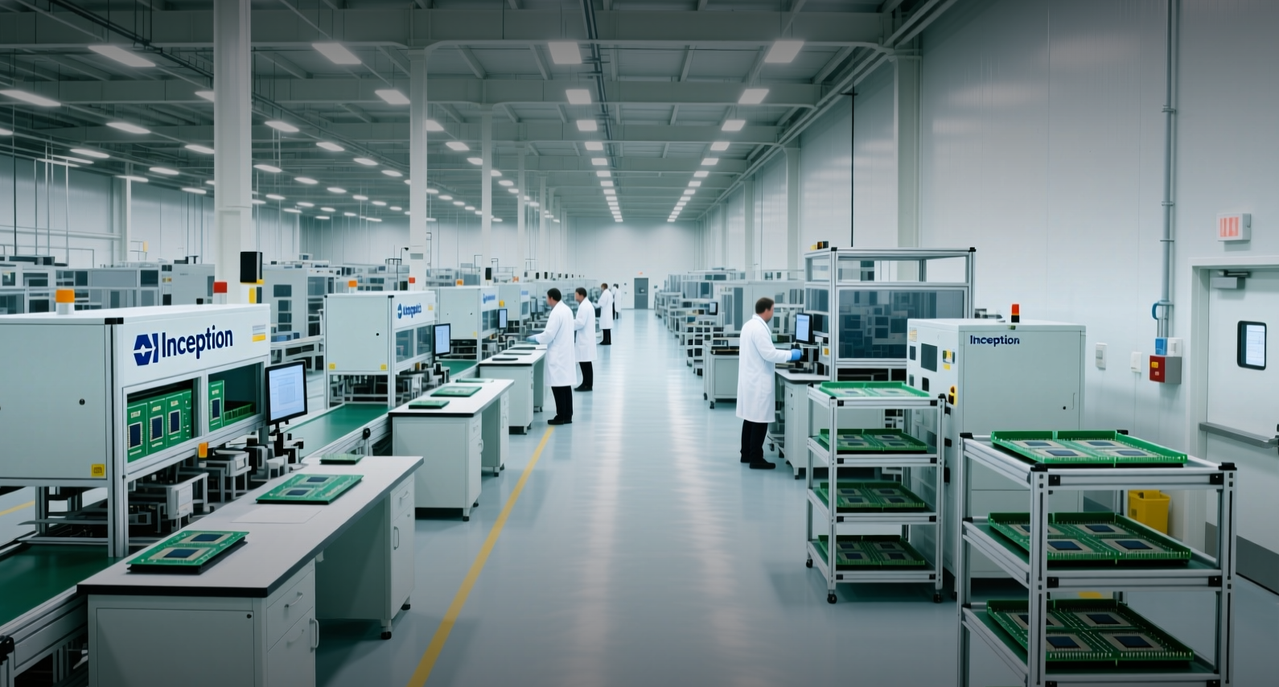
The company is building out its 158,000-square-foot Toronto manufacturing facility, Inception, to support photonic integrated circuit packaging and rack-level module assembly. Unlike superconducting systems from IBM and Google that require millikelvin cooling, Xanadu's photonic design operates at room temperature and scales through modular, networked systems compatible with existing telecom infrastructure. The Qubit Factory build runs 2026-2027, ahead of the fault-tolerance milestone.
PennyLane Builds the Software Foothold
Alongside hardware, Xanadu is expanding PennyLane, its open-source quantum development platform. The software was used by 30.8 percent of developers surveyed over the past year, the second-highest usage share among quantum platforms, with more than 1,890 public code repositories declaring it as a dependency and about 1.1 million package installs per month.
PennyLane reaches 51 simulator and hardware devices through a single API, spanning superconducting, trapped ion, neutral atom and photonic systems. More than 150 university partners across 35-plus countries use it in research and teaching, and corporate collaborators include Lockheed Martin, Rolls-Royce, Toyota, Volkswagen, AMD and Mitsubishi Chemical Group.
"Every developer, researcher, and enterprise building with PennyLane today is a potential customer when our hardware comes online," Rafal Janik, chief operating officer at Xanadu, said. "It gives us a foothold in the quantum ecosystem today."
Xanadu targets meaningful end-customer commercialization by 2029-2030, with monetization paths including enterprise training, applied algorithm development and future cloud-delivered services. The company's photonic approach competes with IonQ's trapped-ion systems and Rigetti's superconducting machines, though Xanadu's room-temperature, silicon-manufacturable design offers a distinct cost profile as the sector moves toward utility-scale machines. With fault tolerance still roughly three years out, the funding runway and software adoption will determine whether Xanadu converts its roadmap into revenue before rivals reach comparable scale.
This article is for informational purposes only and does not constitute investment advice.
